In today’s competitive manufacturing landscape, precision machining stands at the forefront of innovation. Global buyers seek the best techniques to enhance their production capabilities. Precision machining plays a critical role in achieving accuracy and efficiency in various industries.
With advancements in technology, new machining methods continually emerge. These methods promise better quality, reduced costs, and faster turnaround times. However, not every technique suits every application. Buyers must evaluate options based on specific project requirements and material types. Some approaches may boast efficiency but lack the desired precision.
As global demand for highly accurate components grows, manufacturers face challenges. The quest for perfect alignment between cost and quality is ongoing. While some techniques may yield impressive results, others require further refinement. Understanding these nuances is crucial for making informed decisions in precision machining.
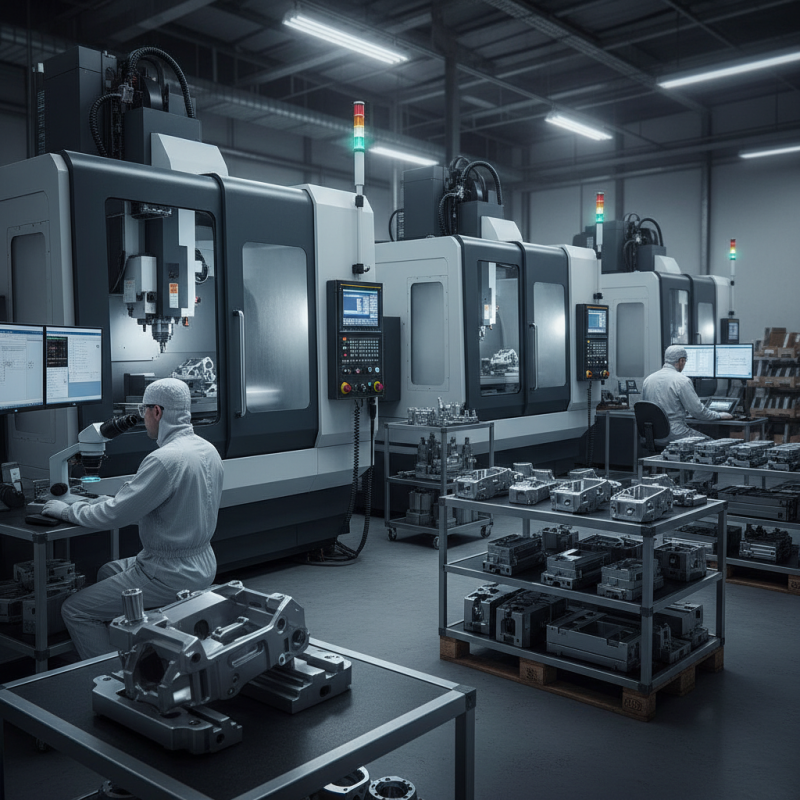
Best Precision Machining Techniques for Global Buyers
Precision machining plays a vital role in various industries, including aerospace, automotive, and medical devices. As a global buyer, understanding the best techniques can enhance product quality. According to the latest report from the International Society for Precision Engineering, the demand for precision components is projected to grow at a CAGR of 7.5% through 2027. This growth highlights the importance of adopting effective machining techniques.
Investing in CNC (Computer Numerical Control) machining is essential. CNC machines offer high precision and repeatability, minimizing human error. While this technology can be cost-intensive, the return on investment often justifies the initial expenditure. Additionally, hybrid machining methods that combine additive and subtractive techniques can increase efficiency. However, balancing technology adoption with workforce training remains a challenge.
**Tips:** Always evaluate the specific needs of your projects. Engage with experts to explore innovative methods. Regularly audit your machining processes to identify areas for improvement. Remember, even advanced techniques require adjustment and adaptation over time. Balancing quality and cost remains a significant consideration in precision machining.
Market research also indicates that sustainability is becoming a priority. Buyers are increasingly seeking suppliers who prioritize eco-friendly practices. Initiatives to reduce waste and energy consumption can enhance a company’s reputation. However, measuring sustainability efforts can be complex, and buyers should seek credible data supporting these claims.
Overview of Precision Machining Techniques and Their Global Significance
Precision machining is essential in today's global economy. This technique involves cutting and shaping materials to meet strict tolerances. Its applications span aerospace, automotive, and medical industries. The significance of precision machining lies in its ability to produce parts that function reliably in critical operations.
Many global buyers seek precision machining for its quality. However, it's not just about exact measurements; it's also about understanding material behavior and tool dynamics. Many engineers emphasize the need for continuous learning in this field. Techniques like CNC machining and EDM are common, yet complexities remain. Buyers sometimes struggle to find reliable partners, particularly in emerging markets.
The global landscape is shifting. Manufacturers face challenges in adopting new technologies. Some facilities lack the skills or resources to implement advanced techniques. This gap can lead to inconsistent quality, causing frustration for buyers. Engaging experts in precision machining can help bridge this gap. Collaborating with knowledgeable partners is vital for successful projects.
Best Precision Machining Techniques for Global Buyers
Market Demand for Precision Machining: Trends and Statistics in 2023
As precision machining evolves, market demand reflects significant trends in 2023. Industries increasingly seek components that meet high-performance standards. This demand drives innovation and efficiency in machining processes. Manufacturers aim for tighter tolerances and enhanced capabilities. Precision parts are crucial in aerospace, automotive, and medical sectors.
Data indicates a growing reliance on automation in machining. Automation enhances production speed and accuracy. However, it also raises concerns about job displacement and the skill gap. Companies must balance technology with workforce training. Adapting to these industry shifts is essential for competitiveness.
Sustainability has gained importance in manufacturing practices. Buyers now prefer eco-friendly machining techniques. This shift prompts a need for cleaner operations and reduced waste. While progress is being made, many companies struggle to implement these changes effectively. Overall, the market for precision machining is dynamic, reflecting ongoing trends that require adaptation and innovation.
Best Precision Machining Techniques for Global Buyers - Market Demand for Precision Machining: Trends and Statistics in 2023
| Technique |
Market Demand (Units) |
Growth Rate (%) |
Main Industries |
| CNC Machining |
500,000 |
8 |
Aerospace, Automotive |
| Laser Cutting |
300,000 |
6 |
Electronics, Metal Fabrication |
| 3D Printing |
150,000 |
10 |
Healthcare, Prototyping |
| EDM (Electrical Discharge Machining) |
120,000 |
7 |
Tooling, Manufacturing |
| Injection Molding |
600,000 |
5 |
Consumer Goods, Automotive |
Key Technologies in Precision Machining: CNC, EDM, and More
Precision machining is essential for various industries, ensuring high-quality components. Key technologies such as
CNC (Computer Numerical Control) machining and EDM (Electrical Discharge Machining) play significant roles.
According to a recent report by MarketsandMarkets, the CNC machine market is expected to reach $100 billion by 2025, driven by its precision and efficiency.
CNC machining is highly automated. It allows for complex designs to be executed with minimal human intervention. This technology provides repeatability and accuracy, which are crucial for industries like aerospace and automotive. However, its reliance on programming and software can introduce risks related to errors in coding. Such errors can lead to costly reworks.
EDM, on the other hand, excels in creating intricate shapes. It uses electrical sparks to remove material, making it ideal for hard metals. Reports indicate that EDM is growing at a CAGR of 6% until 2026. Yet, it requires skilled operators who can troubleshoot any issues that arise and maintain operational efficiency.
Tips: Always double-check machine settings before production runs. Small mismatches can lead to significant inaccuracies. It’s also crucial to keep operators well-trained; human factors remain a significant source of error in precision machining.
Comparative Analysis of Materials Used in Precision Machining Applications
Precision machining plays a vital role in various industries, from aerospace to automotive. The choice of materials is crucial for performance and cost-effectiveness. According to a recent industry report, aluminum alloys constitute around 30% of the materials in precision machining. They offer a great balance of strength and weight, making them popular. However, they can present challenges such as reduced dimensional accuracy when subjected to elevated temperatures.
Steel remains a dominant choice, representing approximately 40% of precision machining materials. It provides superior durability and strength. Yet, it can be more difficult to machine than other materials. The hardness of some steels may wear down tools faster, increasing production costs. This trade-off must be considered to gauge total manufacturing expenses and timelines effectively.
Plastics and composites are gaining traction in machining applications. They made up 15% of the materials used last year, driven by demand for lightweight components. However, these materials often require specific machining techniques. The challenge lies in obtaining a smooth finish without cracking or deforming. Manufacturers must invest time in tool selection and process optimization to ensure desired outcomes. Embracing diverse materials can elevate precision machining capabilities, but it also invites complexities that require ongoing analysis and adjustment.
Challenges and Opportunities in Global Precision Machining: An Industry Outlook
The global precision machining industry faces distinct challenges.
Fluctuating raw material costs disrupt budgets and hinder profitability.
Manufacturers struggle with maintaining quality while adapting to rapid technological changes.
Talent shortages also complicate matters.
Skilled workers are increasingly hard to find, leading to gaps in expertise.
Companies often invest heavily in training to bridge these gaps, yet the process can be slow and expensive.
However, opportunities exist for those willing to innovate.
Advanced automation and AI applications can enhance efficiency and precision.
These technologies allow manufacturers to improve production consistency and reduce waste.
Embracing sustainability is another area of growth. Customers increasingly prefer suppliers committed to eco-friendly practices.
Adopting green methods can differentiate a business in a crowded market.
Nevertheless, the transition to sustainable practices requires careful planning and investment.
As the industry evolves, adaptability is crucial.
Companies must continuously evaluate their processes and technologies.
Perfection is unrealistic; mistakes will occur.
Learning from these missteps can drive future success.
Exploring new markets and forging partnerships may also present fresh avenues for growth.
The landscape of global precision machining offers both challenges and a roadmap for innovation.
FAQS
: Precision machining involves cutting and shaping materials to meet strict tolerances across various industries.
CNC machining offers high precision and repeatability, minimizing human error in production processes.
Hybrid methods combine additive and subtractive techniques to increase efficiency in manufacturing.
Regular audits can help identify areas for improvement and enhance overall process efficiency.
Buyers increasingly seek eco-friendly practices to enhance their company’s reputation and reduce waste.
Many manufacturers lack the skills or resources needed to implement advanced precision machining techniques.
Buyers should evaluate the credibility of sustainability claims and seek reputable data from suppliers.
Growing demand for high-performance components drives innovation, requiring manufacturers to improve efficiencies.
Balancing technology with effective workforce training is essential to prevent skill gaps in the industry.
Engaging with experts and collaborating with knowledgeable partners can help ensure project success.
Conclusion
The article "Best Precision Machining Techniques for Global Buyers" provides a comprehensive overview of the significance of precision machining techniques in today's global market. It delves into the current trends and statistics that demonstrate the rising demand for precision machining in 2023, emphasizing how these techniques are integral to various industries. Key technologies such as CNC and EDM are explored, along with a comparative analysis of materials commonly utilized in precision machining applications.
Moreover, the article highlights both the challenges and opportunities that are present in the global precision machining landscape, offering an insightful outlook on the industry's future. By understanding these facets, global buyers can make informed decisions when navigating the precision machining market, ensuring they remain competitive and up to date with the latest technological advancements.

 Hongrui Model