Choosing a top Prototype Design company in China is not simply a matter of comparing prices or polished websites. The right partner should turn a sketch into a testable product, explain trade-offs clearly, and flag problems before they reach production. A useful standard comes from IDEO founder David Kelley: “Fail often so you can succeed sooner.” That idea fits prototyping well. A rough first model can reveal a weak hinge, an awkward grip, or a button that sits just a few millimeters too high.
This guide will help you assess a company’s engineering skills, workshop capabilities, communication, and quality controls. Look for evidence, not promises: close-up photos of finished parts, clear material specifications, and a documented path from CAD files to physical samples. Ask how the team handles design changes, tolerances, and feedback after the first build. Small details matter. So does listening. A supplier that challenges an unclear requirement may protect your schedule; one that agrees to everything may not. Still, no checklist can remove every risk, and a beautiful sample does not guarantee smooth production. I have to admit, that distinction is easy to miss when deadlines are tight. The following outline offers practical questions for comparing Chinese prototype design firms and choosing a partner whose process matches your product, budget, and timeline.
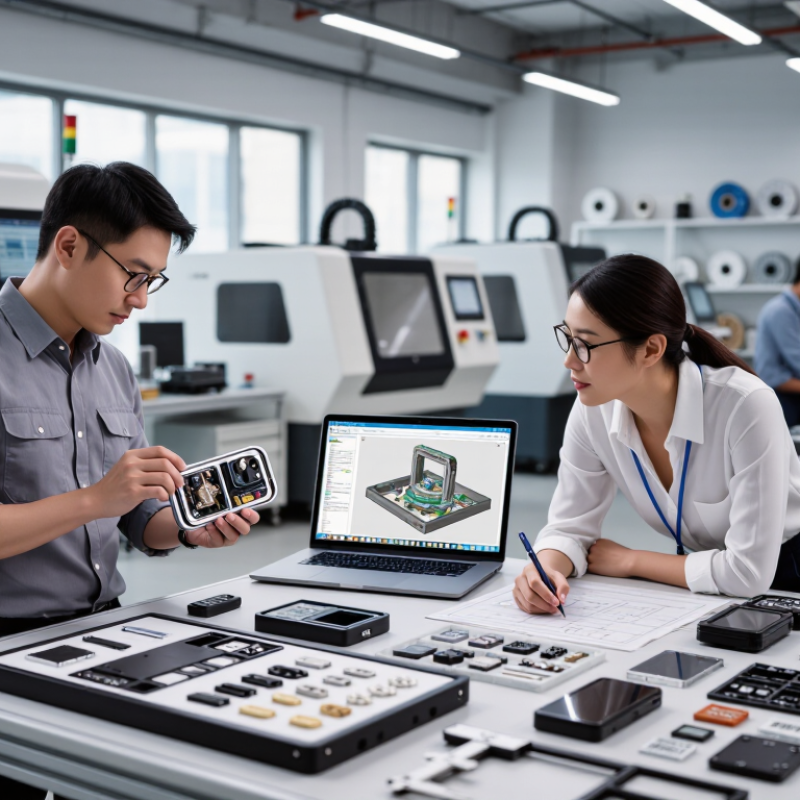
Before comparing prototype design companies in China, write down what the prototype must prove. Is it meant to test the shape in a user’s hand, confirm a moving mechanism, or check whether a circuit fits inside the housing? These goals require different materials, tolerances, and build methods. A palm-sized enclosure may need smooth edges and realistic weight. A working hinge needs repeated motion tests, not just a polished exterior.
Describe key technical requirements with measurable details. Include dimensions, expected loads, operating temperature, surface finish, and any interfaces with existing parts. Attach annotated drawings or clear reference photos. If some values are still uncertain, mark them as estimates rather than presenting them as final specifications. That small distinction can prevent avoidable rework.
Ask potential partners how they will turn those requirements into a test plan. For example, a prototype with snap-fit clips may need several fitting cycles, while a sealed housing may require a basic leak check. Request a sample schedule that identifies material choices, review points, and what the prototype cannot yet demonstrate. Be specific. A prototype is not always a miniature production run, and some details may change after testing. I have to admit, teams sometimes over-specify cosmetic details before confirming the core function. Leave room to learn, but define how success will be measured.
A prototype design company in China should understand your product category, not just operate fast equipment. Look for evidence of relevant work, such as enclosures with tight tolerances, wearable products with small components, or assemblies that need repeated testing. Ask how the team handled a similar challenge, what changed after the first build, and which measurements they tracked. Specific answers are more useful than a polished portfolio alone. Request a sample project timeline, drawing review process, and explanation of how design updates reach the workshop. Clear communication matters when a 0.5-millimeter gap can affect a snap fit.
Tips: Share a short brief, key dimensions, material preferences, and expected test conditions. Ask the company to identify assumptions before quoting. Check whether its engineers can discuss trade-offs, such as wall thickness versus strength, in plain language. A factory visit or live video walkthrough may help you assess equipment, work areas, and quality checks. Keep notes after each conversation. Small inconsistencies can reveal gaps.
Relevant experience does not guarantee a perfect result. It gives you better questions to ask and a stronger basis for judging the answers. Request references or anonymized case details, then confirm the company’s role in design, prototyping, and testing. Agree on review points before production begins, including who approves CAD revisions and how failed tests are documented. I would still expect surprises. Good teams explain them early, show the evidence, and suggest practical next steps.
| Evaluation dimension | What to assess | Evidence to request | Why it matters |
|---|---|---|---|
| Relevant project experience | Experience with products of similar complexity, materials, size, and intended use. | Anonymized case studies, sample parts, project scope, and a description of the company’s role. | Comparable work helps show whether the team can address the design and manufacturing challenges involved. |
| Design and engineering capability | CAD development, design for manufacturability (DFM), tolerance review, and design iteration support. | Sample design reviews, drawing markups, revision records, and a clear account of engineering deliverables. | Early engineering feedback can reveal production or assembly issues before tooling or larger production runs. |
| Prototyping processes | Fit between the proposed process and prototype purpose, such as appearance models, functional parts, or pre-production samples. | A process plan identifying methods such as CNC machining, additive manufacturing, sheet-metal fabrication, or prototype tooling. | Different processes suit different requirements for geometry, surface finish, material, and quantity. |
| Material and finish knowledge | Ability to propose suitable materials and finishes for the prototype’s performance and evaluation needs. | Material data sheets, finish samples, and written confirmation of material grade and any substitutions. | Material and finish choices affect appearance, strength, function, and the usefulness of test results. |
| Quality and inspection | Documented inspection methods, measurement equipment, acceptance criteria, and handling of nonconforming parts. | Sample inspection reports, calibration records, and any applicable quality-system certificate with its scope and validity. | A quality certificate, such as ISO 9001, should be checked for the covered legal entity, activities, and current status; it does not by itself prove part quality. |
| Industry-specific requirements | Experience with applicable regulatory, safety, or traceability requirements for the product sector. | Relevant procedures and certificates, with the issuing body, scope, and validity available for review. | Requirements vary by product and market. For example, ISO 13485 concerns quality management systems for medical devices; confirm that its scope fits the work. |
| Communication and project control | Named project contact, response process, milestone plan, revision control, and escalation route. | A sample schedule, meeting cadence, change-control process, and written confirmation of responsibilities. | Clear ownership and documented decisions reduce misunderstandings across time zones and project stages. |
| Intellectual property and confidentiality | How drawings, CAD files, samples, and project information are protected and access is controlled. | A signed confidentiality agreement, contract terms on ownership and permitted use, and documented file-handling practices. | Written terms clarify ownership, confidentiality obligations, and what happens to project files and tooling. |
| Quotation and total project cost | Itemized costs, included services, shipping, duties where applicable, and charges for revisions or additional samples. | A written quotation with assumptions, exclusions, payment terms, and a defined scope of work. | A comparable scope makes it easier to evaluate proposals without relying on headline price alone. |
| Production handoff | Ability to document prototype findings and support the next stage, whether redesign, tooling, or production sourcing. | A handoff checklist covering final files, approved materials, inspection criteria, and unresolved issues. | A structured handoff helps preserve design intent as the project moves beyond the prototype stage. |
Compare providers against the same written brief, and verify certificates, samples, and project references directly before making a selection.
A strong prototype design company should turn a rough brief into a part that can be tested, measured, and revised. Ask how its engineers handle material selection, tolerances, and design changes. Request a sample drawing or a de-identified case study showing how a difficult feature was resolved. Look for practical explanations, not just polished renderings. Good questions reveal good thinking.
Equipment matters, but a long machine list proves little on its own. Check whether the shop’s processes suit your part: CNC machining for precise features, additive manufacturing for complex shapes, or molding when repeated samples are needed. Ask about working dimensions, achievable tolerances, and how those figures are verified. If a shaft must fit a bearing, for example, ask to see the measurement method and inspection record. Details count.
Quality systems should be visible in daily work. Look for documented drawing reviews, material traceability, calibrated gauges, and clear records of inspection results. Ask what happens when a prototype misses a tolerance. A useful answer describes containment, root-cause review, and corrective action. Verify claims against actual sample documents where possible. Still, paperwork cannot guarantee every outcome. I have seen tidy procedures leave small communication gaps, especially after late design changes. Check how revisions are controlled, and who confirms that the latest file reached the production floor.
Compare design capabilities, equipment, and quality systems when evaluating a potential partner.
Illustrative evaluation framework, not survey results or company-specific data. The suggested weights total 100 points and can be adjusted to match your project’s complexity, materials, tolerances, and validation needs. Verify capabilities through relevant project examples, equipment lists, and documented quality procedures.
Review past projects for evidence of practical problem-solving, not just polished renders. Look for prototypes that resemble your product’s real materials, moving parts, and intended production method. Ask what changed between the first and final sample, and why. A capable team should explain decisions clearly, including failed tests. That detail matters. McKinsey’s 2018 research found that top-quartile companies on its design index achieved 32 percentage points more revenue growth than industry peers over five years. This is not a guarantee that a supplier will deliver results, but it reinforces the value of design quality in business performance.
Check client feedback for specific details about communication, revisions, and delivery—not only broad praise. Request sample work similar to your project, then inspect seams, surface finish, fit, and assembly. If possible, review a physical sample under ordinary lighting and test its key functions. Compare the company’s claims with references you can verify. One limitation: a successful sample does not prove every future batch will match it. Ask how dimensions and materials are checked, and whether findings are recorded.
Tips: Share a simple brief, target dimensions, and intended use before requesting a quote. Ask who will handle design changes and how quickly feedback is usually answered. Keep written notes after each review. It can feel overly cautious, but unclear expectations often create avoidable rework.
Choosing a prototype design company in China requires more than comparing a quoted price. Communication can make or break a project. Ask who will handle your daily questions, how often you will receive updates, and whether design changes are documented. A useful test: send a rough sketch and ask the team to explain its assumptions. Clear questions and specific feedback are good signs. Vague promises are not.
Timelines should include design reviews, material sourcing, prototype builds, and revision rounds—not just a delivery date. Request a written schedule with checkpoints, then ask what could delay each one. Costs deserve the same detail. Compare line items for engineering, tooling, materials, shipping, and revisions. A low initial quote may leave important work out. It happens.
Discuss intellectual property protections before sharing sensitive files. Ask how access is limited, how files are stored, and what written agreements cover ownership and permitted use. Have qualified counsel review the terms for your situation; a reassuring conversation is not a substitute for clear documentation. No process removes every risk, so keep records of decisions and file transfers.
Define one clear purpose. It may test hand feel, hinge movement, circuit fit, or sealing. A polished shell proves little alone.
Share dimensions, loads, temperatures, surface finish, and interface points. Mark uncertain values as estimates. Attach drawings with visible notes.
Request a test plan with measurable results. Include fitting cycles, movement checks, or basic leak checks. Define success before building.
Look for similar enclosures, compact assemblies, or repeated-motion parts. Ask what changed after the first build. Portfolio images are not enough.
Send a rough sketch and request the team’s assumptions. Strong teams discuss wall thickness, strength, and tolerances clearly. Vague promises worry me.
It should cover drawing reviews, material sourcing, fabrication, testing, and revisions. Ask about possible delays. Delivery dates alone hide important work.
Compare engineering, materials, tooling, shipping, and revision charges separately. A low quote may exclude testing or design updates. It happens.
Discuss file access, storage, ownership, and permitted use before sharing them. Use written agreements. A friendly conversation is not legal protection.
The team should show evidence, document the failure, and suggest practical changes. Some surprises are normal. I might overvalue appearance too early.
Choosing a top prototype design company in China starts with defining your project goals, technical specifications, materials, and expected deliverables. With clear requirements, you can identify providers whose industry experience and engineering expertise align with your needs. Evaluate their design capabilities, manufacturing equipment, quality-control processes, and ability to support the level of refinement your prototype requires.
Before making a decision, review examples of past work, client feedback, and available samples to assess consistency and practical problem-solving. Compare communication practices, project timelines, pricing, and how each company safeguards confidential design information. A careful evaluation of these factors can help you find a Prototype Design partner that fits your budget, schedule, and technical expectations while supporting a smoother path from concept to prototype.

Hongrui Model