How to Choose the Best 5 Axis CNC Mill in 2026?

Time:2026-10-14 Author:Isabella
0%

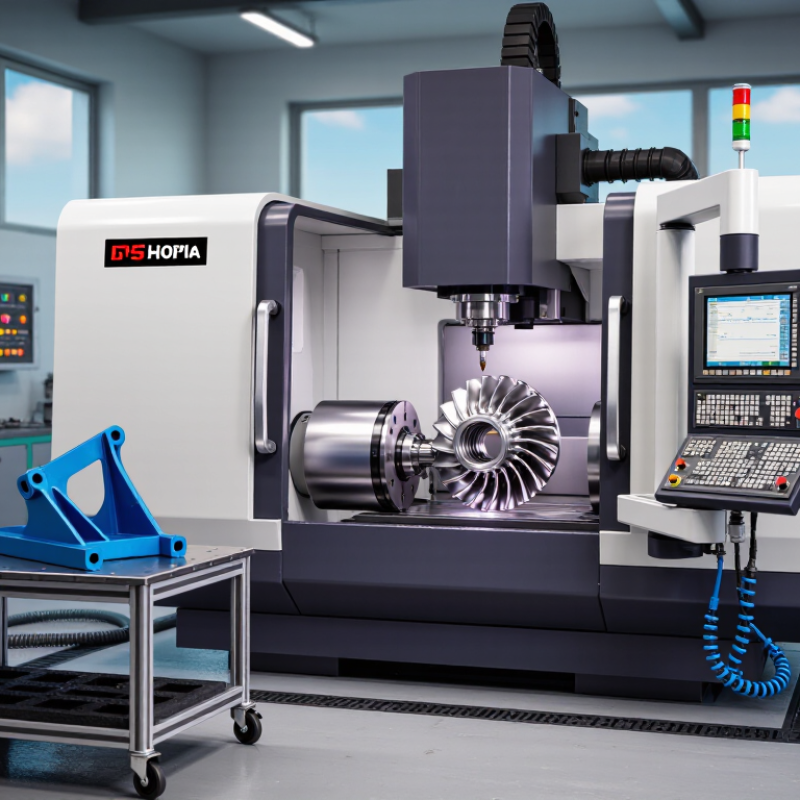
Choosing the best 5 Axis Cnc Mill in 2026 requires more than comparing spindle speed and catalog prices. Your workpiece, tolerances, materials, and operator experience should guide the decision. A titanium impeller needs different capability from an aluminum aerospace bracket. The machine must also fit your floor, power supply, coolant system, and inspection process.

Industry forecasts indicate strong long-term demand for CNC equipment. Grand View Research estimates the global CNC machine market will continue expanding through 2030, driven by aerospace, automotive, medical, and precision-engineering applications. MarketsandMarkets also identifies automation, digital connectivity, and multi-axis machining as major growth factors. However, these reports measure broad market activity. They do not guarantee that an expensive machine will improve your specific production line. That limitation matters.

Dr. Yoram Koren, a recognized authority in manufacturing automation, once warned, “The factory of the future will have only two employees: a man and a dog. The man will be there to feed the dog. The dog will be there to keep the man from touching the equipment.” His statement highlights a practical concern: advanced automation still depends on disciplined human oversight. A reliable 5 Axis Cnc Mill should offer stable thermal performance, accurate rotary positioning, accessible maintenance, and dependable technical support. Check real test cuts, not only brochures. Ask for cycle-time evidence. Review service response times. A low purchase price can become expensive through downtime, training gaps, and difficult programming. Some recommendations will remain judgment calls. That is unavoidable. The strongest choice balances measurable accuracy with the realities of your workshop.
How to Choose the Best 5 Axis CNC Mill in 2026?

Define Your Machining Goals and Part Requirements

How to Choose the Best 5 Axis CNC Mill in 2026?

Define your machining goals before comparing machine specifications. Identify the materials, part dimensions, tolerances, surface finishes, and annual quantities. A small aluminum housing needs different capacity from a large titanium bracket. Record the longest tool, deepest cavity, and most difficult feature. These details expose practical limits early.

Review your drawings and manufacturing history. If parts require several setups, a five-axis mill may reduce alignment errors. However, simultaneous five-axis cutting is not always necessary. Indexed positioning can provide enough value at a lower operating complexity. Check the machine’s work envelope, table load, rotary range, spindle speed, and tool capacity. A machine may appear capable on paper. It can still struggle with long tools, heavy fixtures, or restricted access.

Run a sample process before making a final decision. Use real toolpaths, realistic cutting data, and the planned fixture. Measure cycle time, vibration, chip evacuation, and part accuracy. I once underestimated fixture interference during a trial. The simulation looked clean, but the physical setup failed. That mistake changed my evaluation method. Leave room for maintenance access, operator training, inspection equipment, and future materials. Ask engineers and machinists to challenge your assumptions. Their practical experience often reveals risks that a specification sheet cannot show. Recheck the requirements after the test cut. Your first decision may need revision.

Compare 5-Axis Configurations, Motion Ranges, and Work Envelopes

How to Choose the Best 5 Axis CNC Mill in 2026?

Choosing a 5-axis CNC mill starts with its configuration, not its brochure size. A trunnion table keeps the spindle relatively stable during angled cutting. A swivel head offers more vertical access but may introduce greater tool reach and rigidity concerns. Head-table machines provide flexibility, although their combined movements can complicate programming and collision checks.

Study every motion range carefully. A machine may advertise 360-degree table rotation, yet usable rotation can shrink near the spindle housing. Check each linear travel with the rotary axis tilted. The real work envelope is often smaller than the X, Y, and Z figures suggest. Measure your largest fixture, blank, tool holder, and coolant clearance together. I once underestimated a 120-millimeter fixture, and the tool changed angle beautifully—until the housing nearly touched it. That mistake changed my evaluation process.

Tips: Print a full-scale fixture layout. Test extreme tool angles. Ask for verified interference maps, not general claims. Compare spindle nose clearance, axis limits, and table load at the same time. Short tools help. So does a smaller fixture. Leave room for chips and inspection access. A generous envelope can still feel cramped when the part needs a long cutter and frequent rotary positioning. During trials, record actual angular access and cycle behavior. Datasheets matter, but physical testing reveals the uncomfortable details.

Evaluate Spindle Performance, Accuracy, and Machine Rigidity

How to Choose the Best 5 Axis CNC Mill in 2026?

Choosing a 5 axis CNC mill starts with spindle performance, not brochure speed. A high maximum rpm means little if torque drops during heavy cutting. Check the spindle’s power curve across common materials. Listen for vibration during a controlled test cut. Feel the cut. Ask for thermal growth data after several hours of operation. Oil or air cooling may affect stability, service needs, and operating cost. A practical trial using your own tools and materials reveals more than a polished demonstration.

Accuracy requires more than a small positioning number. Review volumetric accuracy, repeatability, rotary-axis calibration, and probing capability. Thermal compensation can reduce drift, but it cannot repair poor machine geometry. Measure a test part at different table positions. Then measure it again after the machine warms up. The results should remain consistent. Published figures can be useful, though measurement conditions are often unclear.

Rigidity controls surface quality, tool life, and confidence during interrupted cuts. Examine the column structure, guideways, spindle bearings, table support, and rotary unit. Heavy cast construction usually resists chatter, but excessive mass alone proves nothing. Cutting tests matter. A machine may appear rigid yet struggle with long tools or an extended rotary setup. I would also inspect maintenance access and calibration records. These details seem ordinary, but they often decide whether accuracy survives daily production. No machine is perfect, and my own evaluation would remain cautious until repeated tests confirm stable results.

Assess Control Systems, Automation Options, and Software Compatibility

Choosing the best five-axis CNC mill in 2026 starts with its control system. Look for real-time toolpath processing, reliable five-axis kinematics, collision avoidance, and clear operator feedback. A fast screen is not enough. During trials, inspect a simulated impeller cut and review how the control handles sudden feed-rate changes. Small delays can leave visible marks.

Automation should fit your actual workflow, not an imagined factory. Measure probing accuracy, tool monitoring, pallet handling, and recovery after an interrupted cycle. The International Federation of Robotics reported 541,302 industrial robot installations worldwide in 2023. That figure shows automation is expanding, but integration quality still matters more than robot count. I have seen expensive cells lose hours because a sensor fault required manual resets. That weakness deserves honest testing.

Software compatibility is equally important. Confirm direct support for your CAD/CAM postprocessor, machine simulation, digital twin, and inspection software. Open data exchange can reduce repeated programming, while secure access controls protect production records.

Deloitte’s 2024 Smart Manufacturing and Operations Survey found that 86% of manufacturers viewed smart manufacturing as a key competitiveness driver within three years. However, compatibility claims can sound better than they perform. Request a sample file, run a complete virtual cycle, and compare simulated motion with the machine’s real behavior. Some mismatch is normal. Unexplained mismatch is not.

Calculate Total Ownership Costs, Support, and Long-Term Value

How to Choose the Best 5 Axis CNC Mill in 2026?

The purchase price is only the visible part of ownership. Calculate installation, tooling, software, training, energy, maintenance, financing, and floor preparation. A mill requiring special foundations can increase costs before cutting its first part. Include inspection equipment, coolant systems, workholding, and spare components. Small items become expensive together.

Ask for realistic service details, not general promises. What is the response time for remote support? Are technicians available in your region? Can they diagnose alarms through secure access? Request training hours and documentation before signing. A capable machine with weak support may create costly downtime. One missed production day can exceed a monthly service payment.

Build a five-year spreadsheet using your expected hours, materials, and staffing. Compare spindle utilization, tool life, cycle time, and achievable tolerances. Include planned maintenance and an honest downtime allowance. My first estimate would probably be too optimistic without this buffer. Machines also lose value when controls become outdated or parts are difficult to source. Long-term value depends on upgrade paths, operator retention, and resale demand. Check whether the control system supports current workflows and future automation. Keep the assumptions visible. That makes later corrections easier.

FAQS

Why should spindle performance matter more than maximum rpm?

Maximum rpm can look impressive, but torque may fall during heavy cutting. Check the power curve across common materials. Listen for vibration during a controlled test cut. Higher speed is not always better.

How can thermal stability be tested?

Run the machine for several hours, then measure thermal growth. Compare dimensions before and after warming. Cooling method affects stability, maintenance, and operating cost. I would not trust one short demonstration.

Which accuracy figures deserve attention?

Review volumetric accuracy, repeatability, rotary-axis calibration, and probing capability. Measure one test part at different table positions. Measure it again after warm-up. Small published numbers may hide unclear test conditions.

What shows that a five-axis machine is truly rigid?

Inspect the column, guideways, spindle bearings, table support, and rotary unit. Cut a test part with an interrupted path. Watch for chatter, rough surfaces, and shortened tool life. Heavy construction helps, but mass alone proves little.

Why should long tools and extended rotary setups be tested?

They can expose weaknesses hidden by short tools. Cut a deeper feature using the intended rotary setup. Check vibration and surface marks. A machine may seem rigid until the setup becomes extended.

What should be checked in the control system?

Look for real-time toolpath processing, dependable five-axis motion, collision avoidance, and clear feedback. Simulate an impeller-style cut. Then observe sudden feed-rate changes on the machine. Small delays can leave visible marks.

How can automation be evaluated realistically?

Test probing, tool monitoring, pallet handling, and recovery after an interrupted cycle. Use your actual workflow, not an imagined factory. Trigger a controlled sensor interruption. Manual resets may consume hours.

How should software compatibility be verified?

Confirm support for your CAD/CAM postprocessor, simulation tools, digital models, and inspection software. Request a sample file. Run a complete virtual cycle. Compare simulated motion with real machine behavior.

What maintenance details can affect long-term accuracy?

Inspect maintenance access and review calibration records. Ask how quickly technicians can reach critical components. Repeat measurements across several production cycles. I would stay cautious until results remain stable.

Conclusion

Choosing the best 5 Axis Cnc Mill in 2026 starts with a clear understanding of your machining goals, part sizes, materials, tolerances, and production volume. Compare machine configurations, rotary and tilting ranges, work envelopes, and accessibility to ensure the mill can handle both current and future projects. Spindle speed, torque, accuracy, repeatability, thermal stability, and overall rigidity are also essential for achieving consistent results and maintaining tool life.

A practical evaluation should include the control system, programming workflow, software compatibility, automation features, and ease of operator use. Consider whether the machine supports probing, tool management, robotic loading, and other productivity improvements. Finally, calculate total ownership costs, including installation, training, maintenance, energy use, tooling, and technical support. The best choice is not always the machine with the lowest purchase price, but the one that delivers reliable performance, flexible capabilities, strong support, and long-term value for your specific manufacturing needs.


Isabella

Isabella

Isabella is a dedicated marketing professional with a sharp focus on driving brand growth and engagement through strategic content creation. With an extensive background in digital marketing, she combines her passion for storytelling with her keen understanding of industry trends to deliver......