5 Axis Machining is revolutionizing the manufacturing landscape. According to a report by Market Research Future, the global 5 axis machining market is projected to reach USD 3.5 billion by 2024. This growth highlights the industry's increasing reliance on advanced machining techniques to enhance precision and efficiency.
However, achieving successful 5 Axis Machining is not without challenges. Many manufacturers struggle with the intricacies of setup and toolpath programming. Improper practices can lead to costly errors and wasted materials. Understanding the nuances of this specialized technology is crucial for overcoming these hurdles.
By focusing on essential strategies, companies can optimize their machining processes. Embracing best practices can significantly reduce downtime and improve product quality. As industries demand more complex geometries and tighter tolerances, mastering 5 Axis Machining becomes vital for maintaining competitive advantage.
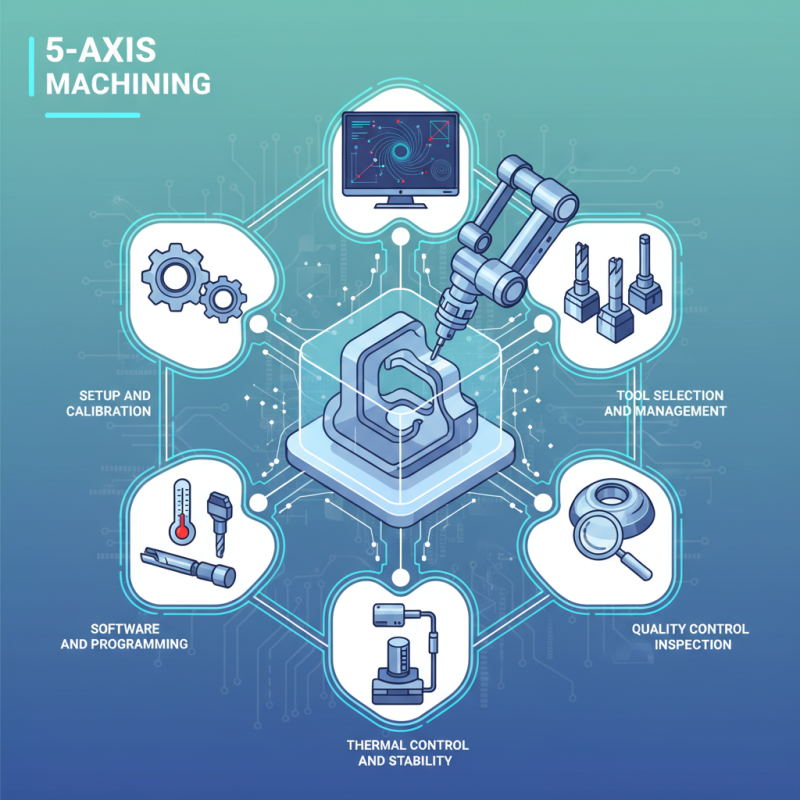
Five-axis machining is a sophisticated technique in modern manufacturing.
Understanding its basics can help improve efficiency and precision in various projects.
This method combines multiple axes of movement, allowing a tool to approach a workpiece from almost any direction.
The benefits are immense, but mastering this technology requires practice and patience.
When starting with five-axis machining, focus on the setup.
Proper alignment is crucial for achieving accurate results.
Small errors in setup can lead to significant flaws in the final product.
Take time to double-check your work. Additionally, familiarize yourself with the software involved.
CAD/CAM systems are essential in translating designs into machine instructions.
However, they can be complex, and a lack of understanding may lead to mistakes.
Experience plays a vital role in five-axis machining.
As operators gain knowledge, they develop efficiency and technique.
Yet, it’s essential to embrace trial and error.
Mistakes should be viewed as learning opportunities.
Constantly refining processes will lead to better outcomes.
Work on this regularly to advance your skills in this transformative machining technique.
When selecting the right 5-axis machine, several key factors must be considered. First, evaluate your specific project needs. Each machining task may require different capabilities. Think about the materials you work with and the complexity of your designs. This reflection helps in choosing a machine that aligns with your requirements.
Another essential tip is to focus on machine accuracy and repeatability. Precision is crucial in 5-axis machining. Research the specifications and performance of potential machines. A machine that shows high reliability can reduce waste and enhance productivity. It’s worth reviewing user experiences and feedback, as these insights can guide your choice.
Consider the size and dimensions of the machine as well. It should fit your workspace without compromising workflow. Ensure that it offers enough travel range for your most ambitious projects. A machine that feels too cramped may lead to frustration and inefficiencies. Always weigh the pros and cons before making a final decision.
In the realm of 5-axis machining, optimizing tooling and workholding is crucial for success. One effective tip is to choose the right tooling materials. High-speed steel might be great for some operations, but carbide tools often deliver superior performance in harder materials. Keep in mind that choosing the wrong tool can lead to early wear and poor finish quality.
Another key area is the setup of workholding. Using a stable and secure workholding system can drastically improve machining precision. Some operators opt for vacuum fixtures or clamps designed specifically for 5-axis operations. This can enhance accessibility to various angles, ensuring that the tool reaches every area of the workpiece. However, it's vital to consider the balance between security and accessibility; an overly rigid setup may hinder tool movement, affecting the overall machining process.
Lastly, ensuring proper alignment is essential. Misalignment can lead to catastrophic results during machining. Invest time in calibrating your machines to minimize errors. It’s a good idea to review your processes regularly. This reflection can highlight areas needing improvement, driving efficiency and effectiveness in your operations.
Effective programming strategies are crucial for successful 5-axis machining. According to industry reports, up to 60% of machining issues stem from inadequate programming. This statistic highlights the importance of mastering software tools and techniques. Proper programming minimizes errors and enhances machining accuracy.
One effective strategy is to optimize tool path planning. Efficient tool paths reduce cycle time, improving overall productivity. Additionally, simulation software can predict potential collisions and issues before actual machining begins. This proactive approach allows for adjustments, reducing costly mistakes.
Another factor to consider is tool selection and setup. Inadequate tooling can lead to poor surface finish or even damage to the workpiece. Regular assessments of tool wear are essential. Implementing a tool monitoring system can significantly extend tool life and improve output quality. A focus on these areas can yield considerable gains in efficiency and reliability. Yet, many still overlook these practices, illustrating a gap in implementation that warrants attention.
Maintaining accuracy and quality in 5-axis machining is crucial. This precision process allows for complex geometries. However, without proper techniques, maintaining quality can be challenging.
One essential practice is regular calibration of the machine. A miscalibrated machine can lead to significant errors. Operators should frequently check the alignment and parameters. Moreover, tooling selection plays a vital role. Using the right cutting tools ensures better surface quality. Always inspect the tools for wear before starting a new job.
Additionally, regular maintenance is essential for sustained performance. Lubrication of moving parts reduces friction. However, it's easy to overlook minor details. Dust and chips can accumulate in critical areas, affecting accuracy. Operators need to establish a routine for cleaning and checks. These seemingly small actions can prevent costly mistakes in the long run.
: It is a technique that allows a tool to move in multiple directions for precise manufacturing.
Proper alignment ensures accuracy. Small setup errors can lead to major flaws in the final product.
Gain experience through practice. Trial and error are key; mistakes are valuable learning opportunities.
CAD/CAM systems convert designs to machine instructions, but understanding them is essential to avoid mistakes.
Regular calibration is essential. Frequent checks of alignment and parameters can prevent significant errors.
Yes, selecting the right cutting tools enhances surface quality. Always inspect tools before use.
Regular maintenance ensures performance. Lubrication and cleaning help reduce friction and prevent errors.
Accumulated dust and chips can affect accuracy. Establishing a cleaning routine is crucial for consistent results.
Calibration frequency depends on usage. Regular checks are recommended to ensure ongoing accuracy.
Small details can be missed, like tool wear or alignment. Always double-check for a flawless outcome.
5 Axis Machining is a complex yet highly efficient method for producing intricate components in various industries. Understanding the fundamental techniques of 5 Axis Machining is crucial for operators and manufacturers alike, as it allows for greater flexibility and precision in part production. Key considerations when selecting the right 5 Axis machine include the size, complexity, and specific needs of the workpiece being machined.
Optimizing tooling and workholding is also critical, as it directly impacts the effectiveness of 5 Axis operations. Implementing effective programming strategies ensures that the machining process is both efficient and accurate, leading to improved quality in the final product. Finally, maintaining accuracy and quality throughout the machining process is essential for achieving high-performance outcomes, making it vital for manufacturers to adopt best practices that enhance the overall efficiency of their 5 Axis Machining processes.

Hongrui Model