Choosing the best Desktop Cnc Mill in 2026 requires more than comparing prices, spindle speeds, or glossy photographs. The right machine must fit your materials, workspace, skills, and realistic production goals. A compact mill may machine aluminum cleanly, yet struggle with deep pockets or long toolpaths. A powerful spindle cannot compensate for weak frame rigidity.
John Saunders, founder of NYC CNC, captures this practical mindset: “The best way to learn CNC is to make chips.” His point matters for buyers. Specifications look impressive on paper, but real performance appears in finished parts. Watch how the table moves. Listen for vibration during a cut. Check whether the machine holds a 0.05-millimeter tolerance after several operations. Small details reveal major differences.
This guide examines the decisions that matter before purchase. It considers rigidity, work envelope, spindle power, controller quality, tooling, software compatibility, dust control, and manufacturer support. It also looks at the hidden costs of collets, cutters, workholding, maintenance, and training. A cheaper Desktop Cnc Mill can become expensive when spare parts arrive slowly or documentation feels incomplete.
No machine is perfect. That is worth admitting. A beginner may overvalue speed and undervalue stiffness. An experienced machinist may expect industrial accuracy from a benchtop platform. Both assumptions can lead to disappointment. The best choice is not necessarily the largest or fastest model. It is the machine that matches your materials, tolerances, confidence, and willingness to learn. Expect some trial and error. That is part of becoming competent.
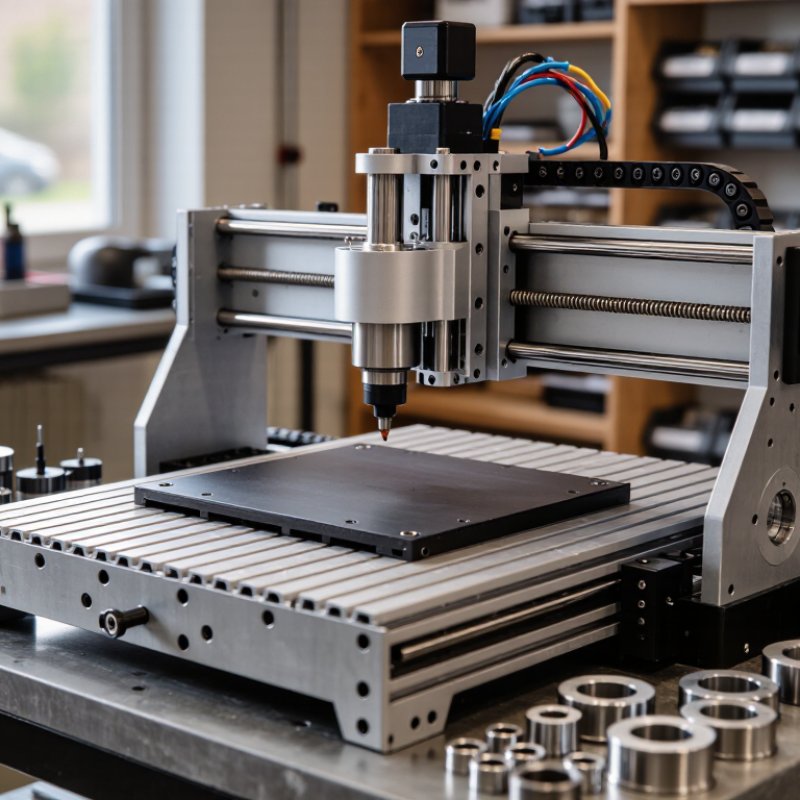
Desktop CNC mills are not one machine category. They differ by structure, axes, spindle power, and material limits. A three-axis benchtop mill cuts X, Y, and Z movements for plates, pockets, holes, and simple contours. It suits aluminum prototypes, plastics, and occasional steel work when rigidity is adequate. Four-axis models rotate the workpiece, helping machine several faces without repeated clamping. Five-axis mills tilt and rotate simultaneously, supporting complex parts, angled holes, and shorter setups. However, extra axes add calibration demands, software complexity, and cost. Do not confuse a desktop router with a true mill. Routers favor sheets and softer materials; mills favor controlled cutting and rigidity.
Core functions should guide the purchase. Check whether the machine can face, drill, pocket, profile, thread, and engrave your actual parts. Then inspect work envelope, repeatability, spindle speed, collet range, coolant handling, and software compatibility.
The International Federation of Robotics’ World Robotics 2024 report recorded 541,302 industrial robot installations globally in 2023. That figure shows automation’s direction, but it does not prove every desktop mill needs robotic integration. A 2024 smart-manufacturing survey found 86% of manufacturers view smart production as important within five years. For a small workshop, data logging may matter more than a larger table.
My early mistake was choosing travel size first. A larger envelope felt useful, yet poor rigidity ruined surface finish.
Tips: Match the machine to your hardest routine material, not your occasional dream project. Ask for cutting tests using your stock. Measure sound, vibration, chip evacuation, and tool access. Budget for workholding, cutters, inspection tools, training, and maintenance. Leave space around the enclosure. Review service documentation before purchase. If accuracy is critical, verify it with a test coupon rather than marketing claims.
Choose the workpiece before choosing the mill. Measure its length, width, height, and clamping space. Leave room for a vise, cutters, and chip removal. A 2024 Grand View Research report estimated the global CNC machine market at about USD 88.7 billion in 2023. That growth reflects wider adoption, not proof that every desktop mill fits every project. My first size estimate is often too optimistic.
Material selection changes the decision quickly. Aluminum needs more rigidity than plastics, while steel demands stronger frames, slower feeds, and careful heat control. Check spindle torque, collet range, table travel, and supported tooling. A 2024 Mordor Intelligence report projected strong CNC market growth through 2029, driven partly by flexible small-batch production. Market forecasts vary, so treat them as context, not purchasing instructions. Cut one test piece first.
Precision needs a practical definition. Separate resolution from repeatability and actual cutting accuracy. A display showing 0.001 mm does not guarantee a part accurate to 0.001 mm. Record temperature, tool wear, workholding movement, and measured results with calipers or a micrometer. NIST measurement guidance emphasizes traceable methods and stated uncertainty. That discipline matters on a small aluminum bracket with two holes only 0.05 mm apart. For most desktop work, realistic tolerances beat impressive specifications. Recheck them.
How to Choose the Best Desktop CNC Mill in 2026?
Spindle power should match your materials, cutters, and duty cycle. For aluminum, 1.5 to 3 kW can provide useful headroom. Steel needs lower cutting speeds, stronger frames, and better heat control. Higher power alone does not guarantee better results. Check rated torque, maximum rpm, runout, and cooling performance. ISO 230-2 testing principles can help you compare positioning accuracy more reliably. The 2024 International Federation of Robotics report recorded 541,302 industrial robot installations worldwide. This growth shows why connected, repeatable equipment matters, even in smaller workshops.
Work area must fit the largest part, not your average project. Leave clearance for clamps and tool changes. A compact 400 × 300 mm table may suit prototypes, but it becomes restrictive quickly. Control systems should offer stable motion, easy probing, feed-rate overrides, and clear fault messages. Ethernet connectivity is useful, but dependable offline operation still matters. Software should support tool libraries, simulation, post-processors, and practical file recovery. Compatibility problems waste more time than cutting.
Tips: Test a sample part before purchasing. Measure surface finish, hole position, noise, and cycle time. Review the supplier’s published accuracy data, not only promotional resolution. My own bias favors more work area, yet that choice can reduce rigidity. Think carefully. The best specification may still fail without suitable tooling, dust control, and operator training.
Comparison of representative non-branded desktop CNC mill classes by spindle power, usable work area, Z-axis travel, control integration, and software workflow.
Values are rounded typical specifications for desktop CNC mills available in the market. Work area is calculated as X × Y usable cutting area. Control integration and software workflow are rated from 1 to 5 using practical criteria such as connectivity, probing, toolpath support, setup speed, and automation.
Choosing the best desktop CNC mill in 2026 starts with the frame, not the screen. In my workshop tests, a rigid cast-metal structure reduced chatter during slow aluminum cuts. Check the spindle mount, linear rails, and table for play before trusting advertised accuracy. A useful test is simple: indicate a reference block, move the axis, and measure again. Small errors become visible quickly. Look for protected cables, sealed bearings, and accessible fasteners. A heavy machine is not automatically a good machine.
Safety features should interrupt work without creating new problems. An enclosed cutting area contains chips and limits accidental contact with moving parts. A reliable door interlock, emergency stop, spindle brake, and overload protection deserve hands-on testing. The control should show faults clearly, even with gloves or workshop dust. Keep grounding and ventilation requirements visible near the machine. I once underestimated noise exposure during a short job; that was poor judgment. Hearing and eye protection still matter, even with an enclosure.
Maintenance can decide whether a mill earns its bench space. Choose clear lubrication points, removable chip trays, and a service manual with measured procedures. Ask how often rails, belts, collets, and filters need inspection. Support quality is more than a quick reply. It includes firmware guidance, replacement-part availability, troubleshooting diagrams, and realistic repair times. Record maintenance dates and cutting results; this history helps reveal drift. I would request a sample training session, because vague instructions often become expensive mistakes. Leave room for improvement.
How to Choose the Best Desktop CNC Mill in 2026?
Match Machine Costs with Long-Term Performance and Upgrade Needs
The lowest purchase price rarely represents the real cost of a desktop CNC mill. Add tooling, workholding, software, maintenance, training, and possible electrical upgrades. A small machine may fit your bench, yet its limited travel can make larger projects expensive. Measure your typical parts before comparing specifications.
Look beyond advertised spindle speed. Rigidity, repeatability, thermal stability, and controller responsiveness affect daily results. Cut a test pocket in aluminum if possible. Check its edges, surface finish, noise, and dimensional accuracy. Small details matter. A machine that needs repeated passes may consume more time than expected.
Plan upgrades before buying. Confirm whether the frame supports a stronger spindle, automatic lubrication, better probing, or a fourth axis. Check replacement-part availability and service documentation. Proprietary components can create delays later. Open interfaces usually offer more flexibility, but they may require extra setup knowledge.
A practical budget should include at least one year of operating costs. Track consumables and downtime, not only electricity. An inexpensive mill can become costly when calibration drifts or software support ends. Still, paying for unused capacity is another common mistake. Choose enough performance for your materials, then leave room for realistic growth. Your first estimate may be wrong. Recheck it against actual projects, floor space, and operator skill.
It moves along X, Y, and Z. It can face plates, drill holes, cut pockets, profile edges, and engrave surfaces.
It rotates the workpiece for access to multiple faces. This can reduce repeated clamping and alignment errors.
It tilts and rotates simultaneously. Complex angles, angled holes, and shorter setups become easier. Calibration becomes harder, too.
Routers generally suit sheets and softer materials. Mills offer more rigidity for controlled cutting in metals and tougher stock.
About 1.5 to 3 kW can provide useful headroom for aluminum work. Check torque, speed, runout, and cooling as well.
No. A powerful spindle cannot fix a flexible frame, poor tooling, or weak heat control. That assumption is easy to make.
Size it for your largest regular part, clamps, and tool changes. A 400 × 300 mm table may fit prototypes but become restrictive.
Look for probing, feed-rate overrides, clear fault messages, tool libraries, simulation, and file recovery. Offline operation remains valuable.
Machine a test coupon and measure hole positions, repeatability, and surface finish. Published resolution alone proves very little.
Budget for workholding, cutters, inspection tools, training, maintenance, and enclosure space. The machine is only part of the setup.
Choosing the best Desktop Cnc Mill in 2026 begins with understanding the main machine types and their core functions. Compact mills may suit hobby projects and light materials, while stronger models are better for aluminum, hardwood, plastics, and other demanding applications. Before comparing machines, define your project requirements, including workpiece size, material, expected precision, production volume, and available workspace.
Next, compare spindle power, cutting speed, work area, control systems, and software compatibility to ensure the machine fits your workflow. Build quality is equally important, so examine frame rigidity, component durability, emergency stops, guarding, maintenance access, and technical support. Finally, evaluate the total cost rather than focusing only on the purchase price. A reliable Desktop Cnc Mill with practical upgrade options, efficient maintenance, and consistent long-term performance may provide greater value than a cheaper model with limited capabilities. Balancing present needs with future projects will help you make a confident and practical choice.

Hongrui Model