Rapid Prototyping has emerged as a critical tool for businesses aiming to innovate. According to a report by the International Society for Technology in Education, 70% of companies that utilize Rapid Prototyping see improved product development timelines. This method allows for quick iterations and effective testing of ideas. It cultivates a culture of experimentation, essential in today's fast-paced market.
"Rapid Prototyping enables businesses to respond to feedback swiftly," says Dr. Emily Chen, a leading expert in design engineering. Her insights underline the importance of agility in product development. However, despite its advantages, companies often struggle with resource allocation for prototyping efforts. This imbalance can hinder the overall effectiveness of the process.
It's essential to note that implementing Rapid Prototyping isn't always straightforward. Many teams face challenges in collaboration and technology integration. These hurdles can lead to delays and increased costs. Reflecting on these issues is crucial for companies seeking to optimize their Rapid Prototyping strategies. The potential benefits are significant, but they require careful planning and execution.
What is Rapid Prototyping?
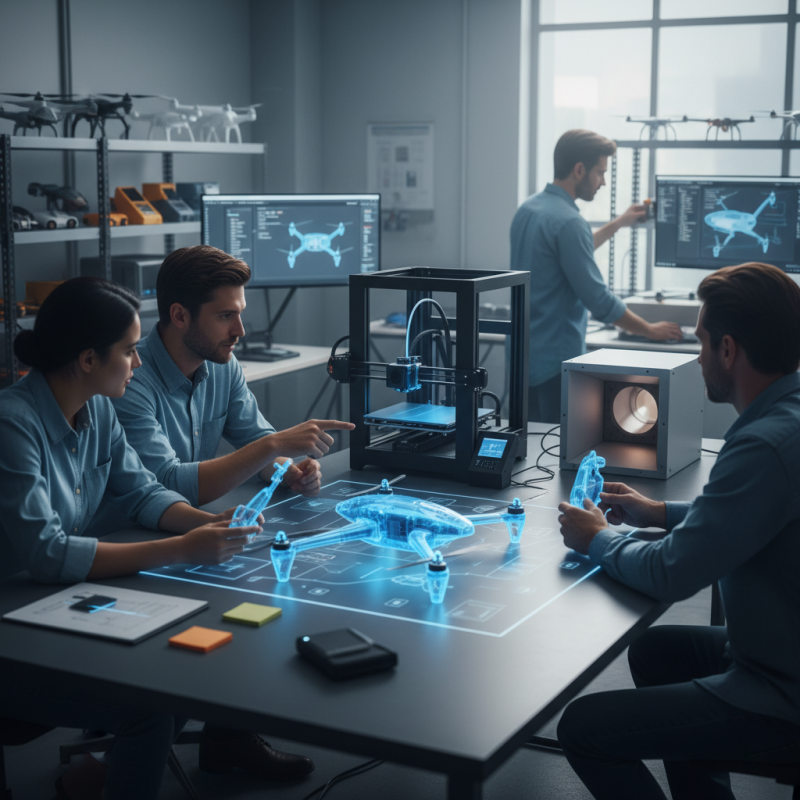
Rapid prototyping is a method that allows businesses to create quick and cost-effective models of products. This technique focuses on rapidly turning ideas into tangible prototypes. It employs various technologies, such as 3D printing and computer-aided design (CAD). With rapid prototyping, teams can visualize concepts and make necessary adjustments early in the development process.
This approach enhances creativity and innovation. Investing in rapid prototyping encourages team members to explore various designs without fear of failure. As a result, organizations can identify strengths and weaknesses of their ideas sooner.
However, one challenge is that not all prototypes are perfect. Some designs may require numerous iterations before achieving the desired functionality. This can lead to frustration among team members.
Additionally, rapid prototyping can help in reducing time-to-market. By finalizing designs quickly, businesses can respond faster to customer demands. However, it's essential to balance speed with quality.
Fast prototyping may sometimes overlook details, leading to potential issues later in production. Reflecting on these experiences can help refine the process and drive more robust outcomes.
The History and Evolution of Rapid Prototyping Techniques
Rapid prototyping has transformed the product development landscape significantly since its inception. Early methods, such as handcrafting and machining, were time-consuming and often resulted in inaccuracies. The introduction of computer-aided design (CAD) in the 1980s marked a pivotal moment. By enabling designers to visualize and modify their ideas digitally, prototyping became more efficient. According to a report by Wohlers Associates, the 3D printing industry alone is projected to reach $50.3 billion by 2025, highlighting ongoing advancements in rapid prototyping techniques.
In the 1990s, advancements like stereolithography (SLA) and selective laser sintering (SLS) further accelerated the process. Companies began to understand that faster prototyping meant faster time to market. A McKinsey report suggests that firms implementing rapid prototyping can reduce product development cycles by up to 50%. These techniques have evolved, offering a range of materials from plastics to metals, making high-fidelity prototypes more accessible.
Tip: Regularly evaluate the prototyping methods you use. Each tool has its strengths and weaknesses. Gather data on your specific projects to make informed decisions about which approach may yield better results.
Embracing modern technologies can be daunting. Not every prototype will meet expectations on the first attempt. Feedback loops are essential to iterating designs effectively. Set realistic goals and understand that failure is often a step towards successful product development.
Tip: Foster a culture of experimentation within your team. Encourage openness to making mistakes. The insights gained from failed prototypes can guide future innovations.
Key Technologies Used in Rapid Prototyping Processes
Rapid prototyping has transformed how businesses develop products. Key technologies in this process include 3D printing, CNC machining, and injection molding. These methods enable quick iterations and faster feedback. A 2021 report showed that 57% of manufacturers cite 3D printing as vital for their prototyping needs.
3D printing, in particular, allows for highly customized designs. It reduces the cost and time associated with traditional prototyping methods. However, challenges exist. Material limitations can affect durability. Additionally, not all designs are suitable for 3D printing. Companies must evaluate these factors carefully.
CNC machining offers precision that 3D printing may not achieve. This technology works well for functional prototypes needing tight tolerances. According to industry data, CNC operations have improved efficiency by up to 30% in some sectors. However, setup times can be lengthy, which may hinder rapid iterations. Balancing these technologies is essential for successful rapid prototyping. Understanding when to use which method can make a significant difference in outcomes.
What is Rapid Prototyping and How Can It Benefit Your Business? - Key Technologies Used in Rapid Prototyping Processes
| Technology |
Description |
Benefits |
Industries Used |
| 3D Printing |
Creating three-dimensional objects from a digital file using additive manufacturing. |
Rapid production, design flexibility, cost-effective for prototypes. |
Manufacturing, Aerospace, Healthcare |
| CNC Machining |
A subtractive manufacturing process that uses computer-controlled machines to remove material. |
High precision, fast production, suitable for metal parts. |
Automotive, Aerospace, Electronics |
| Injection Molding |
Process for creating parts by injecting molten material into a mold. |
High-volume production, excellent surface finish, repeatability. |
Consumer Goods, Medical Devices, Automotive |
| Laser Cutting |
Using a laser to cut materials with high precision and speed. |
Versatile, precise, and can work with various materials. |
Textiles, Metal Fabrication, Signage |
| SLA (Stereolithography) |
A type of 3D printing that uses a UV light to cure liquid resin into hardened plastic. |
High detail, smooth finish, quick turnaround times. |
Jewelry, Medical, Automotive |
Benefits of Rapid Prototyping for Business Development
Rapid prototyping is a transformative process for businesses looking to innovate. It allows companies to create quick, tangible models of their ideas. By doing this, they can gather feedback early. This minimizes risks associated with launching new products. Rapid prototyping often leads to better designs. Teams can identify issues before full production begins.
Businesses can save time and money. Fast iterations reduce development cycles. For example, a company can test multiple versions of a product in weeks. This adaptability allows for a dynamic response to user needs. Mistakes can be addressed early on, leading to stronger final products.
However, relying solely on rapid prototyping can be risky. Quick iterations may overlook deeper issues. Teams might rush through aspects that need more thought. For effective results, balance is key. Combining rapid prototypes with thorough research creates a more refined approach.
Case Studies: Successful Applications of Rapid Prototyping in Industries
Rapid prototyping has transformed many industries, facilitating the quick development and testing of products. For instance, in the automotive sector, companies have reported that prototypes can lead to a 30% reduction in development time. This is due to the ability to iterate designs quickly, allowing teams to make immediate changes based on feedback. A significant case study from the aerospace industry showed that rapid prototyping decreased the time needed for part production by up to 50%. Such efficiency is critical in a field where precision and speed are vital.
Moreover, the medical device sector has seen remarkable advancements through rapid prototyping. Companies have utilized 3D printing to create accurate models for surgical planning. Reports indicate that these prototypes not only shorten the design phase by 40% but also improve surgical outcomes by allowing surgeons to practice on life-like models. However, challenges remain. Quality control in prototypes can be inconsistent and requires careful monitoring to ensure safety and efficacy in final products.
Rapid prototyping is a double-edged sword. It offers speed and flexibility but can sometimes produce errors if not managed properly. Organizations must balance the urgency of prototyping with the need for thorough testing and validation. Learning from these experiences is essential for refining processes and improving product outcomes in any industry.
Conclusion
Rapid Prototyping is a cutting-edge process that enables businesses to quickly transform an idea into a tangible prototype. It has evolved significantly over the years, integrating various technologies that enhance the development process, including 3D printing and computer-aided design (CAD). The efficiency of Rapid Prototyping allows companies to iterate faster on designs, improving product quality while reducing time and costs associated with traditional prototyping methods.
The benefits of Rapid Prototyping for business development are vast. Companies can test and validate concepts before full-scale production, which reduces the risk of costly errors and increases the likelihood of market success. Case studies across various industries showcase successful applications of Rapid Prototyping, demonstrating its potential to foster innovation and accelerate time-to-market. By leveraging this approach, businesses can stay competitive in a rapidly changing market landscape.

 Hongrui Model