Choosing a machining partner can shape product quality, delivery schedules, and long-term costs. For global buyers, the decision involves more than comparing hourly rates. It means checking whether a supplier can hold specified tolerances, document inspections, and communicate clearly across time zones. Small details matter. A clean inspection report, consistent surface finish, or carefully labeled shipment can prevent costly confusion.
This guide introduces ten Precision Machining companies for buyers assessing international supply options. It considers practical factors such as equipment capabilities, material experience, quality systems, production capacity, and support for prototypes or larger runs. Buyers should confirm current certifications, available processes, and export arrangements directly with each company; capabilities can change, and marketing claims are not a substitute for technical review. A low quote can hide trade-offs in lead time, finishing, or inspection scope. Sometimes the best fit is not the biggest shop.
No ranked list can replace a drawing review or a clear discussion of requirements. Before requesting quotes, prepare tolerances, material specifications, expected volumes, and inspection needs. Ask how changes are handled, too. That answer can reveal a lot. The companies featured here offer a starting point for comparison, not a universal verdict. A supplier that suits one project may not suit the next.
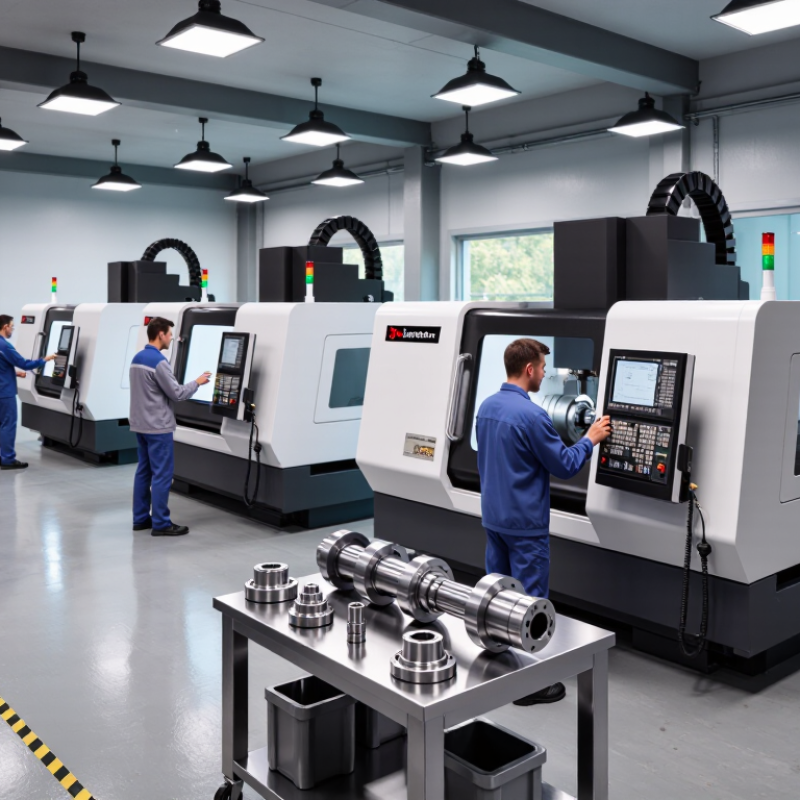
Precision machining companies make components to controlled dimensions using processes such as CNC milling, turning, and grinding. They may cut aluminum housings, stainless-steel shafts, or small polymer fittings. A capable supplier reviews drawings, material requirements, tolerances, and production volumes before quoting. It also checks parts with tools such as micrometers and coordinate-measuring machines. These checks matter when a hole must align with a mating part or a shaft must rotate smoothly. Precision does not mean every feature needs the tightest possible tolerance; that choice can raise cost without improving performance.
These companies serve medical equipment, aerospace, automotive, electronics, and industrial machinery makers. Each sector has different needs. Medical components may require documented material traceability, while electronics enclosures often need consistent mounting features and clean edges. Aerospace parts can involve demanding material and inspection requirements. A supplier’s experience with one industry does not automatically prove it can meet another’s specifications. Ask how it handles first-article inspection, revision changes, and rejected parts. Details reveal more than a broad capability list.
Tips: Share a clear drawing and expected annual volume. Ask for sample inspection records and confirm which dimensions are measured. Check how the shop communicates when a tolerance seems impractical. Small gaps can become costly. Even a careful process can miss an assumption, so review the first article before approving a full run.
Examples of component types commonly produced for different industries
The bar values count the example component types listed for each industry; they do not represent market size, demand, or industry rankings. Examples include turbine and landing-gear components for aerospace, surgical instruments and implant components for medical devices, transmission and engine components for automotive, connector and enclosure parts for electronics, pump and valve components for energy, and tooling and machine components for industrial equipment.
Choosing a precision machining supplier for global sourcing starts with the part, not the sales presentation. Share a controlled drawing, material grade, critical dimensions, surface-finish requirements, annual volume, and change expectations. Ask how the supplier interprets tolerances and resolves unclear callouts. Small details matter. A 0.02 mm feature can affect the process plan, inspection method, and quoted price.
Evaluate capability through evidence. Request a sample inspection report, calibration records, and details of how nonconforming parts are contained and corrected. Check whether measurement methods match the drawing, especially for tight tolerances and complex geometries. Ask for evidence. A supplier may own modern machines, yet stable results depend on tooling control, operator training, maintenance, and inspection discipline. Where possible, compare a first-article sample with your own requirements before approving repeat production.
Compare quotations beyond unit price. Review lead times, minimum order quantities, packaging, freight assumptions, and the supplier’s process for handling engineering changes. Clarify which operations are performed in-house and how outside processes are monitored. A remote audit or focused video walkthrough can reveal practical details, such as machine loading and inspection flow. I would not treat a polished capability deck as proof; still, a checklist cannot catch everything. Confirm key assumptions in writing, and leave room to reassess after the first production run.
Use this supplier-evaluation scorecard to compare machining companies. Requirements vary by part, industry, destination market, and contract; confirm all capabilities against drawings, samples, audits, and documented records.
| # | Evaluation dimension | What to assess | Evidence to request | Buyer’s verification question |
|---|---|---|---|---|
| 1 | Quality management | A documented quality system appropriate to the product and sector. ISO 9001 is a widely used general quality-management standard; sector-specific requirements may also apply. | Current certificate, issuing-body details, scope, audit findings, corrective-action records. | Does the certificate cover the actual manufacturing site and processes used for our parts? |
| 2 | Tolerance capability | Ability to meet the specific dimensional and geometric tolerances on the drawing, consistently across the required production quantity. | Sample inspection reports, process-capability data where appropriate, measurement methods, and first-article results. | Can you demonstrate compliance with the tightest critical-to-quality features on our drawing? |
| 3 | Machining and process range | Relevant turning, milling, drilling, grinding, finishing, and secondary-operation capabilities for the part’s geometry, material, and production volume. | Process flow, equipment list, representative part examples, and details of subcontracted operations. | Which operations are performed in-house, and how are outsourced steps controlled? |
| 4 | Inspection and measurement | Inspection methods suited to the drawing, including calibrated instruments and, where needed, coordinate-measuring or optical measurement equipment. | Inspection plan, sample reports, calibration records, and equipment list with measurement ranges. | Can the supplier measure every specified characteristic using an appropriate, calibrated method? |
| 5 | Material traceability | Ability to link supplied material and production lots to the finished parts, particularly where material grade or origin is contractually specified. | Material test certificates, lot records, receiving-inspection procedures, and part-marking or batch-identification samples. | Can each shipment be traced back to its material batch and relevant production records? |
| 6 | Capacity and delivery planning | Available machine time, staffing, production scheduling, and ability to manage forecast changes and agreed shipment dates. | Capacity plan, production schedule example, lead-time assumptions, and on-time-delivery records for comparable work. | What is the confirmed capacity for our forecast, and how are delays communicated and recovered? |
| 7 | Cost transparency | A clear quotation that separates or explains tooling, setup, material, machining, finishing, inspection, packaging, and shipping assumptions. | Itemized quotation, tooling ownership terms, minimum-order assumptions, and pricing validity period. | Are all recurring and one-time charges, exclusions, and change-order costs stated clearly? |
| 8 | Export and logistics readiness | Experience preparing export shipments, commercial documentation, protective packaging, and delivery terms agreed with the buyer. | Redacted export-document examples, packaging specification, shipping workflow, and proposed delivery-term responsibilities. | Who handles export documents, freight coordination, insurance, and customs-related information? |
| 9 | Communication and engineering support | Responsiveness, drawing-change control, technical clarification, and ability to identify manufacturability concerns before production. | Named points of contact, quotation-response process, sample engineering review, and document-revision procedure. | How are drawing revisions, nonconformities, and urgent questions acknowledged and resolved? |
| 10 | Risk, compliance, and continuity | Controls for data confidentiality, applicable product and trade requirements, business continuity, and supplier or subcontractor risks. | Confidentiality terms, relevant compliance declarations, business-continuity plan, and subcontractor-control process. | What measures protect our drawings and maintain supply if equipment, utilities, or key suppliers are disrupted? |
Comparison tip: Apply the same drawing, annual-volume estimate, inspection requirements, packaging specification, and delivery assumptions to every candidate. Validate claims through a technical review, sample order, and—when warranted—a site or remote audit.
A useful comparison of ten leading precision machining companies starts with capability, not catalog size. Look for documented experience in three- and five-axis milling, CNC turning, Swiss machining, grinding, and electrical discharge machining. The right process depends on geometry, material, tolerance, and production volume. Small details matter. Ask how suppliers inspect a deep bore or control burrs on a thin edge. Request sample inspection records, equipment lists, and clear tolerance notes. A polished capability sheet can still leave gaps.
Market estimates provide context, not a quality score. Fortune Business Insights valued the global CNC machine market at about US$101.2 billion in 2023 and projected growth through 2032. The figure covers machinery, not precision machining services, so it should not be treated as a direct measure of supplier demand. Workforce capacity also matters: a 2024 Deloitte and Manufacturing Institute study projected 3.8 million U.S. manufacturing job openings by 2033, with up to 1.9 million potentially unfilled. For global buyers, compare each supplier’s inspection methods, material traceability, lead-time planning, and ability to scale repeat orders. Fit is everything. One overlooked point: certifications help establish process discipline, but they do not prove that a specific part will meet your needs. Share drawings, critical dimensions, and expected volumes before comparing quotations.
A useful comparison of precision machining companies starts with the work their equipment can repeat, not the number of machines on the floor. Check achievable tolerances, inspection methods, and whether shops can provide measured results for a real sample part. The International Federation of Robotics’ World Robotics 2024 report counted 4,281,585 industrial robots operating worldwide in 2023. That figure signals broad automation, not equal machining capability. Ask how a supplier controls tool wear, heat, and variation between production batches. Small details matter.
Materials reveal another gap. A shop familiar with aluminum may not manage titanium’s heat or stainless steel’s tool wear equally well. Compare documented experience with your exact alloy, surface finish, and part geometry. Certifications also need context. The ISO Survey 2022 recorded 1,265,216 valid ISO 9001 certificates worldwide, but certification alone does not prove a shop can meet a specific tolerance. Review the certificate scope, current audit status, and inspection records. A neat scorecard can still miss practical fit; I would want to see how the supplier handles a borderline measurement, not just a polished capability sheet.
Choosing a precision machining partner starts with the part, not the company’s sales pitch. Define material, tolerance, annual volume, surface finish, and inspection needs before comparing suppliers. A shop equipped for aluminum prototypes may not be suited to repeat production in stainless steel. Ask how it measures critical features, controls tool wear, and documents changes between batches. Small details matter.
Region affects lead time, communication, and landed cost. UNCTAD’s Review of Maritime Transport 2024 reports that over 80% of global trade by volume moves by sea. For overseas sourcing, check port access, packaging, shipping schedules, and buffer stock alongside machining price. Request material traceability, first-article inspection results, and examples of measurement records. ISO 9001 certification can indicate a quality-management system, but it does not prove a supplier can hold your specific tolerance. Even a careful scorecard can miss that distinction.
Tips: Share a representative drawing and ask for a manufacturability review before requesting a firm quote. Confirm who approves substitutions or process changes. If possible, run a small pilot batch. A low unit price may look convincing, yet rework, freight delays, or unclear inspection criteria can erase the savings. A little skepticism helps.
Share a controlled drawing, material grade, critical dimensions, finish, volume, and expected design changes. Small details matter.
Request sample inspection reports and confirm the measurement method matches your drawing. A 0.02 mm feature may need specific tooling and inspection.
No. Tooling control, operator training, maintenance, and inspection discipline also affect repeatability. Ask how the supplier tracks variation between batches.
Review lead time, minimum order quantity, packaging, freight assumptions, and change-handling procedures. Low prices can be misleading.
Ask for documented work with your exact alloy, finish, and part geometry. Aluminum experience may not transfer to stainless steel or titanium.
Not by itself. Check the certificate’s scope and audit status, then review inspection records for similar parts.
A video walkthrough may show machine loading, inspection flow, and shop-floor practices. A polished presentation is not proof.
Request a first-article inspection and consider a small pilot batch. Confirm who approves material substitutions or process changes.
Check shipping schedules, port access, packaging, and buffer stock alongside machining costs. Sea freight can add delays. A checklist still misses things.
This article explores what Precision Machining companies do and how their services support industries that depend on accurate, consistent components. It outlines how to assess suppliers for global sourcing, including their engineering capabilities, production capacity, quality systems, communication practices, and ability to meet project requirements. Readers will also find an overview of ten leading providers and the kinds of machining services and capabilities they offer, without relying on brand names.
The comparison considers technologies, material experience, and relevant certifications to help buyers understand how suppliers may differ. It also highlights practical factors for selecting a partner by region and project, such as lead times, logistics, technical support, and the complexity and volume of the parts required. Together, these points provide a useful framework for identifying a supplier whose capabilities and working practices align with a project’s needs.

Hongrui Model