Choosing a Sheet Metal Fabrication company in China takes more than comparing prices or polished product photos. Buyers should examine process capability, quality controls, communication, and experience with similar parts. A clean laser-cut edge is useful evidence, but it does not prove consistent bending or reliable delivery.
Manufacturing pioneer Taiichi Ohno is often quoted as saying, “Where there is no standard, there can be no kaizen.” That principle matters here. Ask how a supplier controls drawings, tolerances, material batches, and inspection records. For example, a formed stainless-steel enclosure may look simple, yet its corners can reveal uneven bending or poor fit. Small details count.
This overview highlights Chinese companies with capabilities relevant to custom fabrication, including cutting, forming, welding, and finishing. It also considers factors such as equipment, industry focus, and support for international customers. These indicators can help narrow a shortlist, but they cannot replace a factory audit or a sample order. No list is perfect. Company capabilities change, and public information may leave gaps. Treat the comparisons as a starting point, then verify certifications, current capacity, and project references directly before making a decision.
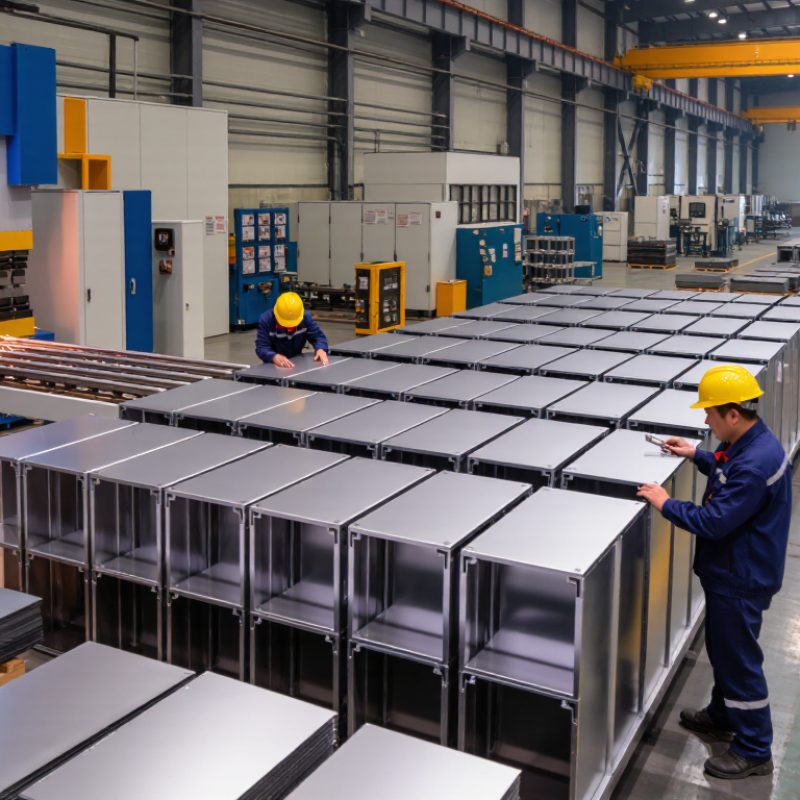
China’s sheet metal fabrication industry is supported by a large steel supply and broad manufacturing base. World Steel Association data show that China produced 1,019.1 million tonnes of crude steel in 2023, about 54% of global output. This figure describes the upstream material base, not sheet metal production itself. Fabricators turn sheet into parts through laser cutting, punching, bending, welding, and finishing. A small enclosure may pass through several of these steps before inspection.
Investment is also changing factory floors. China’s National Bureau of Statistics reported that manufacturing investment increased 6.5% in 2023. For fabrication, that wider trend can mean more automated cutting and bending equipment, though investment figures do not prove every workshop is modern. Capabilities still vary. Some suppliers handle precise, repeat orders well but struggle with short-run jobs or complex finishes. Buyers should check process limits, inspection records, and sample parts rather than rely on capacity claims alone.
Tips: Ask for material certificates, dimensional inspection results, and a production sample. Check bend consistency and edge quality under good lighting. Small details matter. And supplier descriptions can be imperfect; confirm specifications in writing before production.
Identifying leading sheet metal fabricators in China takes more than comparing quoted prices. Start with the parts you actually need: material grade, thickness, bend angles, hole positions, finish, and expected order volume. Ask how each shop checks critical dimensions and records inspection results. A sample part can reveal burrs, uneven bends, or coating flaws that a sales presentation may not show. Small details matter.
Compare capabilities against your drawings, not broad claims. Look for suitable cutting, punching, bending, welding, and finishing equipment, then confirm which processes are handled in-house. Request a clear quotation that separates tooling, materials, finishing, packaging, and shipping. Ask for realistic production timelines and examples of how changes are managed after approval. A responsive engineer can be valuable. So can a clear paper trail. Still, neither guarantees consistent production. Review sample quality, measurement reports, and communication together, and revisit them when specifications change. No scorecard is perfect; I would give more weight to verified process control than impressive capacity figures, though that judgment can miss a smaller shop’s strengths. Compare suppliers using the same drawings and questions, then document why one fits the project better.
China’s sheet metal fabrication sector includes companies with different strengths, rather than one clear leader for every project. Coastal manufacturers often serve export customers and combine laser cutting, CNC punching, bending, and welding under one roof. A typical job might begin with a flat stainless-steel blank, then move through a press brake and inspection bench. Fit matters.
Some suppliers focus on precision enclosures for electronics and industrial equipment. Their capabilities may include tight bend tolerances, threaded inserts, powder coating, and small-batch assembly. Buyers should ask how suppliers control first-article dimensions and protect finished surfaces during packing. A neat sample is useful, but repeatability matters more.
Other fabricators handle larger cabinets, machine guards, or custom frames, where welding quality and dimensional stability become central. Look for clear drawings, material traceability, inspection records, and practical communication about design changes. Certifications can support credibility, yet they do not replace checking relevant work samples or production controls. One limitation: online profiles rarely reveal how a factory performs when schedules tighten. A video call and a trial order can expose gaps early. I would compare suppliers by process fit, documented quality, and response speed—not by claimed scale alone.
Company-neutral overview: the profiles below describe common sheet metal fabrication capabilities and buyer-check items, not verified claims about specific companies.
| Profile area | Typical processes or facts | What buyers should verify |
|---|---|---|
| Cutting-focused fabricator | Laser cutting and punching are commonly used to produce flat sheet-metal parts and openings. | Supported material types and thicknesses, maximum sheet dimensions, edge-quality requirements, and drawing-file formats. |
| Forming and bending fabricator | Press brakes form flat blanks into angles, channels, enclosures, and other three-dimensional parts. | Available tooling, bend limits, minimum flange requirements, and how the supplier handles bend allowances and tolerances. |
| Welding and assembly fabricator | Sheet-metal assemblies may use processes such as MIG, TIG, or resistance welding, selected according to the material and design. | Welding procedures, inspection methods, distortion control, assembly capabilities, and any applicable customer specifications. |
| Finishing-capable fabricator | Common finishing options include powder coating, wet painting, plating, and mechanical surface finishing; availability varies by supplier. | Whether finishing is performed in-house or outsourced, coating specifications, color matching, and corrosion-resistance requirements. |
| Multi-process manufacturer | A single project may combine cutting, forming, welding, hardware insertion, finishing, and final assembly. | Which steps are completed internally, how subcontracted work is controlled, and who is responsible for final inspection. |
| Material capabilities | Common sheet-metal materials include carbon steel, stainless steel, aluminum, and galvanized steel. | Exact grades, thickness availability, material traceability, approved substitutions, and documentation requirements. |
| Quality and inspection | Inspection can include dimensional checks, visual examination, and verification against drawings or agreed specifications. ISO 9001 is a quality-management-system standard. | Current certificates and their scope, inspection equipment, sampling plans, reporting format, and nonconformance procedures. |
| Prototype-to-production support | Fabrication suppliers may support prototypes, pilot builds, or repeat production; the appropriate route depends on part design and order requirements. | Minimum order quantities, tooling charges, sample approval process, production capacity, lead-time assumptions, and change-control practices. |
When comparing sheet metal fabrication companies in China, look beyond quoted price. Core services may include laser cutting, turret punching, bending, welding, surface finishing, and assembly. Not every factory offers each process in-house. Ask who handles secondary operations and how parts are inspected. A clear production route can reduce handoffs, delays, and inconsistent finishes.
Material experience matters. Common choices include carbon steel, stainless steel, and aluminum, each requiring suitable tooling and process settings. Ask whether the supplier can work with your specified grades and thicknesses. Request a sample or first-article inspection when dimensions are critical. A neat drawing does not always prevent confusion; bend directions and finish requirements may still need discussion. Details matter.
Tips: Share 2D drawings, 3D files, annual volumes, and tolerance requirements before requesting a quote. Ask for realistic lead times and inspection records. Check how the supplier manages material traceability and changes. Small details can be missed, so confirm them in writing.
Selecting a Chinese sheet metal fabrication partner starts with matching its capabilities to your part. Ask whether laser cutting, punching, bending, welding, and finishing happen in-house or through subcontractors. This matters. A 1.5 mm stainless-steel enclosure needs clean edges, consistent bend angles, and controlled weld distortion. Request sample inspection records and a first-article report, not just polished product photos. Records should show dimensions, tolerances, material grade, and how deviations are handled. Photos can hide a lot.
Check engineering support before requesting a final price. Send a drawing and ask for feedback on bend reliefs, hole-to-edge distances, and tight tolerances. A capable team should explain trade-offs plainly rather than promise everything. Confirm how revisions are tracked and who approves changes. Ask for a production sample, then inspect it with your own gauges where possible. Even then, a good sample may not predict every production batch.
Compare packaging details, too; thin panels can arrive scratched or bowed after a long journey. Clarify prototype and repeat-order lead times, including holiday and shipping buffers. A slightly lower quote might exclude deburring or protective film. Request a written scope, payment milestones, and a clear process for handling defects. Even careful suppliers can miss something, so agree on checks before production begins.
Approximate room-temperature densities are shown in grams per cubic centimeter. Density affects part weight and material use, so confirm that a prospective fabricator can source and process the alloy specified for your design. Values vary slightly by grade and composition.
Compare capabilities against your drawings, material grades, thicknesses, tolerances, and order volume. Use the same questions for each supplier. A low quote may exclude finishing or packaging.
Ask whether cutting, punching, bending, welding, finishing, and assembly happen in-house. Confirm which steps use subcontractors. Fewer handoffs can mean fewer delays.
Request a sample part, inspection records, and a first-article report. Check dimensions, burrs, bend angles, weld distortion, and coating. Photos can hide flaws.
Share 2D drawings, 3D files, material grades, thicknesses, tolerances, and expected volumes. Clarify finish, packaging, and delivery needs. Details matter.
Send a drawing and ask about bend reliefs, hole-to-edge distances, and tight tolerances. Clear trade-offs are more useful than broad promises.
Ask for separate costs for tooling, materials, finishing, packaging, and shipping. Confirm lead times, payment milestones, and any excluded work in writing.
Ask how revisions are tracked and who approves them. Confirm changes in writing before production. A tidy email trail helps.
No. A good sample cannot predict every batch. Review production checks and defect procedures, and inspect repeat orders when practical. I would still keep some doubt.
China’s Sheet Metal Fabrication industry serves a wide range of manufacturing needs, from custom components to larger production runs. This overview explains how leading fabricators can be identified and compared by considering their engineering expertise, equipment, quality controls, production capacity, delivery performance, and ability to handle different project requirements. It also introduces the types of companies active in the sector without relying on a single measure of success.
Fabricators may offer services such as cutting, bending, welding, stamping, and surface finishing, working with materials including steel, stainless steel, and aluminum. When selecting a Chinese fabrication partner, buyers should assess material options, tolerances, communication, order flexibility, quality assurance, and logistics. Matching these capabilities to a project’s design, volume, budget, and schedule can help create a practical and reliable working relationship.

Hongrui Model