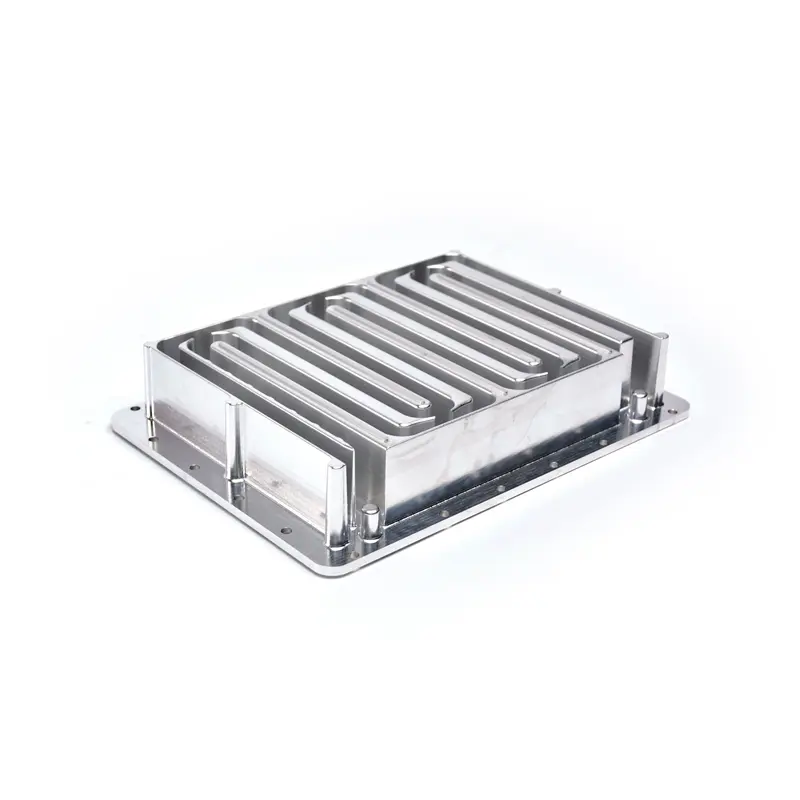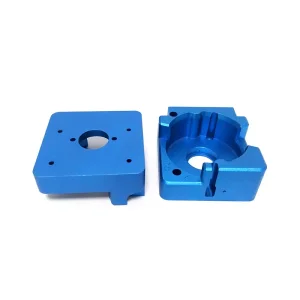
High-Quality Advanced EDM Machining Technology Manufacturer, Supplier

Electric discharge machining (EDM) is a new process that uses electric energy and heat energy for processing, commonly known as discharge machining. The difference between EDM and general cutting is that the tool and the workpiece are not in contact during EDM, but rely on the pulsed spark discharge continuously generated between the tool and the workpiece, and use the local and instantaneous high temperature generated during discharge to gradually erode the metal material.

Product Description

⚙️

The Main Characteristics of Electric Discharge Machining

Able to process materials and complex shaped workpieces that are difficult to cut with ordinary cutting methods.
No cutting force during machining process.
Do not produce defects such as burrs, knife marks, and grooves.
The tool electrode material does not need to be harder than the workpiece material.
Directly using electrical energy processing for easy automation.
The surface undergoes a metamorphic layer after processing, which may need further removal.
Requires treatment of working fluids and smoke pollution generated during processing.
🛠️

What Can EDM Do?

1. Processing molds and parts with complex shaped holes and cavities.

2. Processing various hard and brittle materials such as hard alloys and quenched steel.

3. Processing deep and fine holes, irregular holes, deep grooves, narrow seams, and cutting thin sheets.

4. Process various forming tools, templates, thread ring gauges, and other precision measuring tools.

🎯

Processing Accuracy and Quality

The dimensional accuracy of the perforation depends on the size of the tool electrode and the spark discharge gap. Generally, it ensures that the cross-section profile size is evenly reduced by a processing gap. The dimensional accuracy is one level higher than the workpiece, generally not less than IT7 level. Surface roughness is kept smaller than the workpiece, with straightness, flatness, and parallelism not greater than 0.01mm over a 100mm length.
🏭

Application Area

Electric discharge machining is primarily used for machining holes and cavities in mold production, serving as a leading processing method that promotes technological progress in the industry. It is particularly economically reasonable when the part quantity is less than 3000 units compared to die-stamped parts.

Main Categories:
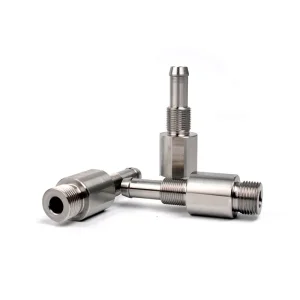
Electric discharge forming machining
Electric discharge wire cutting machining
Electric discharge grinding & generative machining
Non-metallic & surface strengthening EDM
📐

EDM Forming & Wire Cutting

EDM Forming: This method involves copying the shape and size of the workpiece electrode onto the workpiece through the feed motion of the tool electrode relative to the workpiece.
Wire Cutting Machining: Uses moving fine metal wires as tool electrodes to perform pulse discharge cutting according to a predetermined trajectory. This includes high-speed and low-speed wire cutting methods.

Frequently Asked Questions

What materials can be processed by EDM?
EDM can process any conductive material, regardless of its hardness, including hard alloys, quenched steel, and other difficult-to-cut metals.
Does EDM produce mechanical stress on the workpiece?
No, there is no direct contact between the tool and the workpiece, so there is no significant cutting force or mechanical stress involved.
What is the typical accuracy level of EDM?
EDM typically achieves an accuracy level of IT7 or better, with high precision in straightness and parallelism (within 0.01mm per 100mm).
Why is EDM preferred for mold making?
It excels at creating complex cavities and fine details in hardened materials which are common in mold production, often being more cost-effective for small to medium batches.
What is the difference between high-speed and low-speed wire cutting?
The categorization is based on the movement speed of the wire electrode; low-speed wire cutting usually offers higher precision and better surface finish compared to high-speed.
Are there any drawbacks to EDM?
The process creates a metamorphic surface layer that may need removal, and it requires careful management of working fluids and smoke generated during the spark discharge.

Related Products