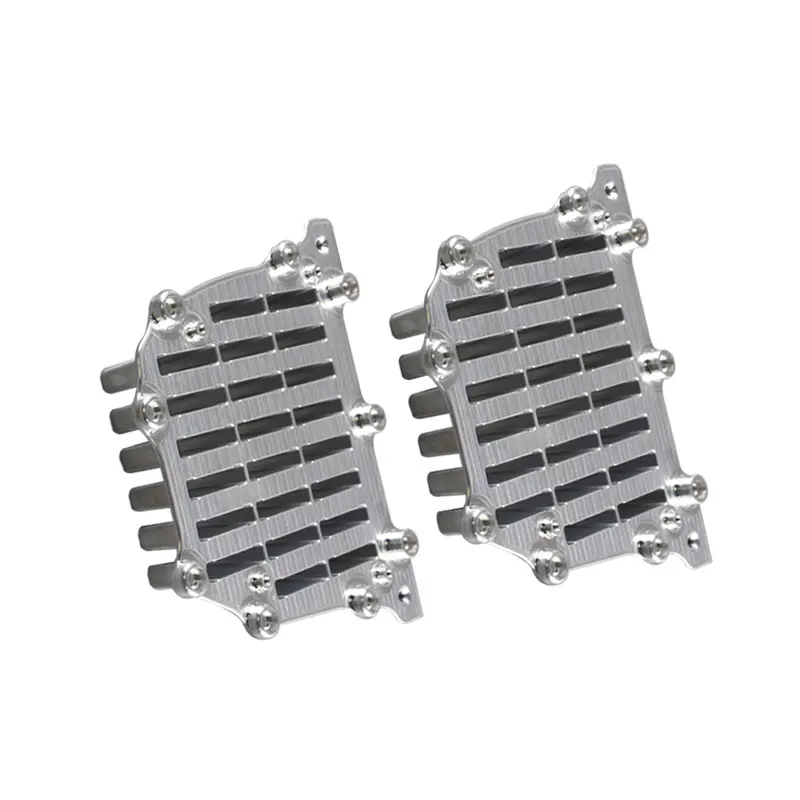
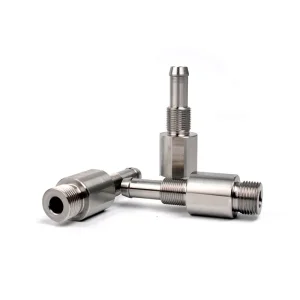
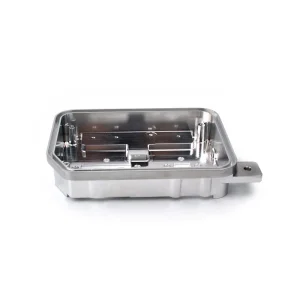
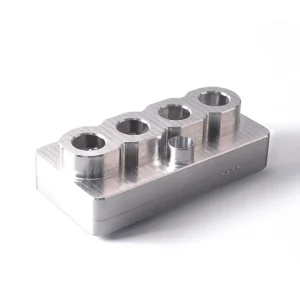
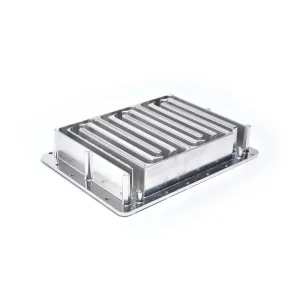
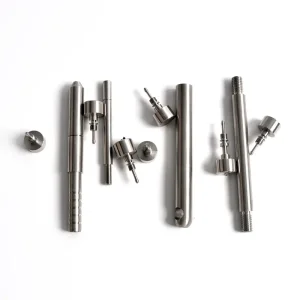
ODM Precision CNC Planing System for High-Accuracy Machining Suppliers, Factory

Planing is a cutting method that mainly involves the linear reciprocating motion of the planer (or workpiece), with the intermittent movement of the workpiece (or planer) perpendicular to it as the feed motion. According to the different main motion directions during cutting, planing can be divided into horizontal planing and vertical planing. Horizontal planing is generally referred to as planing, while vertical planing is referred to as latch.

Planing is one of the main methods of surface machining. Planing can be carried out on a shaper planer or a gantry planer, and the main motion of planing is variable speed reciprocating linear motion. There is inertia in the variable speed, which limits the improvement of the cutting speed, and it does not cut during the return journey, resulting in low planing production efficiency, which is widely used in single piece and small batch production, especially when processing narrow and long planes.

Product Description

Application Area of Planing Technology

Planing is mainly used for rough and semi-precision machining of flat surfaces and grooves. For portal planers with high precision and good rigidity, a wide blade large planer can also be used for fine planing instead of scraping and grinding.
Normally, the economic accuracy of planing processing is IT8-IT9, and the surface roughness Ra is 12.5-1.6um.

Function & Capabilities

Planing plane, vertical plane, and steps.
Planing right angle grooves, inclined planes, and dovetail workpieces.
Planing T-shaped slots, V-shaped slots, and surfaces.
Hole processing and planing racks.

Wide Blade Planer Excellence

Using a wide blade planer to finely plane a plane can replace scraping, with a machining accuracy of IT7, a surface roughness of Ra0.2-0.8um, and high production efficiency.

Accuracy Details: Generally it can reach IT8~IT9, and the surface roughness Ra is 12.5~1.6um. But in the gantry planer with a wide knife, Ra is 0.4 ~ 0.8μm.

Why Choose Planing Technology?

Good Versatility: Can be processed vertical, horizontal plane, can also be processed T groove, V groove, dovetail groove and so on.
Simple & Efficient: The machine tool and tool required for planing are simple in structure, easy to manufacture and install, and easy to adjust.

Frequently Asked Questions

Q: What is the standard accuracy for general planing? A: The standard economic accuracy is typically IT8-IT9, with a surface roughness Ra ranging from 12.5 to 1.6um.
Q: Can planing replace manual scraping? A: Yes, when using a wide blade planer on a high-precision gantry planer, it can effectively replace scraping with high production efficiency.
Q: What types of specialized grooves can be planed? A: Planing is excellent for T-shaped slots, V-shaped slots, dovetail grooves, and right-angle grooves.
Q: What are the primary advantages of planing tools? A: The tools and machine structures are simple, making them easy to manufacture, install, and adjust compared to other machining methods.
Q: What is the maximum precision achievable with a wide blade planer? A: It can achieve a machining accuracy of IT7 and a surface roughness as fine as Ra0.2-0.8um.
Q: Is planing suitable for complex surfaces? A: While mainly for flat surfaces and grooves, it is highly versatile and can handle inclined planes, racks, and specific hole processing.

Related Products