Home >
CNC Machining Services >
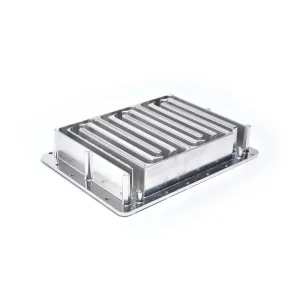
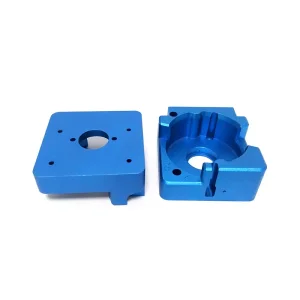
ODM Precision Parts Manufacturing advanced CNC Grinding Machine Manufacturers, Factories
1 / 1
ODM Precision Parts Manufacturing advanced CNC Grinding Machine Manufacturers, Factories
The use of high-speed rotating grinding wheel and other abrasive tools to process the workpiece surface cutting. The specific power of grinding is larger than the general cutting, the metal removal rate is smaller than the general cutting, and the workpiece is usually removed by other cutting methods before grinding, leaving only 0.1 to 1 mm or smaller grinding margin.
What Can A CNC Grinding Machine Achieve During Final Product Processing?
Different types of grinders are utilized to meet specific manufacturing requirements. These services are categorized based on grinding direction, workpiece type, and target geometry.
Grinding Direction
Most grinding machines perform operations using axially or radially rotating grinding wheels, processing workpieces from both the side and the front.
Specialized plunge grinders focus on top-to-bottom surface processing, while double-sided fine cutters simultaneously grind both top and bottom surfaces.
Grinding Parts & Geometry Grinding
Advanced CNC grinders are capable of performing high-precision operations on various product areas, including:
✓Inner and Outer Diameters
✓Product Surfaces
✓Steps, Cones, and Chamfers
✓Complex Profiles and Grooves
Why Choose Professional Grinding Services?
01High Efficiency: Grinding speeds range from 30m to 50m per second, with processing temperatures reaching 1000℃ to 1500℃.
03Material Versatility: Capable of processing both soft materials and extremely hard materials like porcelain and cemented carbide.
04Fine Control: Extremely small cutting depths allow for the removal of incredibly thin metal layers in a single stroke.
Function & Accuracy Standards
Grinding is essential for processing internal/external cylinders, conical surfaces, and complex forms such as threads, gears, and splines. The self-sharpening nature of abrasive particles ensures consistent performance across various materials.
Accuracy Level: Reaches IT8 ~ 5 or higher.
Standard Surface Roughness: Ra1.25 ~ 0.16 microns.
Q1: What are the primary grinding directions in CNC machining?
CNC machines typically use axial or radial rotation. Plunge grinding processes from top to bottom, while double-sided cutters handle both surfaces simultaneously.
Q2: Which materials are suitable for CNC grinding?
Grinding is highly versatile; it can process soft materials as well as extremely hard substances like porcelain and cemented carbide.
Q3: How precise is the CNC grinding process?
The accuracy can reach IT8 ~ 5 or even higher. Precision grinding can achieve a surface roughness as low as Ra0.04 microns.
Q4: What complex geometries can be achieved?
It can produce steps, cones, chamfers, profiles, grooves, threads, gears, and splines with high repeatability.
Q5: What are the typical speeds and temperatures involved?
Grinding speeds usually range between 30m and 50m per second, with internal temperatures reaching between 1000℃ and 1500℃ during the process.
Q6: Why is grinding preferred for finishing?
Because the cutting depth is very small and the abrasive particles are self-sharpening, it allows for extremely thin metal removal, resulting in superior surface quality.
 Hongrui Model