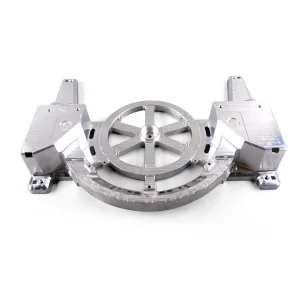
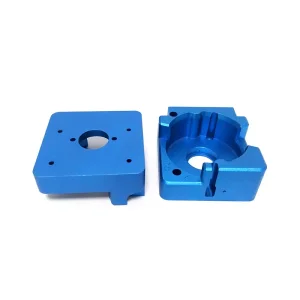
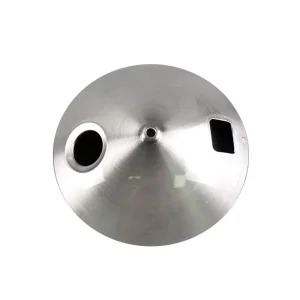
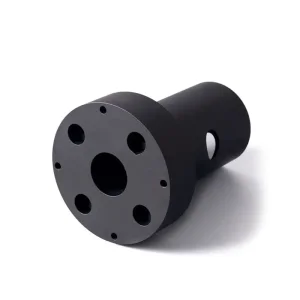
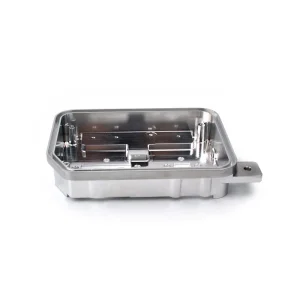
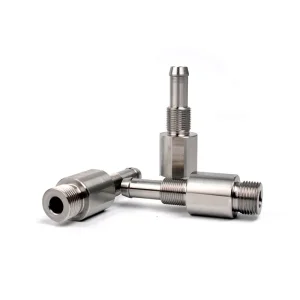
High-Quality Machining OperationsSwiss Precision Lathe

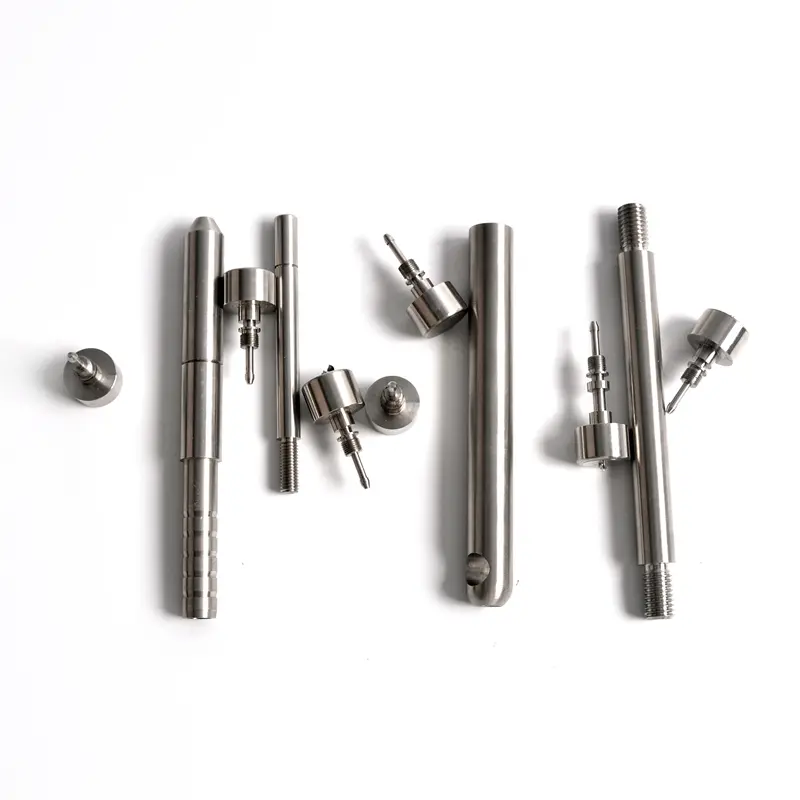
Swiss CNC machining is a process that specializes in machining small, high-precision turning parts. A Swiss lathe is a machine that cuts a bar fed through a guide bush while the tool remains stationary. The chuck is recessed behind the guide sleeve so that the bar material held in it has better support and is not directly exposed to the bed and tooling, so that the machine can quickly and closely process the material. Swiss CNC lathes with removable headstock.

Product Description

Application field of precision machining technology

1
Precision instruments and accessories manufacturing High-precision precision instruments are essential in scientific research and precision production processes, and the accessories in these precision instruments need to be manufactured using precision machining technology. Not only do they need to be able to guarantee accuracy, but they also need to be able to withstand high-speed rotation and very small axial deviations.
2
Mold and tooling manufacturing In industrial production, molds and tooling are an indispensable part. The manufacture of molds and tooling needs to ensure high precision, while also having high hardness, high reliability and long life.

The function of precision machining

It is often used in the processing of key parts such as precision lead screw, precision gear, precision worm gear, precision guide rail and precision bearing.

Our technical specifications:
Machining Accuracy
10 ~ 0.1 micron
Surface Roughness
Below 0.1 micron

Our advantages

Precision parts processing production efficiency is higher, CNC parts processing can process multiple surfaces at the same time, compared with ordinary lathe processing can save a lot of processes, save time, and CNC machining parts quality is relatively stable ordinary lathe to a lot.
Parts of different complexity can be processed through programming, and the modification and update design only needs to change the program of the lathe, which can greatly shorten the development cycle of the product.
The degree of automation is very enough, which greatly reduces the physical labor intensity of workers.

Frequently Asked Questions
What industries benefit from precision machining technology?
Precision machining is vital for industries requiring high-precision instruments, scientific research tools, and mold manufacturing where reliability and long life are essential.
What level of accuracy can be achieved?
Our precision machining achieves an accuracy range of 10 to 0.1 microns, with surface roughness kept below 0.1 microns.
Which specific parts are commonly processed using this technology?
It is primarily used for key components such as precision lead screws, gears, worm gears, guide rails, and high-precision bearings.
Why is CNC machining more efficient than traditional lathes?
CNC processing allows for simultaneous machining of multiple surfaces, reducing production steps, saving time, and ensuring more stable quality compared to manual lathes.
Can precision machining handle complex part designs?
Yes, through advanced programming, parts of varying complexity can be produced. Design updates only require program changes, significantly shortening the development cycle.
How does automation improve the manufacturing process?
High levels of automation reduce the physical labor intensity for workers while maintaining consistent accuracy and increasing overall production throughput.

Related Products