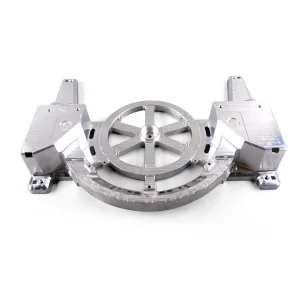
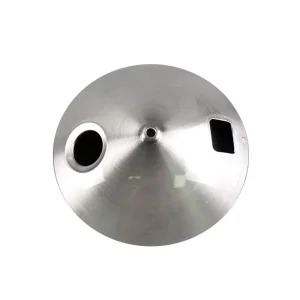
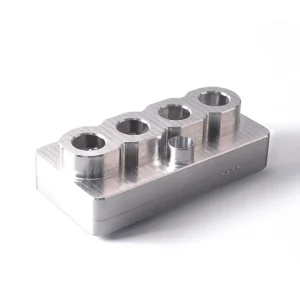
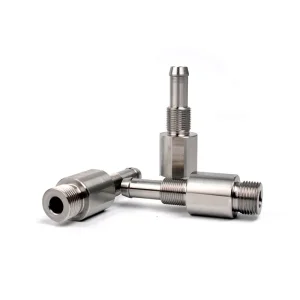
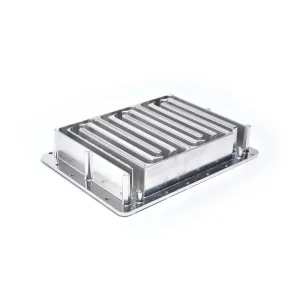
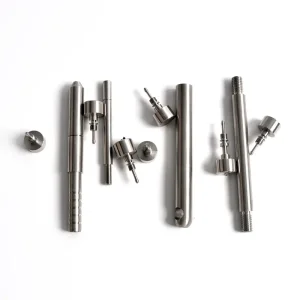
Pioneering standard and custom CNC manufacturing solutions optimized for durability, thermal dissipation, and ultra-precise dimensional alignment.
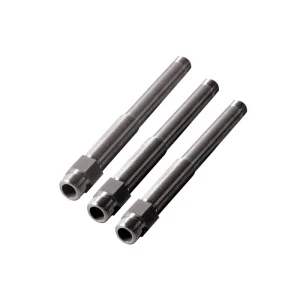
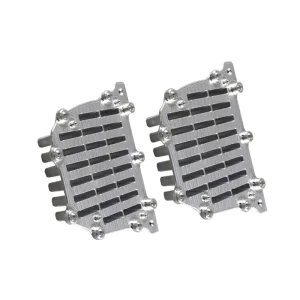
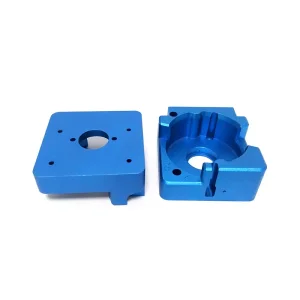
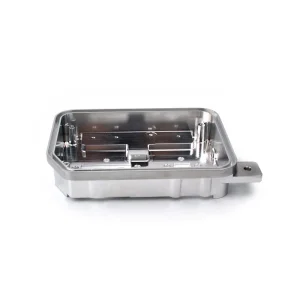
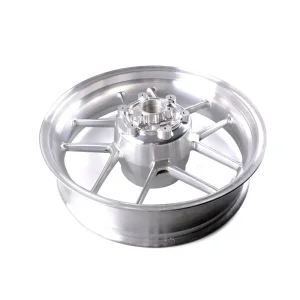
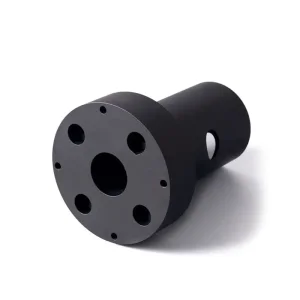
Modern industrial laser deployment relies heavily on specialized semiconductor configurations that demand extreme thermal management, stability, and optical path execution. In particular, Custom 5W (5-Watt) Laser Modules represent a crucial tipping point in solid-state and diode laser architectures. Producing continuous-wave (CW) or modulated power of 5,000 milliwatts requires robust material choices and precise component positioning to prevent catastrophic optical damage (COD).
Whether utilizing a 450nm blue laser diode for rapid polymer processing, a 532nm DPSS green laser for high-contrast bio-medical imaging, or a 1064nm infrared laser for precise metal micro-marking, the housing's structural alignment remains the single most critical point of failure. Thermal expansion in poorly toleranced subassemblies changes the alignment of optical collimators, resulting in severe focal shifting, poor beam quality (M² factor degradation), and immediate efficiency drops.
Small mechanical deviations of ±0.005 mm can shift collimating lens systems, distorting the focal spot and reducing output efficacy by up to 35% in high-power applications.
5W diode modules convert up to 75% of electrical energy into waste heat. Copper C11000 micro-heatsinks and thermoelectric coolers (TECs) are essential to prevent diode failure.
Anodized aluminum or brass housing protects optics from volatile outgassing, high-pressure environments, and moisture infiltration common in industrial settings.
Our research into Semantic Search Intent highlights that global procurement departments do not merely search for "5w laser modules." Rather, engineers require solutions for thermal dissipation matching, drive circuitry feedback integration, and robust structural housing. Delivering real information gain means addressing how these high-power modules operate under intense cycle loads in automated assembly lines and rough factory environments.
Hongrui is one of the top rapid prototyping companies in China, specializing in high-end, low-cost OEM CNC machining parts manufacturing that bridges the gap between optomechanical design and bulk production.
Dongguan Hongrui Model Technology Co., Ltd. was established in 2019 with a registered capital of 5 million yuan and currently employs over 100 people. We specialize in rapid prototyping and high-precision CNC manufacturing. Our products are used across critical global sectors including the automotive, medical, electronic, aerospace, machinery, communications, toys, and smart devices industries.
In optoelectronic applications, the stability of a custom 5W laser module housing depends entirely on the precision of the manufacturing partner. By integrating Hongrui's ultra-precision CNC capabilities, clients receive laser diode housings, submounts, and collimator frames that maintain micron-level tolerances over millions of duty cycles.
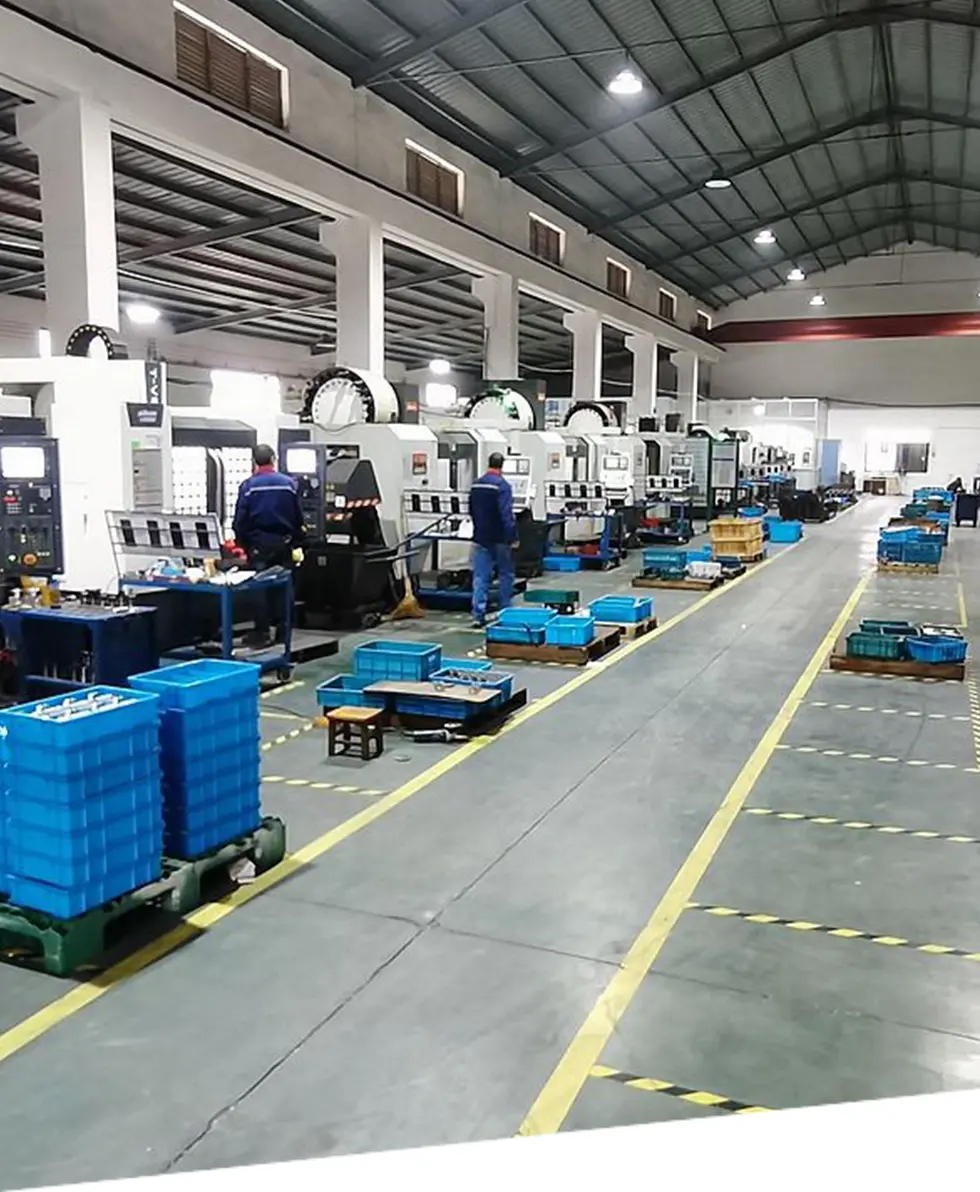
Optical housings demand complete material tracing and process stability. At Hongrui, our production environment is audited and certified to meet the world's most demanding quality frameworks.
We have invested a significant amount of money in quality control systems and our production environment. In 2020, we passed our first comprehensive quality system audit by SGS. In 2023, we formally obtained the "GB/T 19001-2016 / ISO 9001:2015" certification. In the same year, we also successfully passed the SGS company's environmental system audit.
Hongrui strictly implements all ISO directives, guaranteeing the product quality and customer satisfaction of our CNC machining services through meticulous management details. For 5W laser module housings, this ensures absolute orthogonality, concentricity of optical bores, and clean internal threading free from burrs that could compromise optical alignment.
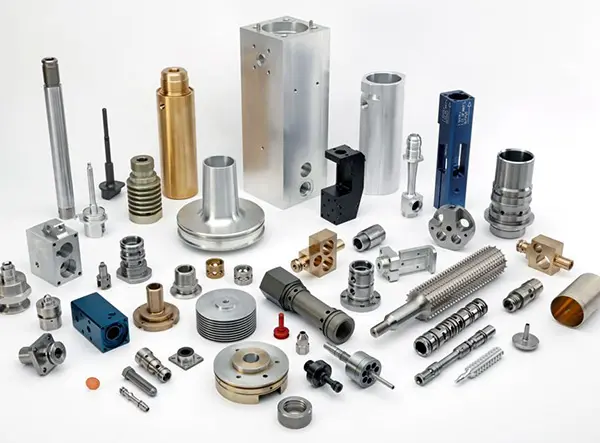
Our multi-axis production floor is engineered for high-accuracy components, providing global optical developers with reliable raw housing components and structural assemblies.
| Material Class | Common Alloys Used | Ideal Optomechanical Application | Surface Finishes Available |
|---|---|---|---|
| Alumimum Alloys | Al 6061-T6, Al 7075-T6 | High thermal dissipation outer sleeves, standard 5W module brackets | Type II/III Hard Anodizing, Sandblasting, Bead Blast |
| High Conductivity Copper | C11000, C10100 (OFHC) | Active diode submounts, primary micro-channel coolers | Electroless Nickel Plating, Gold Plating |
| Stainless Steel | SS 304, SS 316L, 17-4 PH | High-vacuum environments, heavy corrosive conditions | Passivation, Electro-polishing, PVD Coating |
| Refractory Metals & Titanium | Ti-6Al-4V, Tungsten Alloys | Aerospace-grade military modules, high structural strength | Polishing, Nitride Coating |
| Engineering Plastics | PEEK, Delrin (POM), PTFE | High-voltage electrical isolation barriers inside housings | Precision Deburring, Ultrasonic Clean |
As 5W laser modules transition from lab-scale assemblies to industrial deployment, procurement managers face unique supply chain challenges. Balancing volume pricing with consistent geometric tolerances is paramount.
Global technology integrators in the US, Europe, and Japan require suppliers who do not just ship optical components but provide robust supply chain integration. 5W systems are frequently deployed in harsh fields: automated agricultural sorting systems, automated high-speed circuit board cutting lines, aerospace LiDAR suites, and clinical surgery applications. Standard off-the-shelf housings often fail due to structural vibration or thermal stress, highlighting the necessity for custom-designed mechanical housings.
By partnering with a precision manufacturer like Hongrui, OEM suppliers can transition quickly from low-volume R&D prototyping to high-volume manufacturing. This streamlined engineering hand-off decreases time-to-market while ensuring that every batch of laser casings matches the original thermal and dimensional specifications.
What lies ahead for high-power semiconductor systems? The industry is shifting toward multi-wavelength beam combining, driver integration, and environmental hardening.
1. Intelligent Feedback Loops: Next-generation 5W modules are integrating optical photodiodes and real-time microcontroller units (MCUs) inside the structural housing. This allows for automated power leveling to maintain exactly 5,000mW of optical power regardless of diode aging.
2. Advanced Multi-Spectral Beam Combining: In order to reach 5W of single-mode focus, developers are combining multiple 1W and 2W blue laser diodes using polarized beam combiners. This requires complex internal spatial geometries that only 5-axis CNC machining centers can reliably cut.
3. Extreme Environment Stabilization: With military and space-borne LiDAR projects requesting 5W continuous outputs, components must withstand temperatures from -40°C to +85°C. Machined titanium alloy housings with nitrogen-filled glass sealing options are becoming standard.
A 5W laser is classified as a Class 4 laser system. Operating at these energy densities requires strict adherence to international safety protocols and manufacturing guidelines.
To be legally integrated into end-user medical or consumer products, 5W laser assemblies must comply with FDA CDRH 21 CFR 1040.10, CE Mark requirements, and the European RoHS directives. Housing designs must integrate interlock connections, protective shutters, and explicit optical path isolation.
Hongrui's adherence to GB/T 19001-2016 and ISO 9001:2015 ensures that our mechanical components prevent any light leaks, protect the electrical pathways, and provide reliable earthing paths. Our rigorous cleaning processes remove any traces of cutting fluid, preventing outgassing that could otherwise condense on the laser output window and destroy the optics when the beam is powered on.
Direct answers to the most common questions raised by procurement managers and optoelectronic integration engineers.
From multi-axis CNC milling centers to Swiss-precision lathe operations, we deliver high-reliability components to your exact specifications.
 Hongrui Model