Why modern heavy industries choose double helical profiles to eliminate axial load limits and optimize transmission torque density.
Herringbone gears, commercially described as double helical gears, represent the absolute zenith of precision gear engineering. Traditional helical gears, while operating with significantly reduced noise compared to spur gears, introduce a destructive challenge: axial thrust force along the gear shaft. This thrust forces engineers to spec heavy, friction-inducing thrust bearings that limit the ultimate efficiency of the transmission.
The Herringbone gear architecture elegantly solves this dilemma. By placing two opposite helical teeth tracks adjacent to each other in a clean 'V' shape, the axial thrust vectors are structurally canceled out. What remains is a pure, highly efficient radial torque pathway capable of handling extreme shock loads and massive rotational velocities without axial deflection.
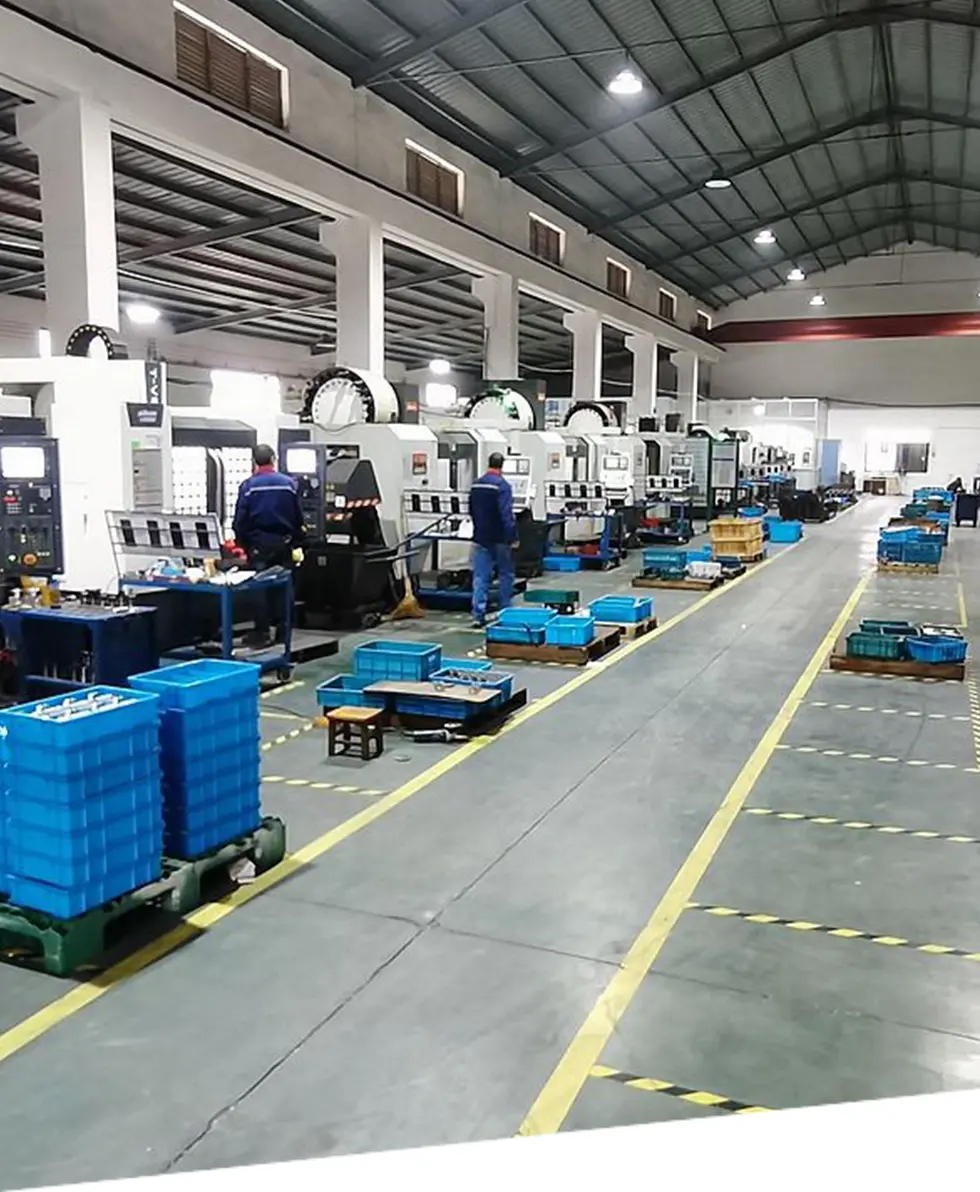
Leveraging state-of-the-art multi-axis CNC systems, sub-micron inspection, and global standard quality protocols.
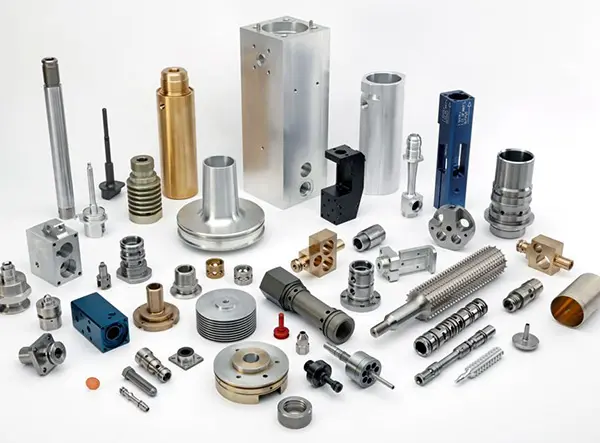
Established in 2019 with a registered capital of 5 million yuan and currently employing over 100 high-caliber engineers and technicians, Hongrui is recognized as one of the premier rapid prototyping and precision manufacturing companies in China. We specialize in high-efficiency, low-cost OEM CNC machining parts manufacturing across vital sectors, including automotive, medical, aerospace, communications, toy engineering, and deep industrial machinery.
Our quality assurance is validated by international auditing bodies. In 2020, we passed our comprehensive quality system audit by SGS Group, and in 2023, we obtained the official GB/T19001-2016 / ISO 9001:2015 certification. Hongrui strictly manages every phase of production, implementing detailed, clean-room management policies to guarantee outstanding product precision and consistent customer satisfaction.
Understanding structural performance demands of double helical systems under variable speeds and temperatures.
By processing advanced high-tensile steels and titanium alloys on vertical CNC grinding and high-precision EDM systems, we eliminate the structural runout typical of traditional single-axis gear generation. The result is a double helical system with complete surface contact integration, minimizing transmission noise by over 18dB compared to standard helical configurations.
| Material Profile | Tensile Strength (MPa) | Primary Industrial Use Cases | Optimized Heat Treatment | Machining Approach |
|---|---|---|---|---|
| Alloy Steel 18CrNiMo7-6 | 1200 - 1400 | Heavy Wind Turbines, Marine Propulsions | Gas Carburizing & Quenching (58-62 HRC) | 5-Axis CNC Milling & Profile Grinding |
| Stainless Steel 17-4 PH | 950 - 1100 | Offshore Oil Pumps, Corrosive Chemical Mixers | Solution Annealed & H900 Precipitation Hardening | High-Torque Hard Milling & EDM |
| Titanium Ti-6Al-4V (Grade 5) | 900 - 1050 | Aerospace Actuators, Defense Control Systems | Vacuum Stress Relieving | High-Speed Machining with Stabilized Coolant |
| Nickel Alloys (Inconel 718) | 1250 - 1375 | Gas Turbines, Cryogenic Engine Gearing | Age Hardening | Slow EDM & Custom CNC Milling |
| Carbon Steel 1045 / 42CrMo4 | 650 - 850 | Heavy Machinery, Industrial Conveyors, Toy Tooling | Induction Hardening on Teeth (50-55 HRC) | Cost-Effective High-Speed Lathe Turning |
Exploring the next structural developments in modern transmission engineering and smart production ecosystems.
Eliminating the traditional relief groove at the center intersection of double helical gears. By using advanced multi-axis CNC grinding and software-controlled tool paths, modern suppliers can create smooth, continuous gear apexes to maximize effective face width and contact ratio.
Transitioning from massive, heat-deforming batch carburizing ovens to specialized, robotically guided laser surface hardening. This allows precise hardening of the gear flanks while keeping the core highly ductile, preventing thermal warping and tooth misalignment.
Combining the absolute speed of 3D metal printing with the precision of five-axis CNC subtraction. This approach enables rapid prototyping of massive gear hubs followed by exact micron-level finishing of the gear profiles, lowering raw material waste by 60%.
Analyzing how double helical gears serve mission-critical environments in dynamic regional industrial sectors.
High-torque multi-stage compressors in Texas and Alberta rely heavily on herringbone systems. Operating under high pressures with minimal downtime, these gears prevent axial load transfer back to gas turbines, lowering structural wear and operational failures.
Offshore vessels and wind turbine gearboxes demand robust corrosion resistance and high torque density. Utilizing double helical structures made of specialized marine grade steels allows seamless power transmission with low vibration in extreme weather.
The massive rock crushing and grinding mills in Western Australia generate extreme vibration and dust. Sealed herringbone gear systems provide the tooth contact area needed to absorb continuous physical shocks without cracking or alignment loss.
How Dongguan Hongrui integrates specialized production networks to deliver reliable mechanical solutions worldwide.
Dongguan's manufacturing region offers a highly integrated raw material and precision engineering hub. When sourcing double helical and herringbone components from Dongguan Hongrui, you access a dynamic ecosystem that optimizes lead times and ensures structural reliability:
We combine advanced physical checks with meticulous material documentation for every production batch. All gear sets undergo three-dimensional Coordinate Measuring Machine (CMM) testing to confirm the apex alignment of the herringbone profiles is accurate to ±0.005mm.
Furthermore, all metallurgical batches are supplied with complete raw material traceability certificates and SGS system reports, giving overseas engineering procurement teams confidence in product performance and compliance.
How our engineering team ensures direct technical assistance and matches international certifications for worry-free sourcing.
Our manufacturing practices are fully compliant with ISO 9001:2015. Our processes are regularly audited by SGS to verify our material traceability, gear inspection systems, and calibration procedures meet international standards.
Every dynamic gear undergoes non-destructive testing (NDT), including magnetic particle testing (MT) and ultrasonic testing (UT). This verifies that the critical tooth root area of the herringbone gear is free of internal structural micro-fissures.
Our bilingual design engineers are ready to assist with design-for-manufacturability (DFM) support, ensuring proper clearances, tooth profiles, and spline interfaces for seamless assembly.
Addressing key engineering considerations, manufacturing challenges, and alignment techniques for double helical gearing systems.
Standard helical gears generate a continuous axial force during rotation that must be absorbed by thrust bearings. Herringbone gears (double helical gears) utilize a dual-angle tooth structure that cancels out these axial forces internally. This eliminates the need for expensive thrust bearings, reducing mechanical friction and boosting system efficiency.
The main difficulty lies in aligning the apex where the two helical tooth tracks meet. Even minor alignment errors between the left- and right-hand helix leads can cause concentrated load zones, faster wear, and localized fatigue. Correcting this requires multi-axis CNC machines and precise profile grinding to hold tolerances within ±0.005mm.
Our advanced multi-axis CNC systems enable us to maintain tight tolerances down to ±0.0002 inches (±0.005 mm). These precise limits are crucial for critical high-speed transmissions, ensuring smooth tooth engagement, low noise, and minimal back-and-forth movement.
For highly demanding industrial environments, we recommend 18CrNiMo7-6 or 42CrMo4 alloy steel, treated with gas carburizing and quenching to 58-62 HRC. For applications requiring lightweight components or corrosion resistance, Titanium Ti-6Al-4V or precipitation-hardening stainless steels like 17-4 PH are excellent options.
The center groove provides a clear exit path for the cutter or grinding wheel during manufacturing. While it makes production easier, it slightly reduces the overall contact area. Continuous herringbone gears (without the center groove) maximize tooth contact surface, but they require advanced 5-axis CNC machining to execute correctly.
 Hongrui Model