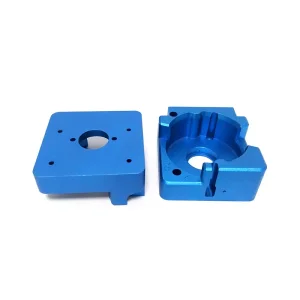
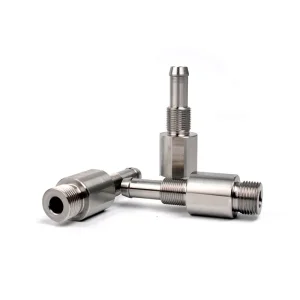
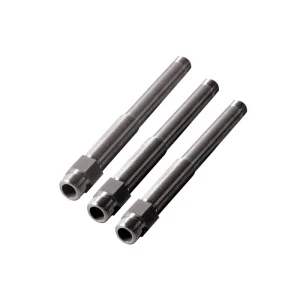
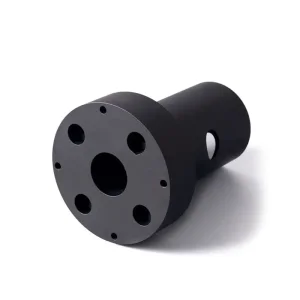
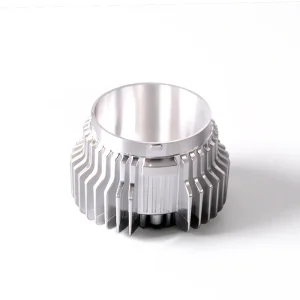
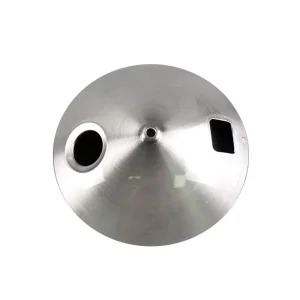
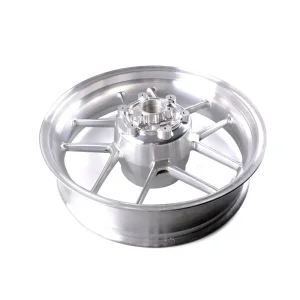
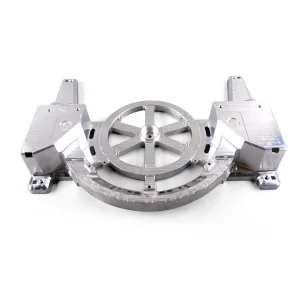
Explore our engineering capabilities across advanced manufacturing, surface finishing, and multi-axis CNC systems.
Understanding the shear calculations, physics, and design criteria that govern fine-pitch metric threads in heavy-duty assemblies.
In high-load mechanical assemblies, the choice of fastening pitch is critical. An M10 x 1.25 nut features a nominal outer diameter of 10mm combined with a fine pitch of 1.25mm per thread rotation. This contrasts with the standard coarse pitch (M10 x 1.5). By specifying a finer 1.25mm pitch, engineers achieve a significantly higher shear area, superior tensile resistance, and a decreased tendency to self-loosen under rigorous dynamic vibrations.
This structural property is key in automotive suspension linkages, steering gear assemblies, and aerospace structural mounts. Fine threads present a lower helix angle, meaning they require lower torque to generate identical clamping force compared to coarse threads, while providing greater precision in displacement adjustment. The following technical specifications outline the key differences between the M10x1.25 fine thread system and the standard M10x1.5 system:
| Thread Dimension Metric | Thread Pitch (mm) | Major Diameter (mm) | Minor Diameter (Nut) | Thread Tensile Stress Area (mm²) | Recommended Preload Torque (Nm / Class 10.9) |
|---|---|---|---|---|---|
| M10 x 1.25 (Fine) | 1.25 | 10.00 | 8.647 | 61.2 | 65 - 72 |
| M10 x 1.50 (Coarse) | 1.50 | 10.00 | 8.376 | 58.0 | 55 - 61 |
The mathematical formulation for the shear area of internal threads confirms that a decrease in pitch directly raises the depth-to-pitch ratio, preserving thread root thickness and maximizing cross-sectional loading capacity. As a premier M10 1.25 nuts factory, we manufacture fasteners conforming strictly to DIN 934, ISO 4032, and customized OEM specifications to support precise assembly demands worldwide.
The low helix angle converts torque to axial preload more efficiently, ensuring high-strength joint integrity under heavy static loads.
Perfect for engine mounts and reciprocating machines where high vibrational loads compromise standard coarse-threaded fasteners.
Provides critical tuning capability in steering systems, instrument calibrations, and industrial automation components.
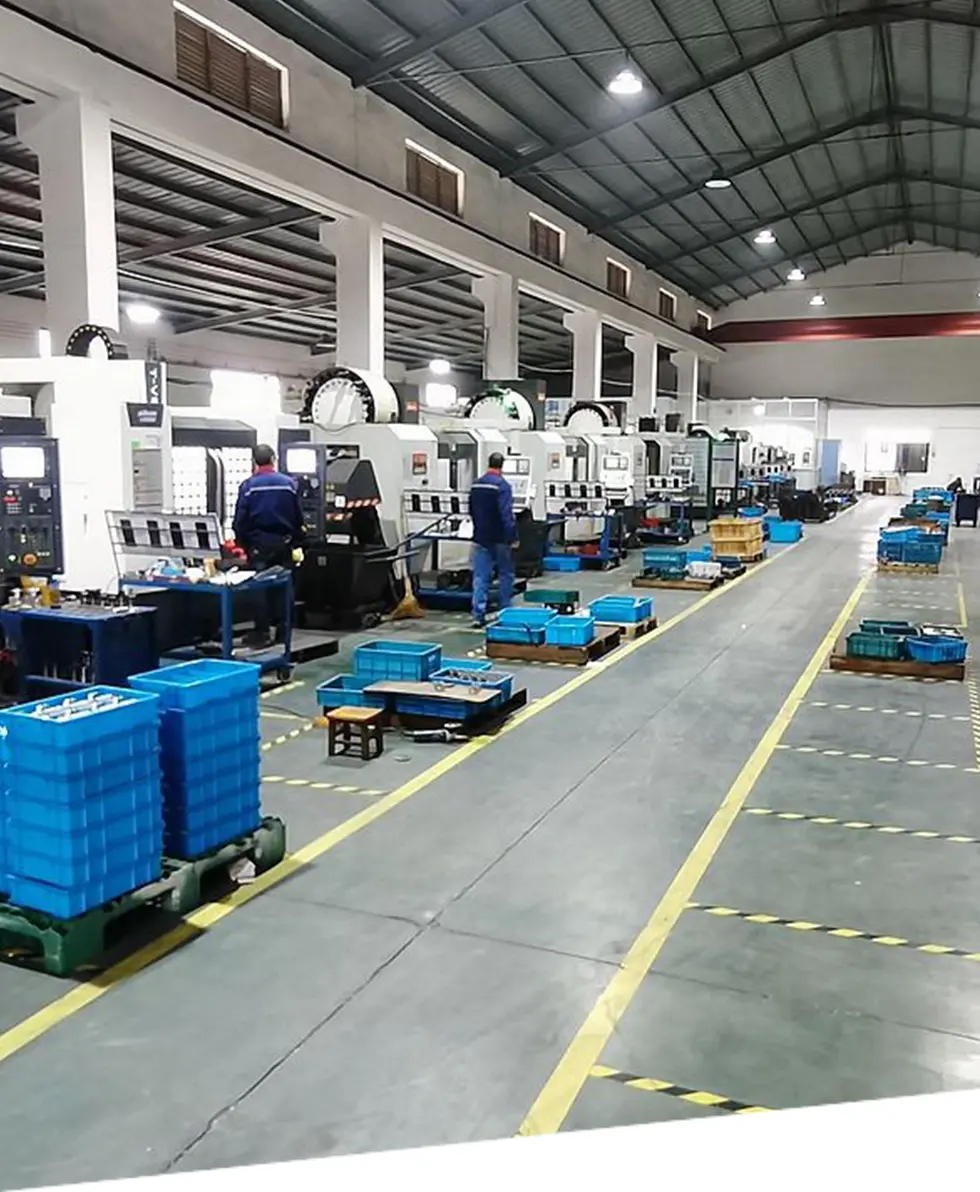
Founded in 2019 with a registered capital of 5 million yuan and boasting a highly skilled workforce of over 100 professionals, Hongrui stands as a premier manufacturer of custom precision components and CNC machining parts in China. We operate a highly modern production facility specializing in cost-efficient, high-precision OEM fastener engineering and complex part manufacturing.
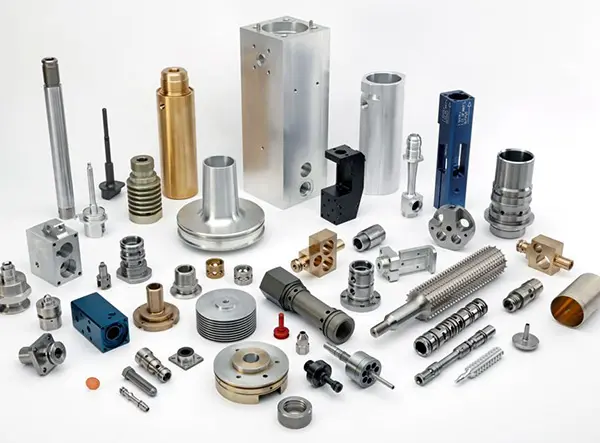
Our infrastructure includes 50 high-end CNC machine tools ranging from vertical, horizontal, three-axis, four-axis, to five-axis CNC machining centers. This robust configuration allows us to significantly optimize delivery times while keeping production tolerances to an ultra-precise ±0.0002 inches (±0.005 mm).
Examining supply chains, materials compliance, and commercial fastener availability across global industrial sectors.
The global fastener industry is shifting rapidly toward customized, high-performance alloys and micro-pitch specifications. As global manufacturing scales, standard off-the-shelf fasteners often fall short of modern engineering requirements. The demand for specialized components, like high-tensile strength M10 1.25 locking nuts, is accelerating due to the rapid growth of Electric Vehicles (EVs), next-generation aerospace components, and automation systems.
In response to these trends, our facility employs advanced materials engineering to supply nuts and bolts designed to survive intense thermal cycles and corrosive exposures. We manage raw material supply chains to secure premium materials—such as high-grade SUS304/SUS316 stainless steels, grade 10.9 and 12.9 carbon steels, and lightweight Ti-6Al-4V titanium alloys. By optimizing internal CNC turning, tapping, and grinding operations, we eliminate structural thread defects and deliver consistent batch quality to our international buyers.
Our fasteners are manufactured in strict compliance with RoHS and REACH regulations, facilitating seamless import processes for European and North American manufacturing hubs.
We work with international logistics networks to support JIT manufacturing models, reducing warehousing expenses for our global OEMs.
Raw material integrity is verified using optical emission spectrometers and PMD testing equipment before moving to production.
Where precision engineering meets real-world mechanical and environmental challenges.
Within high-performance vehicles, engine mounting components, transmission housings, and suspension control arms depend on M10 1.25 nuts. Their fine threads resist loosening caused by engine frequencies and road vibrations. The micro-pitch prevents losing torque, ensuring critical structural elements remain secure.
Modern industrial robotic joints require extreme spatial precision and backlash prevention. Fine-threaded fasteners are ideal for calibrating actuator tension and linking end-effectors, helping secure mechanical assemblies and preserve structural tolerances over millions of repetitions.
Inside heavy CNC routers and lathes, spindle mounts and ball screw brackets experience continuous directional reversals. Fine pitch nuts are essential in these configurations to maintain assembly rigidity, directly supporting the tight tolerances required in precision parts manufacturing.
From solar tracker linkages to wind turbine hub fittings, outdoor installations require reliable fasteners that withstand thermal expansion and contraction. Using specialized surface finishes (such as zinc-nickel plating or hot-dip galvanization) on our M10 1.25 nuts prevents galvanic corrosion in harsh environments.
How automation and environmental standards are shaping the next generation of industrial fastening technologies.
The fastener industry is evolving beyond basic mechanical components. At Dongguan Hongrui Model Technology Co., Ltd., we are actively tracking development directions in industry standards. Our engineering roadmap includes plans for the integration of smart sensor washers that monitor clamp load in real time, as well as the adoptation of green metallurgical processes to lower the carbon footprint of high-tensile fasteners.
We are also advancing our tooling capabilities to machine advanced lightweight materials like titanium composites and aerospace-grade superalloys. Our 5-axis CNC machining centers enable the production of custom nuts with complex geometries, specialized flanges, and internal locking features, providing high performance for critical assemblies.
Get professional insights from our leading mechanical engineers on thread selections, torque targets, and manufacturing specs.
An M10 x 1.25 nut features a finer thread pitch than the standard M10 x 1.5 coarse configuration. The primary engineering benefit is a larger minor diameter, which increases the thread shear area. Additionally, the shallower helix angle of the fine thread produces greater resistance to vibrational loosening and allows for more precise tension adjustments in critical load paths.
For chemical and marine environments, we recommend Grade 316 stainless steel (SUS316) due to its high resistance to chlorides and pitting. Titanium alloys like Ti-6Al-4V are also excellent lightweight, high-strength alternatives. If carbon steels are preferred, applying high-performance coatings like zinc-nickel plating or hot-dip galvanizing helps protect the fastener from environmental degradation.
We achieve high precision by utilizing modern CNC turning and machining centers, maintaining strict temperature controls on our shop floor, and implementing rigorous quality management system (QMS) workflows. Our ISO 9001:2015 certified process relies on optical sorting machines, coordinate measuring machines (CMM), and regular thread gauge calibrations to ensure tight tolerance control.
Yes, Hongrui specializes in rapid prototyping and custom low-volume production. Whether you require standard hex nuts, self-locking nylon insert nuts, flange nuts, or custom components with non-standard pitches, our team can engineer prototypes to your exact specifications.
We provide a wide range of surface treatments including anodizing, sandblasting, black oxide, zinc plating (yellow, clear, black), nickel plating, passivation, electropolishing, and thermal heat treatment. These finishes are designed to enhance wear resistance, prevent rust, and meet aesthetic preferences.
Lead times depend on the complexity and volume of the order. Prototyping jobs can often be shipped in 3 to 7 working days, while bulk OEM production runs typically require 15 to 25 days. Our 50 CNC machine tools give us the flexibility to adjust production schedules and support urgent delivery requirements.
A comprehensive overview of our equipment, machining centers, and custom manufacturing processes.
 Hongrui Model