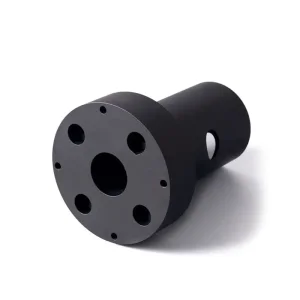
ODM Colloid Mill Supplier & Factory

Next-Generation Ultra-Precise Stator & Rotor Engineering, High-Shear Emulsification Technologies, and Advanced Industry 4.0 Contract Manufacturing Solutions for Global Process Industries.

Featured High-Precision Engineered Products

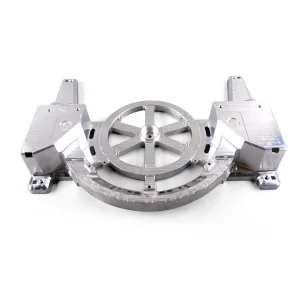
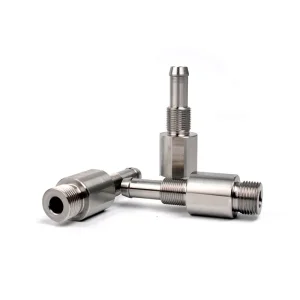
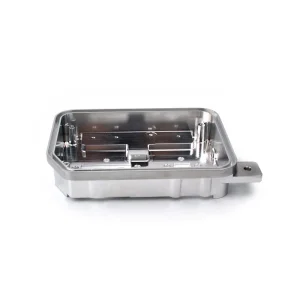
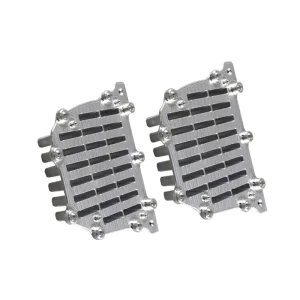
Premium OEM/ODM manufacturing capability covering advanced CNC components, rapid prototyping systems, and high-tolerance industrial tooling.
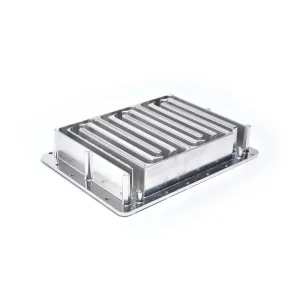
Advanced EDM Machining

High-Quality Advanced EDM Machining Technology

View Technical Specifications →
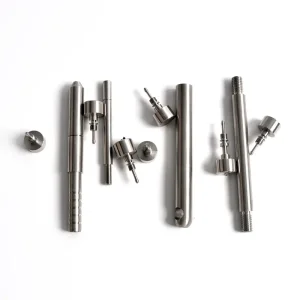
Swiss Precision Lathe

High-Quality Machining Operations Swiss Precision Lathe

View Technical Specifications →
CNC Boring Machine

Custom Dynamic-Image CNC Boring Machine

View Technical Specifications →
CNC Turning Services

Custom Precision CNC Turning Services

View Technical Specifications →
CNC Milling Machine

Custom Precision CNC Milling Machine for High-Quality Manufacturing

View Technical Specifications →
CNC Planing System

ODM Precision CNC Planing System for High-Accuracy Machining

View Technical Specifications →
Rapid Prototyping System

Custom Rapid Prototyping System for Efficient Product Development

View Technical Specifications →
5-Axis Machining Center

ODM High-Precision 5-Axis Machining Center

View Technical Specifications →

Colloid Mill Physics & Fluid Dynamics: An Engineering Overview

Deciphering the mechanical parameters that govern particle size reduction, homogenization, and phase dispersion in industrial production.

A Colloid Mill is a highly specialized piece of fluid processing machinery designed to carry out grinding, dispersion, emulsification, and homogenization of liquid and highly viscous semi-liquid mixtures. By utilizing a high-speed rotational mechanism, colloid mills operate on the physical principle of hydraulic shear, pressure differential, and mechanical friction. The liquid product is driven through an extremely narrow adjustable gap between a stationary stator and a rapidly spinning rotor (often operating at speeds between 2,800 to 6,000 RPM).

Mechanics of Particle Reduction:

As materials enter the milling head, they are subjected to intense centrifugal forces, fluid shear stress, and high-frequency hydraulic friction. The mechanical shear force ($F_s$) generated in the gap is inversely proportional to the width of the gap ($h$) and directly proportional to the peripheral velocity ($v$) of the rotor: $F_s \propto v/h$. Achieving perfect micro-fluidizing and structural uniformity requires a dynamic balance that only sub-micron tolerances can guarantee.

For demanding applications such as pharmaceutical nano-suspensions, chemical polymers, and sub-micron cosmetics, standard off-the-shelf colloid mills often fall short. This is where ODM (Original Design Manufacturer) services become pivotal. By customizing the geometry of the milling teeth, utilizing advanced alloys, and machining to ultra-tight mechanical tolerances, ODM suppliers provide tailored equipment designed to achieve optimal particle sizes (down to 2-5 microns) and stable emulsifications without thermal degradation of the raw materials.
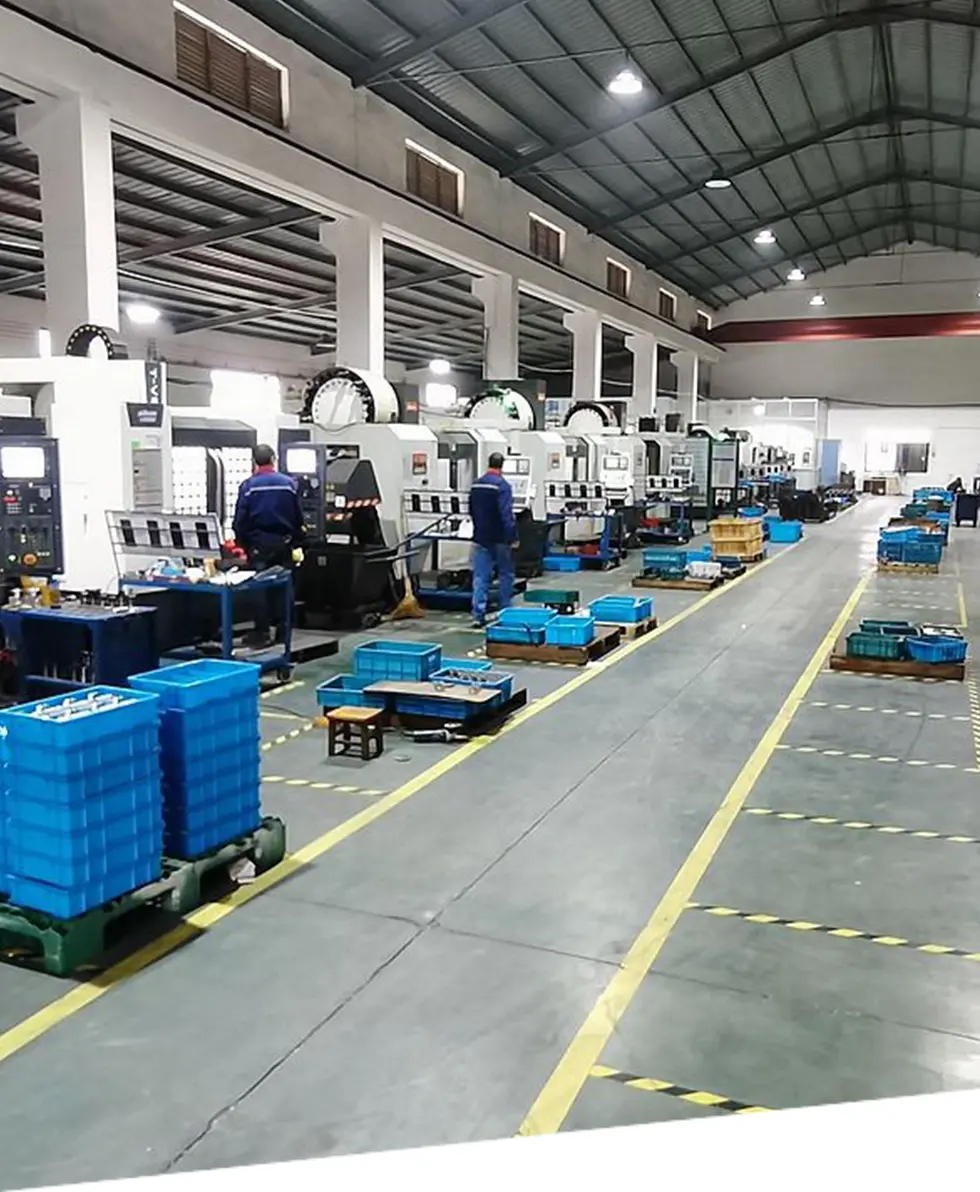
Hongrui Precision Prototyping Facility

Colloid Mill Engineering Trends & Global Market Drivers

Analysing technological disruptions: from aseptic designs to IoT-enabled precision maintenance in fluid processing.

🧪

Hygienic CIP/SIP Automation

Modern process lines demand zero-downtime cleaning. Next-generation colloid mills integrate Clean-In-Place (CIP) and Sterilize-In-Place (SIP) paths, eliminating the need to dismantle the rotor-stator assembly for sanitization. The focus is on seamless mechanical seal designs and FDA/USP Class VI compliant elastomers.

⚙️

Advanced Tribological Metallurgy

To process abrasive slurries or corrosive chemical mixtures, factories require rotor and stator designs using high-wear duplex stainless steel, tungsten carbide inserts, or Stellite coatings. These advanced materials prolong component life up to 400% under high-pressure friction compared to standard SUS304/SUS316 alloys.

📱

Smart Sensing & IoT Integration

Industrial IoT has entered high-shear fluid engineering. Dynamic gap sensors, stator temperature thermocouples, and structural vibration analyzers transmit real-time telemetry to automated PLC boards, detecting cavitation or thermal peaks before mechanical failure can occur.

About Our Company: Dongguan Hongrui Model Technology Co., Ltd.

A Premier Industrial ODM Manufacturing Partner Specializing in Precision Rapid Prototyping and Complex CNC Mechanical Subassemblies.
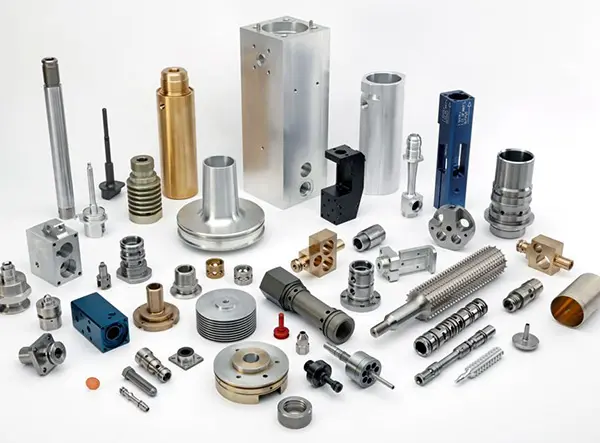
Hongrui Precision CNC Machining Workshop

about our company

Hongrui is one of the top rapid prototyping companies in China.

Dongguan Hongrui Model Technology Co., Ltd. was established in 2019 with a registered capital of 5 million yuan and currently employs over 100 people. We are one of the best rapid prototyping companies in China, specializing in low-cost OEM CNC machining parts manufacturing. Our products are mainly used in industries such as automotive, medical, electronic, aerospace, machinery, communications, toys, and smart devices.

Quality Assurance of Hongrui Precision Parts Manufacturing Factory:

We have invested a significant amount of money in quality and production environment. In 2020, we passed the quality system audit by SGS company, and in 2023, we obtained the "GB/T19001-2016 ISO 9001:2015" certificate. In the same year, we also successfully passed the SGS company's environmental system audit. Hongrui strictly implements the provisions of ISO, guaranteeing the product quality and customer satisfaction of CNC machining through meticulous management details.

50+

CNC Machines

±0.005mm

Optimal Tolerance

100+

Skilled Operators

ISO 9001

Certified Quality

Production Capacity Of Precision Parts Machining Manufacturer

  • Hongrui has a total of 50 CNC machine tools, including vertical, horizontal, three-axis, four-axis, and five-axis CNC machine tools, which can significantly shorten delivery time. The optimal tolerance can be controlled within ±0.0002 inches and ±0.005 mm, making it suitable for manufacturing OEM parts.
    Our CNC machining capabilities cover a variety of materials such as aluminum, stainless steel, copper, nickel, cobalt, tungsten, titanium and various plastic parts. In addition to CNC machining, we also offer grinding, milling, turning, deburring, drilling and other services, as well as a variety of surface treatments including rust removal, tapping, sandblasting, polishing, vibration finishing, pressure testing, cleaning and assembly.

China Industry 4.0: Achieving Supply Chain Resilience and Efficiency

How modern Chinese industrial manufacturing hubs guarantee supply chain integrity and absolute dimensional fidelity for critical processing hardware.

The industrial landscape for fluid processing and colloidal machinery has evolved from basic steel casting to complex multi-axis CNC manufacturing under the Industry 4.0 framework. As global procurement agents demand faster lead times, robust environmental compliance, and consistent traceabilities, Chinese advanced engineering sectors have positioned themselves as the benchmark for resilient supply chains.

By using localized high-tech clusters in Dongguan, factories like Dongguan Hongrui Model Technology Co., Ltd. can offer highly integrated manufacturing ecosystems. From high-grade raw alloy sourcing (titanium, cobalt, tungsten carbide) to advanced five-axis simultaneous machining and state-of-the-art anodizing or heat-treating processes—every step is audited under strict ISO guidelines. This centralization dramatically reduces logistics-related bottlenecks and guarantees high structural component yield rates.

Precision Direct Advantages:

1. Ultra-Precise Dynamic Balancing: Rotors spinning at 6000 RPM must maintain strict dimensional alignment. With tolerances down to ±0.005mm, Hongrui prevents rotor-stator contact, minimizing wear and eliminating costly product contamination.
2. High-Tech Surface Finishes: Advanced anodizing, sandblasting, and vibration finishing are carried out in-house, creating fluid channels with low friction coefficients (Ra < 0.4 microns) to avoid residue build-up.

Furthermore, China's resilient supply chain leverages continuous capital reinvestment. Access to massive domestic metal refineries ensures that even during global raw material shortages, high-strength structural alloys (such as SUS316L, duplex steels, and tungsten alloys) remain readily accessible. For overseas procurement agents, this means stable pricing, predictable scheduling, and highly reliable project delivery windows.

For custom ODM Colloid Mill components, having a partner capable of executing rapid prototyping at scale is invaluable. Our capability to machine dynamic shapes, conduct precision boring, and execute rapid multi-axis milling ensures that complex stator layouts (from standard slotted gears to cross-cut shear channels) move seamlessly from digital CAD mockups to tested, physical production elements.

Localized Industrial Applications of Custom Colloid Mills

Exploring specialized process geometries and high-shear configurations across diverse global manufacturing sectors.

🍞

Food & Beverage Homogenization

Primary Use Cases: Processing peanut butter, high-stability almond milk, mayonnaises, soy drinks, chocolate pastes, and fruit juice concentrates. Standard configurations require mirror-polished SUS316L housings and specialized double-lip mechanical seals with continuous food-grade flushing to comply with FDA hygiene standards.

💊

Pharmaceutical & Biomedical Processing

Primary Use Cases: Ointments, active drug micro-suspensions, nutrient liposomes, high-stability vaccines, and sterile emulsions. Precision here is non-negotiable: milling chambers must have zero dead-space, be capable of complete draining, and operate at strict temperatures using thermal jackets.

🧪

Chemical & Industrial Dispersions

Primary Use Cases: Asphalt emulsions, industrial paints, lithium battery slurries, lubricating greases, and polymer emulsions. These demanding fields require stator/rotor components constructed from abrasion-resistant alloys like cobalt or tungsten carbide, coupled with robust explosion-proof ATEX motor systems.

Technical Knowledge Base & Industrial FAQs

Crucial operational guidelines, maintenance strategies, and component customization metrics compiled by our lead fluid dynamics and CNC engineers.

Q1: What are the primary advantages of an ODM customized colloid mill compared to standard off-the-shelf units?
An ODM-customized colloid mill allows for precise engineering of the milling chamber geometry, stator/rotor groove profiles, and materials to match your target viscosity and abrasive profile. Off-the-shelf units often suffer from premature wear or incomplete shearing when processing non-standard viscosities. ODM designs optimize motor horsepower, torque curves, and mechanical tolerances (down to ±0.005mm) to achieve optimal particle size distributions with minimal energy consumption.
Q2: How does the dynamic tolerance of the stator and rotor affect processing efficiency?
The shear gap in a high-shear colloid mill typically ranges from 0.05mm to 1.5mm. At high speeds (up to 6,000 RPM), any run-out or dynamic imbalance will cause rotor-stator contact, leading to catastrophic equipment failure or metal contamination in the product. By machining these parts on state-of-the-art five-axis CNC equipment with tolerances within ±0.0002 inches (±0.005mm), we guarantee precise, consistent shear rates across the entire surface area, protecting mechanical components and improving quality.
Q3: Which materials are best suited for processing corrosive or highly abrasive fluids?
For highly abrasive slurries (e.g., mineral suspensions, paint pastes, pigments), standard stainless steels like SUS304 wear down quickly. We recommend utilizing stators and rotors made of Duplex Stainless Steel (like SAF 2205) or solid Titanium. For high-wear applications, we can integrate Tungsten Carbide or Cobalt alloy tips into the grinding teeth, extending operational life under load.
Q4: Why is dynamic balancing crucial for colloid mills, and how does Hongrui ensure it?
Even minor mass offsets at high rotational velocities generate significant centrifugal force, resulting in structural vibration, seal leakage, and bearings failure. We utilize precision CNC grinding and digital dynamic balancing equipment to check and adjust every rotor assembly. This meticulous testing guarantees vibration amplitudes stay well below ISO 10816 standards, ensuring long-term operational stability.
Q5: What role do cooling jackets play in preventing thermal degradation of processed materials?
High-shear milling generates substantial mechanical friction, which converts directly into heat energy. This temperature rise can damage heat-sensitive products like active pharmaceutical ingredients, proteins, or cosmetics. Our customized ODM colloid mills can be designed with integrated double-walled cooling jackets around both the milling chamber and the stator housing, allowing for continuous water cooling to maintain processing temperatures below critical thresholds.
Q6: Can Hongrui machine complex custom tooth patterns on stator and rotor assemblies?
Yes. Thanks to our fleet of 50 advanced CNC machine tools (including 3-axis, 4-axis, and 5-axis vertical and horizontal centers), we can machine highly complex stator/rotor patterns. Whether your process requires linear grooves, cross-hatched serrations, spiral flight patterns, or multi-stage tooth configurations, our precise tooling capabilities ensure high-fidelity execution of your CAD designs.
Q7: What quality control and certifications does Hongrui provide?
Quality is central to our manufacturing process. Hongrui operates in strict accordance with ISO 9001:2015 standards, and our facility has passed extensive environmental and quality audits by SGS. We utilize advanced coordinate measuring machines (CMM), surface roughness testers, and digital micrometers to verify that every critical dimension conforms to specifications, providing complete material traceability and inspection reports for every batch.
Q8: How do we initiate a custom manufacturing project for Colloid Mill parts with Hongrui?
The process begins with submitting your technical drawings (STEP, IGES, or DWG files) and material requirements. Our engineering team reviews the geometry for manufacturability (DFM) and provides an optimized quotation. Once authorized, we use our rapid prototyping systems to manufacture a pilot batch, which undergoes rigorous dimensional verification before proceeding to volume production.

Advanced Machining Portfolio & Solutions

Explore our complete manufacturing ecosystem, from dynamic multi-axis machining systems to advanced metal finishing services.
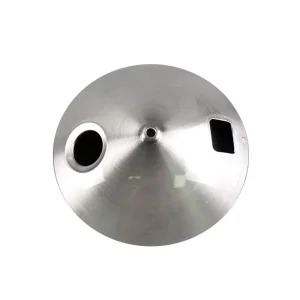
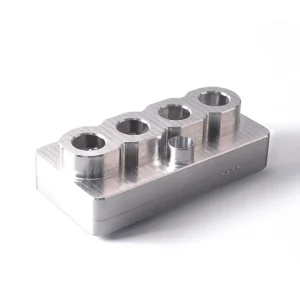
CNC Planing System

ODM Precision CNC Planing System for High-Accuracy Machining

View Technical Specifications →
Rapid Prototyping System

Custom Rapid Prototyping System for Efficient Product Development

View Technical Specifications →
5-Axis Machining Center

ODM High-Precision 5-Axis Machining Center

View Technical Specifications →
CNC Grinding Machine

ODM Precision Parts Manufacturing CNC Grinding Machine

View Technical Specifications →
CNC Drilling System

Custom CNC Drilling System for Efficient Manufacturing

View Technical Specifications →
CNC Slotting Solutions

ODM Precision CNC Slotting Solutions for Component Manufacturing

View Technical Specifications →
CNC Cleaning Scrub

High-Quality Professional-grade CNC Cleaning Scrub

View Technical Specifications →
Advanced Anodizing Solutions

High-Quality Advanced Anodizing Solutions for Metal Finishing

View Technical Specifications →