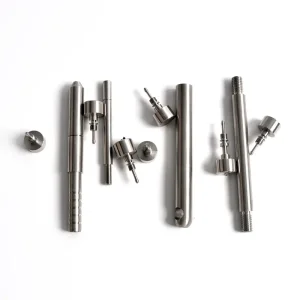
A comprehensive analysis of manufacturing architectures, mechanical tolerances, global market drivers, and structural integration requirements.
The global demand for high-precision, low-footprint laser systems has positioned the 60W CO2 laser as the optimal threshold for versatile material processing. Balancing cutting performance with structural thermal stability, 60W laser heads are the cornerstone of light-industrial cutters, medical surgical equipment, packaging engraving lines, and aerospace marking platforms. However, sourcing a robust system demands more than evaluating the glass or RF tube itself; it requires deep scrutiny of the structural mechanics, chassis design, optical alignment rigs, and motion gantry stability.
For system integrators, securing an ODM Laser Co2 60w Manufacturer is critical to guarantee component alignment and mechanical longevity. A laser beam's beam delivery system is highly sensitive to external vibrations and thermal shifts. Minor deflections in optical mounts can result in kerf deviations, beam divergence, and drastic power drops. Consequently, advanced ODM manufacturers must combine laser physics capabilities with state-of-the-art precision CNC machining and rigorous quality assurance frameworks to build reliable, high-performance laser assemblies.
Analyzing procurement requirements, global compliance standards, and supply chain pressures for CO2 laser integration.
Procurement teams demand robust supply networks. Having a manufacturing partner with combined vertical capabilities—handling raw material extrusion, high-tolerance CNC milling, anodizing, and final clean-room assembly—greatly reduces lead times and structural defects.
Global operations require compliance with CDRH (FDA) Class 4 laser safety regulations, CE markings, RoHS, and local electrical regulations. Systems must feature structural interlock circuits, mechanical beam shutters, and high-efficiency exhaust ports.
Procurement prioritizes component durability. Glass CO2 laser tubes have high cost-efficiencies but limited lifespans (typically 3,000–10,000 hours). RF-excited metal tubes offer 20,000+ hours with consistent spot size stability, shifting the initial CAPEX into long-term OPEX savings.
A premier tier-one manufacturing partner delivering custom rapid prototyping, high-capacity precision CNC machining, and system assembly.
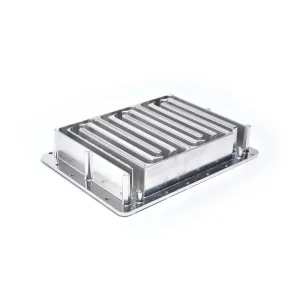
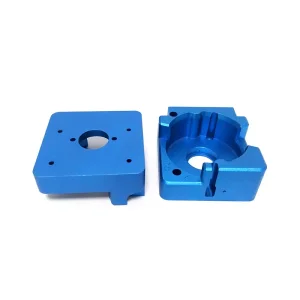
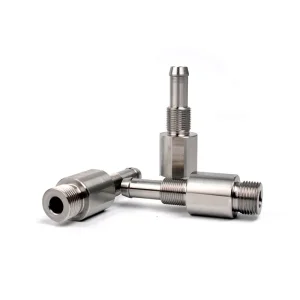
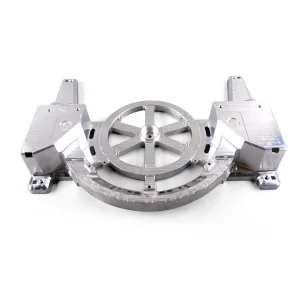
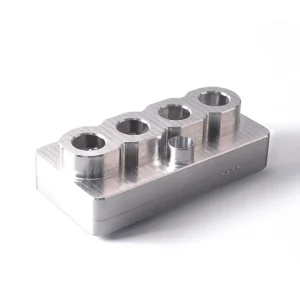
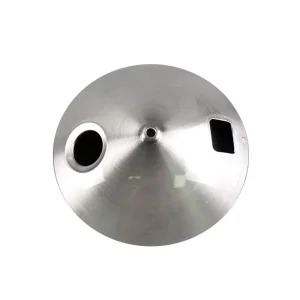
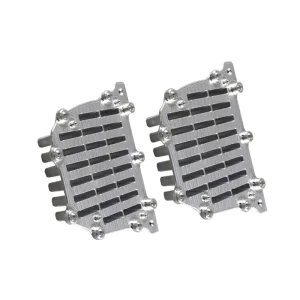
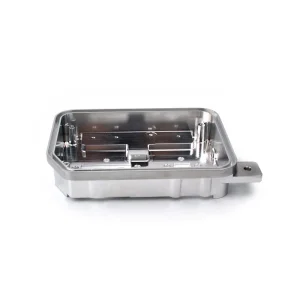
Established in 2019 with a registered capital of 5 million yuan, Dongguan Hongrui Model Technology Co., Ltd. has grown into one of China's top-tier rapid prototyping and precision manufacturing companies. Spanning automotive, medical, aerospace, electronics, machinery, and smart devices, Hongrui specializes in high-tolerance, low-cost OEM CNC machining parts manufacturing. We are dedicated to providing the mechanical backbone—such as chassis structures, linear guide mounts, and optical mirror brackets—required for heavy-duty commercial CO2 laser setups.
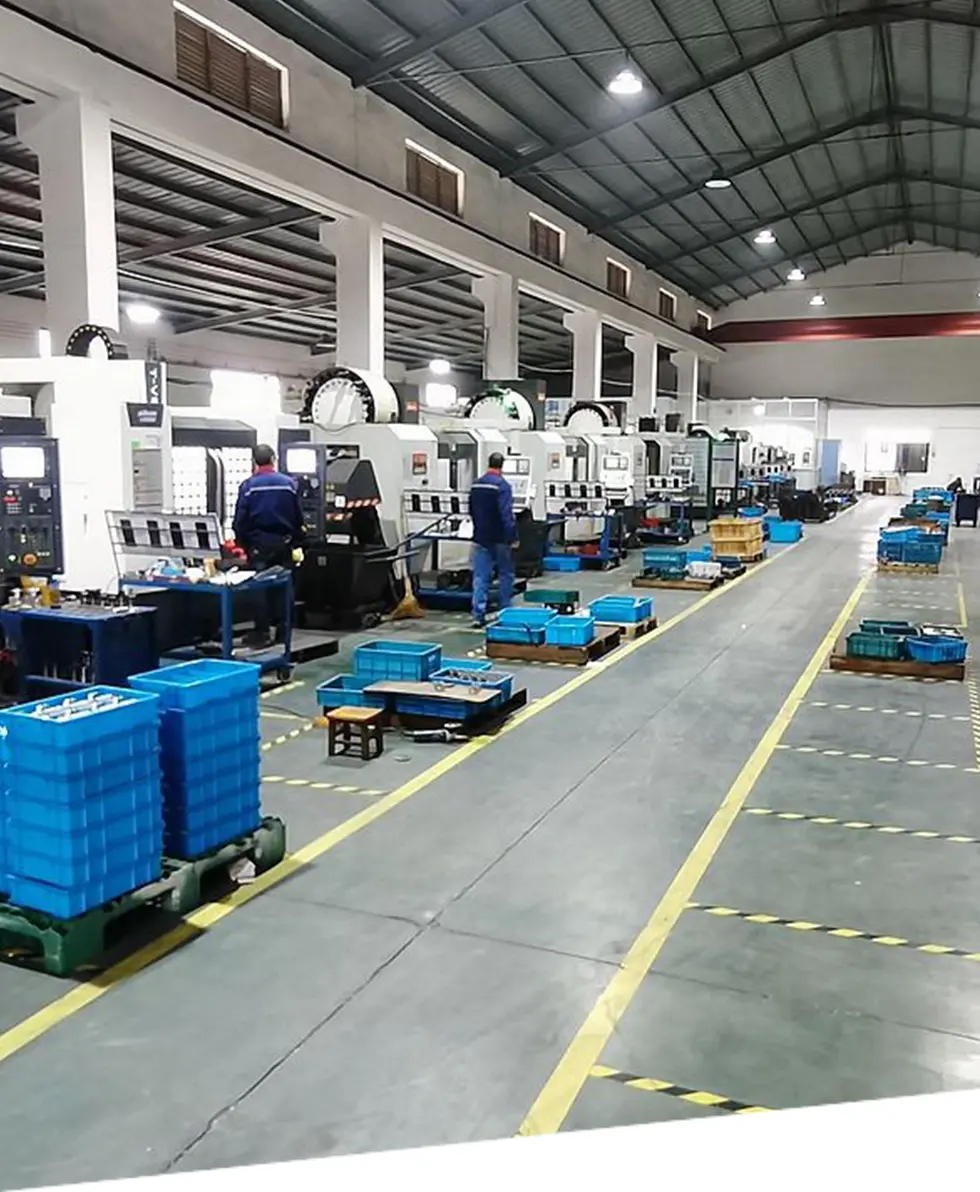
With an investment of over 100 high-grade tools and machinery, our capability covers multi-axis systems, including vertical, horizontal, three-axis, four-axis, and five-axis CNC machine tools. This fleet enables us to significantly compress production lead times while holding tolerances within a strict ±0.0002 inches (±0.005 mm) range. Whether you are engineering customized cooling manifolds for high-power laser tubes or dynamic optical positioning frames, our engineering department ensures every detail matches your CAD configurations.
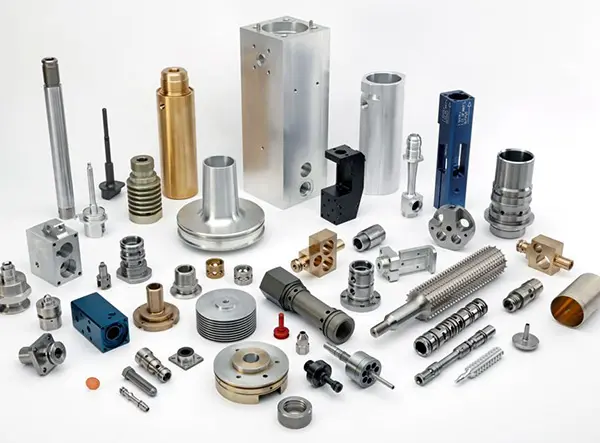
Our raw material supply and processing lines support a massive variety of metals and engineering plastics, allowing us to build parts tailored for thermal isolation, weight reduction, and high structural rigidity:
How industries leverage customized 60W CO2 laser machinery integrated with high-precision mechanics.
In medical fields, 60W CO2 lasers are deployed to cut specialized polymers, clean-room medical packaging, and surgical tubing. These applications demand clean cuts without thermal deformation or particulate contamination, requiring high-accuracy laser nozzle alignments machined to sub-micron tolerances.
For marking high-density circuit boards, engraving flame-retardant enclosures, and cutting flexible printed circuits (FPCs), 60W lasers offer the optimal combination of precision spot size and pulse control. The chassis must absorb all vibration from fast-running linear motors to maintain path fidelity.
Automotive tier-one suppliers use 60W laser systems to engrave interior plastic components, trace serial numbers, and trim organic polymer seals. The mechanical housing must withstand continuous 24/7 manufacturing line stresses under high temperatures.
The evolution of CO2 laser integration, optical enhancements, and future control paradigms.
Conventional glass tubes are shifting to ceramic RF-excited designs. These designs offer stable beam pointing, lower drive voltages, and higher pulse repetition rates, allowing machines to run at faster processing speeds without degrading cut quality.
Modern laser controllers now integrate AI visual positioning cameras and height-sensing autofocus mechanisms. Optical lens housings require specialized custom-milled sensor brackets to hold cameras parallel to the focusing beam line.
With global green initiatives, laser chillers and optical purging setups are moving toward closed-loop systems. This reduces water and gas consumption while keeping optical pathways dry and particulate-free.
Rigorous verification procedures and global quality standard implementations at our production plants.
Precision manufacturing demands traceable compliance. In 2020, Dongguan Hongrui Model Technology Co., Ltd. passed our initial factory quality system audit by the international inspection agency SGS. In 2023, we achieved the formal GB/T 19001-2016 / ISO 9001:2015 quality management certificate, alongside a successful SGS environmental system audit.
We execute standard inspection checklists at every stage, including Incoming Quality Control (IQC) for raw material verification, In-Process Quality Control (IPQC) during CNC milling and EDM cutting, and Outgoing Quality Assurance (OQA) with coordinate measuring machines (CMM) and profile projectors. This ensures every laser housing, linear guide bed, or custom optical mount leaves our factory in perfect compliance with our clients' strict technical datasheets.
Expert answers regarding structural tolerance, laser optics alignment, thermal drift, and custom material machining.
High-speed galvo heads and gantry systems produce significant kinetic forces. If the chassis or linear guide mounts lack torsional rigidity, the resulting micro-vibrations propagate up to the mirrors and focus lens. This shifts the focal spot, broadens the cutting kerf, and causes jagged edges. At Hongrui, we machine critical mounting blocks to a tolerance of within ±0.005 mm to eliminate mechanical play and absorb structural frequencies.
Aluminum 6061-T6 is standard due to its excellent strength-to-weight ratio and high thermal conductivity. For highly demanding environments, we utilize 7075-T6 aluminum or titanium alloys. These parts receive specialized black anodizing finishes to minimize internal reflections and prevent laser damage, maintaining stable optical paths.
ISO 9001:2015 guarantees strict process repeatability. A single alignment offset on a laser chassis can lead to assembly line failures down the road. Our certified quality flow ensures that every production step—from raw material inspection, multi-axis CNC milling, to final surface treatment—is recorded and verified.
CO2 lasers produce heat that travels down the laser head and optical mounts. Thermal expansion can warp brackets, causing the beam to drift off-target. Designers mitigate this by implementing water-cooled mounting baseplates. Hongrui constructs these specialized cooling plates using precise deep-hole drilling and high-pressure channel testing to ensure leak-free operation.
For standard rapid prototyping runs, our 50-machine CNC facility can deliver finished parts in 3 to 7 working days. Medium-volume series production runs take around 2 to 4 weeks, depending on design complexity and secondary finishing operations like anodizing, powder coating, or laser engraving.
 Hongrui Model