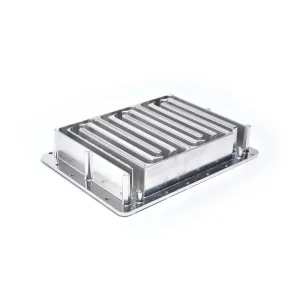
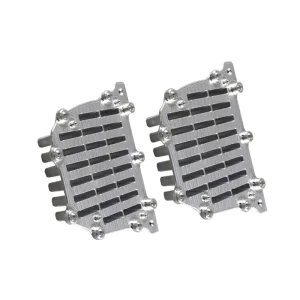
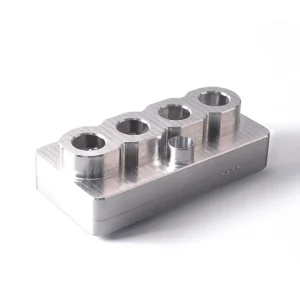
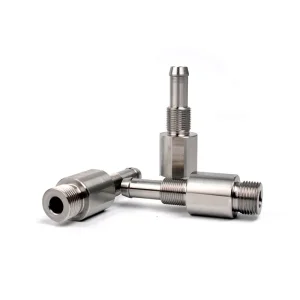
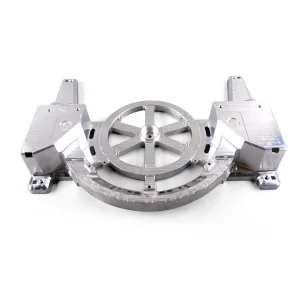
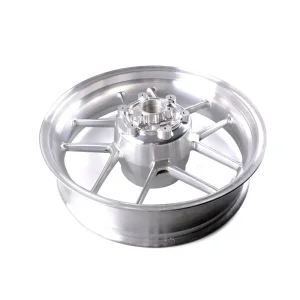
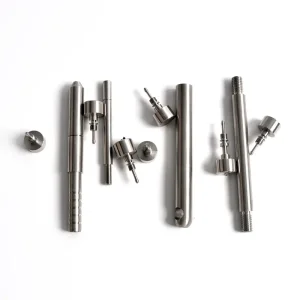
Integrated manufacturing technologies backing our high-integrity Gravity Casting and CNC post-processing operations.
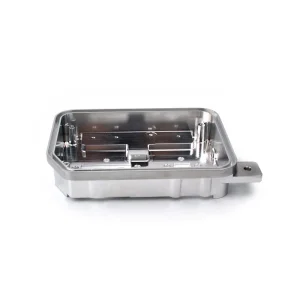
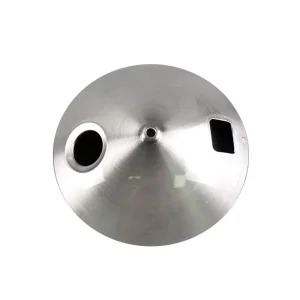
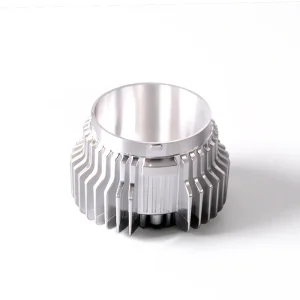
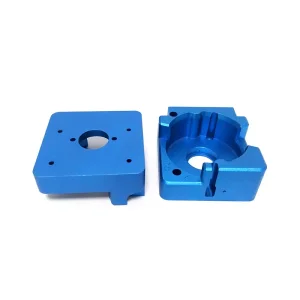
Gravity Casting, structurally referred to as Permanent Mold Casting (GDC), is a foundational metal-forming process where molten metal is poured from a vessel into a metallic mold (typically tool steel or cast iron) under the force of gravity alone, without the application of external mechanical pressure or high-velocity injection. Unlike pressure die casting, where liquid metal is rammed into die cavities under intense hydraulic pressures, gravity die casting relies on controlled pouring vectors, thermal gradient management, and natural hydrostatic head pressure to fill the mold cavity.
This process results in exceptional metallurgical density, fine-grained microstructures, and low gas entrapment. Because the metal cools rapidly against metallic mold walls, the secondary dendrite arm spacing (SDAS) within the solidifying alloy is drastically reduced. This fine microstructural dispersion translates directly to superior mechanical properties: higher ultimate tensile strength (UTS), elevated yield strength, enhanced fatigue resistance, and gas-tight pressure containment capabilities suitable for high-stress industrial applications.
Key Engineering Insight: Gravity die casting balances the dimensional consistency of die casting with the metallurgical integrity of investment casting. It allows for full heat treatment (such as T5, T6, and T61 thermal aging) because gas porosity is virtually eliminated—a feat impossible in traditional high-pressure die casting due to blister formation during solutionizing temperatures.
Selecting the appropriate casting paradigm requires evaluating volume economics, mechanical demands, and wall thickness parameters. The table below illustrates how OEM Gravity Casting compares against competing metal-forming technologies:
| Process Parameter | Gravity Die Casting (GDC) | High Pressure Die Casting (HPDC) | Sand Casting | Investment Casting |
|---|---|---|---|---|
| Porosity Level | Extremely Low (Heat Treatable) | Moderate to High (Trapped Air) | Low to Moderate | Very Low |
| Mechanical Strength | Very High (T6 Capable) | Medium (As-Cast) | Medium | High |
| Tooling Cost | Moderate ($3k – $25k) | High ($20k – $150k+) | Low ($500 – $5k) | Moderate to High |
| Economic Run Volume | 500 to 50,000 units/year | 15,000+ units/year | 1 to 1,000 units/year | 100 to 10,000 units/year |
| Surface Finish (Ra) | 3.2 – 6.3 µm | 1.6 – 3.2 µm | 12.5 – 25 µm | 1.6 – 3.2 µm |
| Tightest Machining Tolerance | ±0.005 mm (Post-CNC) | ±0.05 mm | ±0.5 mm | ±0.1 mm |
The global demand for high-performance OEM gravity castings is accelerating rapidly, driven by industrial electrification, lightweighting initiatives in mobility, and the reshoring of heavy equipment manufacturing. Sourcing directors and engineering vice presidents across North America, Europe, and Asia-Pacific are increasingly seeking qualified OEM suppliers who can deliver complete single-source manufacturing—from raw melt simulation and metallurgical control to high-precision CNC machining and certified surface finishing.
In modern industrial procurement, "intent mining" reveals that buyers are no longer searching merely for "cheap casting foundries." Sourcing criteria have shifted toward total risk mitigation, documented quality assurance, zero-defect defect rates (PPM targets below 50), and comprehensive metallurgical traceability. Key purchasing drivers include:
Applications in hydraulic pumps, automotive braking systems, and fluid manifolds demand castings that exhibit zero fluid or gas leakage under internal operating pressures exceeding 300 bar.
Gravity cast blanks require tight, predictable dimensional tolerances so that automated CNC fixtures can index the parts reliably for secondary milling, boring, and turning operations.
By shifting from expensive 5-axis full billet machining to near-net-shape gravity casting combined with targeted precision CNC finish machining, unit costs drop by 40% to 65% on medium-to-high volume runs.
How Dongguan Hongrui Model Technology Co., Ltd. delivers global-tier OEM Gravity Casting and CNC Machining excellence.
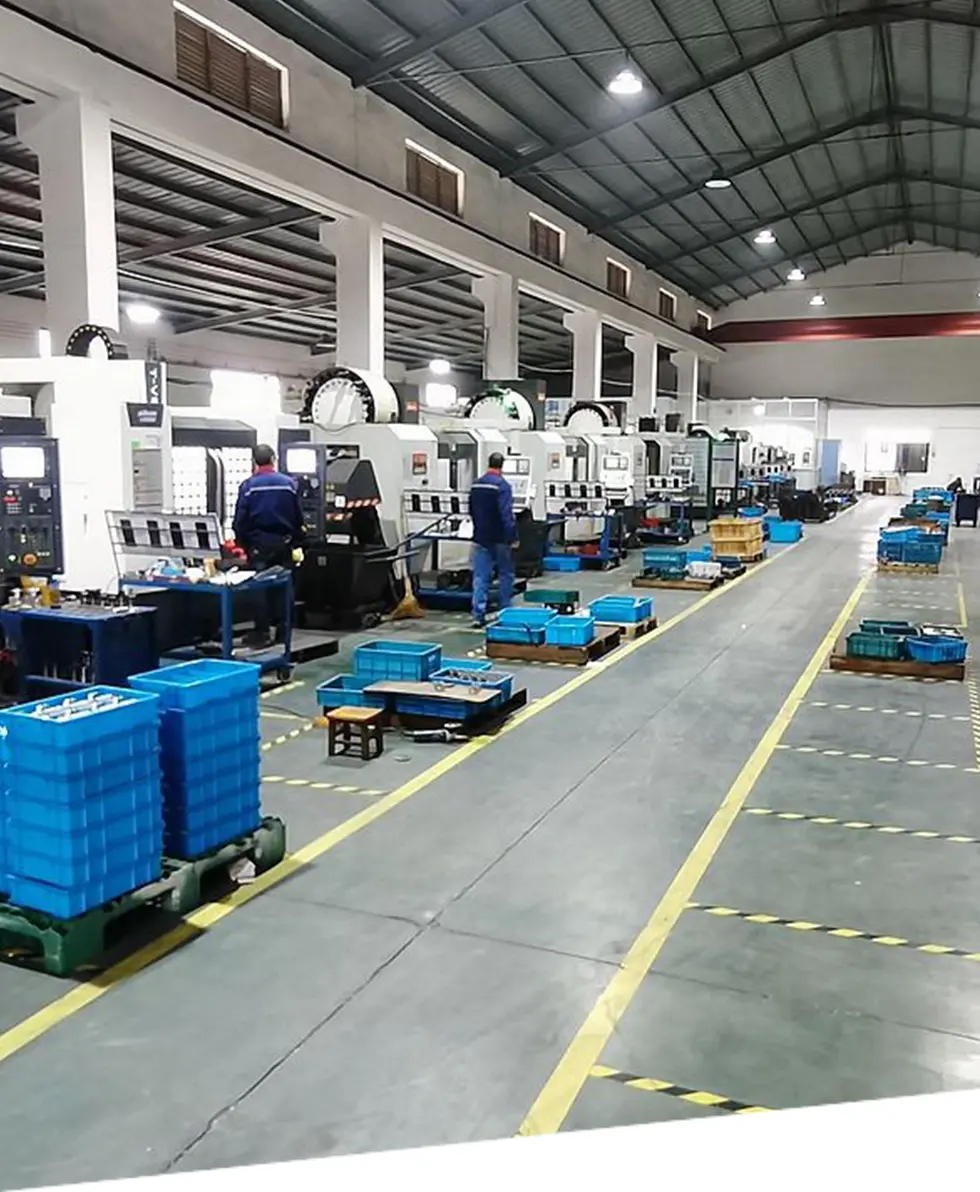
Hongrui is one of the top rapid prototyping and precision manufacturing companies in China.
Dongguan Hongrui Model Technology Co., Ltd. was established in 2019 with a registered capital of 5 million yuan and currently employs over 100 skilled engineers and specialists. We specialize in low-cost, high-precision OEM CNC machining parts manufacturing and gravity casting post-processing solutions. Our engineering solutions serve leading tier-1 clients across critical industries, including automotive, medical, electronic, aerospace, machinery, communications, toys, and smart devices.
Quality Assurance Commitment: We have invested significantly in advanced quality inspection equipment and climate-controlled production environments. In 2020, we passed the rigorous quality system audit by SGS Company, and in 2023, we obtained the official GB/T19001-2016 / ISO 9001:2015 quality certification. In the same year, we successfully completed the SGS environmental system audit. Hongrui strictly implements all ISO provisions, guaranteeing flawless product quality and maximum customer satisfaction through meticulous management details.
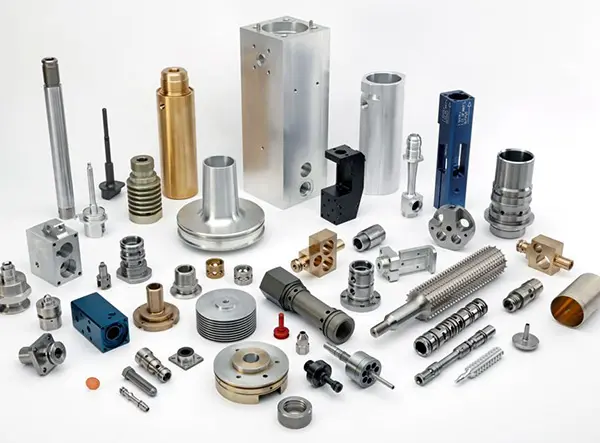
Hongrui operates a state-of-the-art facility equipped with a total of 50 CNC machine tools, including vertical, horizontal, three-axis, four-axis, and five-axis CNC machining centers. This robust infrastructure enables us to significantly shorten project lead times while maintaining ultra-precise control over part geometry.
Precision Tolerance Standards: Our optimal machining tolerances can be controlled within tight margins of ±0.0002 inches (±0.005 mm), making our services ideal for critical OEM structural components and post-cast precision finishing.
Extensive Material Versatility: Our CNC machining and gravity casting post-processing cover a comprehensive range of metals and technical engineering plastics, including:
End-to-End Value-Add Finishing Services: In addition to casting and multi-axis CNC machining, we offer a comprehensive suite of secondary processes under one roof, including grinding, milling, turning, micro-deburring, drilling, thread tapping, sandblasting, shot peening, manual and mechanical polishing, vibration finishing, high-pressure hydrostatic testing, ultrasonic cleaning, and sub-system modular assembly.
The transition from traditional, manually poured foundries to smart digital casting ecosystems has revolutionized gravity casting capabilities. Industry 4.0 innovations have solved historical challenges related to turbulence, gas entrapping, and solidification shrinkage.
Before physical tooling is cut, advanced finite element analysis (FEA) and computational fluid dynamics (CFD) software (such as MAGMASOFT or ProCAST) simulate the entire filling and solidification sequence. Thermal gradients inside the steel die are optimized to ensure directional solidification. Risers, chill plates, and gating channels are positioned algorithmically so that liquid metal feeds shrinkage zones seamlessly, yielding internal sound castings free of micro-porosity.
Conventional static pouring often introduces liquid surface turbulence, folding aluminum oxide films into the melt (forming bifilms that weaken tensile performance). Modern OEM facilities utilize Programmable Servo Tilt-Pouring Machines. The mold starts in a tilted position and slowly rotates back to vertical as the molten metal enters the cavity at a strictly controlled laminar flow velocity. This technique eliminates oxide inclusion defects and stabilizes density distribution throughout complex geometries.
Gravity castings made from aluminum alloys like A356 (AlSi7Mg0.3) undergo standard T6 heat treatment to maximize strength. The process consists of:
OEM Gravity Castings serve critical applications across diverse sectors where failure is not an option:
Used extensively for aluminum EV motor housings, inverter enclosures, steering knuckles, turbocharger compressor wheels, and heavy-duty brake calipers requiring high thermal conductivity and structural rigidity.
Critical structural brackets, fuel control valve housings, actuator bodies, and cockpit instrument frames manufactured under stringent non-destructive testing (NDT) specs.
High-density structural bases for X-ray devices, MRI gantries, surgical robotic arm linkages, and pressure-tight fluid dispensing bodies requiring bio-compatible coatings.
When selecting an OEM Gravity Casting partner, procurement engineering teams must establish a rigorous validation protocol. Below is the multi-stage quality verification matrix standard for global Tier-1 operations:
| Inspection Stage | Methodology / Equipment | Acceptance Standard / Target Parameter |
|---|---|---|
| 1. Chemical Melt Analysis | Optical Emission Spectrometry (OES) | Exact alloy elemental composition verification before pouring. |
| 2. Internal Defect Detection | X-Ray Radiography / Industrial CT Scanning | ASTM E155 / E505 gas porosity & micro-shrinkage Level 1 or 2 compliance. |
| 3. Dimensional Verification | CMM (Coordinate Measuring Machine) + 3D Laser Scan | Tolerance verification to within ±0.005 mm against 3D CAD step models. |
| 4. Pressure Tightness | Hydrostatic / Helium Mass Spectrometer Testing | Zero bubble formation at 1.5x rated system pressure (e.g. 50 bar pneumatic). |
| 5. Mechanical Properties | Tensile, Hardness (Brinell HBW), Elongation Testing | T6 condition: Tensile > 290 MPa, Yield > 220 MPa, Elongation > 5%. |
Direct answers to critical technical and procurement questions for engineering directors and buyers.
Complementary machining platforms and specialty services available for custom OEM production runs.
 Hongrui Model