High-tolerance industrial solutions and custom CNC prototyping engineered to exact specifications.
Decoding technical demands, material innovations, and mechanical parameters shaping modern industry.
Modern applications rely heavily on high-grade austenitic, martensitic, and duplex stainless steels (such as 304, 316, 316L, 410, and Duplex 2205). The integration of chromium and molybdenum determines a fastener's resistance to pitting and crevice corrosion under extreme thermal and atmospheric pressures.
Critical systems necessitate tight class fits, typically conforming to Class 3A/3B thread specifications or metric equivalents (6g/6H). These tolerances prevent galling and ensure structural integrity under vibrational stresses, particularly in automotive transmissions and heavy aerospace machinery.
Quality-critical OEMs mandate Mill Test Reports (MTRs) showing chemical analysis and mechanical testing certificates. Full compliance with EN 10204 Type 3.1 ensures raw materials are completely certified and free from volatile defects such as hydrogen embrittlement.
| Material Grade | Tensile Strength (MPa) | Yield Strength (MPa) | Corrosion Resistance Index (PREN) | Primary Industrial Applications |
|---|---|---|---|---|
| Stainless Steel 304 (A2-70) | 700 Min. | 450 Min. | ~ 18 | General machinery, industrial structures, consumer electronics. |
| Stainless Steel 316 (A4-80) | 800 Min. | 600 Min. | ~ 25 | Marine fittings, chemical processing equipment, subsea oil & gas. |
| Duplex 2205 | 680 - 880 | 480 Min. | ~ 34 | Highly corrosive marine environments, petrochemical, pollution control. |
| Martensitic 410 | 650 - 850 | 500 Min. | ~ 12 | Self-drilling screws, high-wear structural fixtures, valve components. |
Deciding between precision CNC-turned fasteners and cold-headed fasteners.
Ideal for low-to-medium volumes, complex geometries, and highly tight dimensional requirements. Our CNC turning center capacities achieve tolerances down to ±0.005 mm (±0.0002 inches). Because it features zero tooling investment, design iteration is highly cost-effective and immediate. It is widely preferred for custom aerospace, medical, and robotics development.
Optimized for high-volume runs where metal fiber grain flow is preserved along the longitudinal axis of the fastener, thereby enhancing shear strength. While requiring dedicated die tooling and initial development phases, it achieves high material utilization and rapid cycle times for large-scale construction, automotive, and appliance assemblies.
Dongguan Hongrui Model Technology Co., Ltd. was established in 2019 with a registered capital of 5 million yuan and currently employs over 100 people. We are one of the best rapid prototyping companies in China, specializing in low-cost OEM CNC machining parts manufacturing.
Our products are mainly used in industries such as automotive, medical, electronic, aerospace, machinery, communications, toys, and smart devices.
We have invested a significant amount of money in quality and production environment. In 2020, we passed the quality system audit by SGS company, and in 2023, we obtained the "GB/119001-2016 ISO 9001:2015" certificate. In the same year, we also successfully passed the SGS company's environmental system audit. Hongrui strictly implements the provisions of ISO, guaranteeing the product quality and customer satisfaction of CNC machining through meticulous management details.
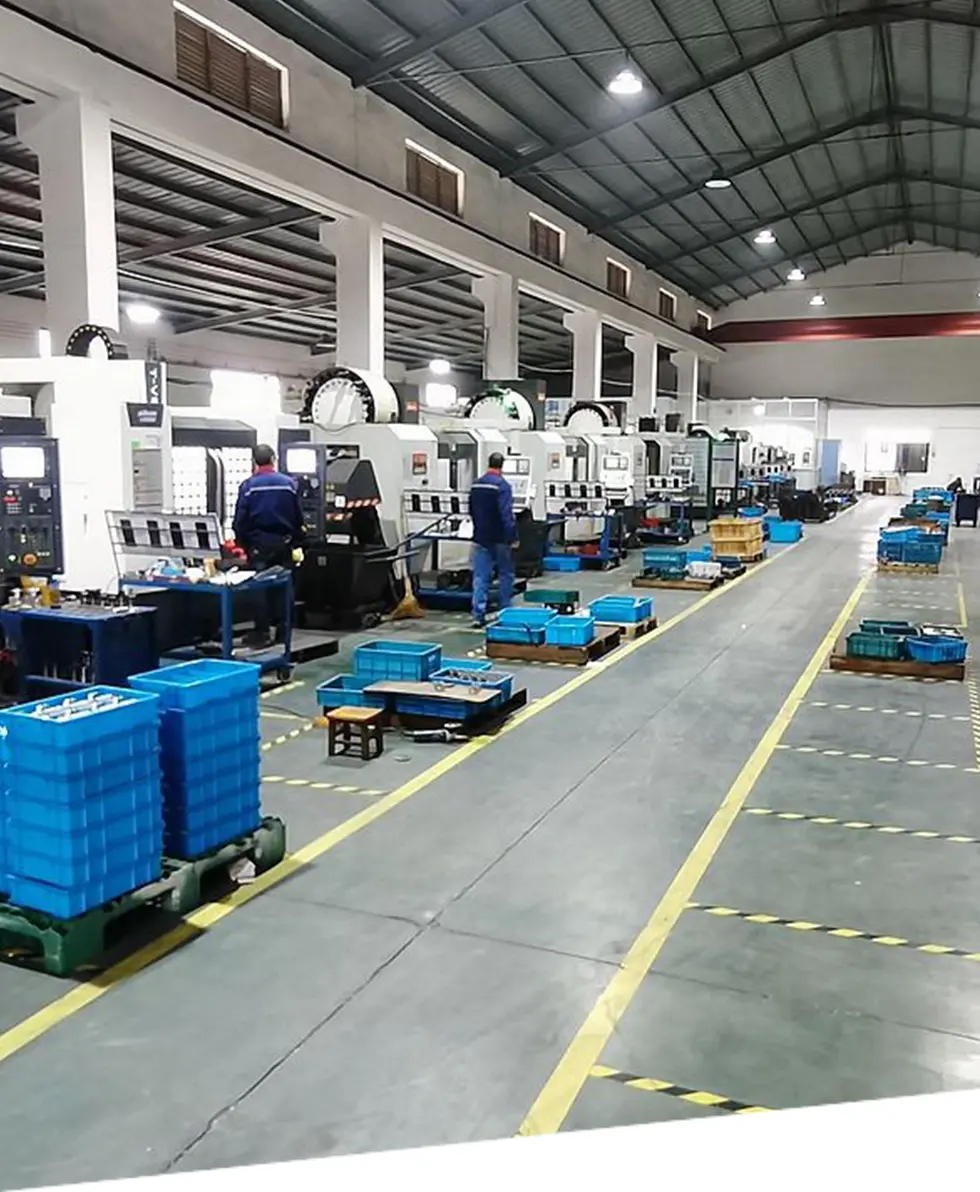
Hongrui has a total of 50 CNC machine tools, including vertical, horizontal, three-axis, four-axis, and five-axis CNC machine tools, which can significantly shorten delivery time. The optimal tolerance can be controlled within ±0.0002 inches and ±0.005 mm, making it suitable for manufacturing OEM parts.
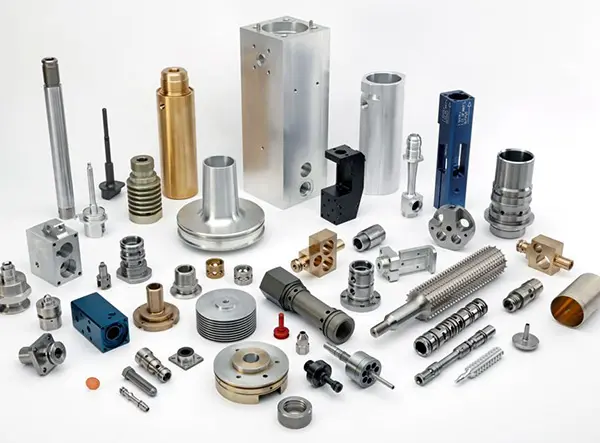
Our CNC machining capabilities cover a variety of materials such as aluminum, stainless steel, copper, nickel, cobalt, tungsten, titanium and various plastic parts. In addition to CNC machining, we also offer grinding, milling, turning, deburring, drilling and other services, as well as a variety of surface treatments including rust removal, tapping, sandblasting, polishing, vibration finishing, pressure testing, cleaning and assembly.
Ensuring operational stability and safety in demanding operating environments globally.
Stainless steel structural fasteners undergo rigorous testing for high-altitude thermal fluctuations. Custom engineered aerospace grade nuts, washers, and studs are essential to prevent structural relaxation during rapid atmospheric depressurization and acceleration phases.
Utilizing high-purity SS316L (medical grade) fasteners inside imaging devices and surgical tools prevents biocompatibility issues and withstands routine cleaning and autoclave heat treatments without loss of structural integrity.
Custom threaded inserts, standoffs, and screws designed for EV (Electric Vehicle) battery management modules. High electrical and heat resistance, combined with precise dimensional fits, prevents assembly failure under continuous vibration.
How Dongguan Hongrui resolves critical supply risk concerns for international buyers.
Global procurement teams often struggle with engineering detail loss during translation. At Hongrui, our bilingual project managers interface directly using standard engineering formats (STEP, IGES, DXF) to ensure technical requirements are perfectly understood and executed.
We deploy automated Optical Sorting Machines for high-volume fastener shipments to check critical external dimensions (head diameter, thread pitch, height). This limits potential human oversight and matches zero-defect tolerance thresholds required by automotive assembly lines.
By arranging FCA, FOB Shenzhen, and DDP shipping configurations, our logistics department streamlines compliance documentation, tariffs, and shipping arrangements, avoiding ports-of-entry delays.
Emerging shifts in material compositions, coating technologies, and automated traceability.
Traditional nitric acid passivation is quickly shifting to citric acid solutions, complying with strict REACH and RoHS regulatory directives. Our plant adopts green passivation techniques to ensure chromium-oxide layers remain stable and clear of toxicity hazards.
With traceability becoming mandatory for major automotive and wind energy infrastructure projects, laser-marked matrix codes are becoming standard. This provides complete manufacturing cycle visibility from original steel heat number down to final torque inspection.
Expert structural, materials, and ordering information answers for engineers and sourcing professionals.
Explore our technical capabilities, specialized systems, and precision machining technologies.
 Hongrui Model