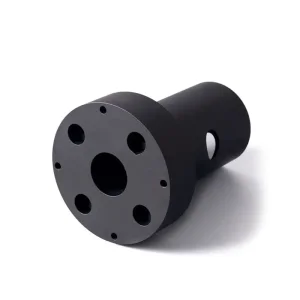
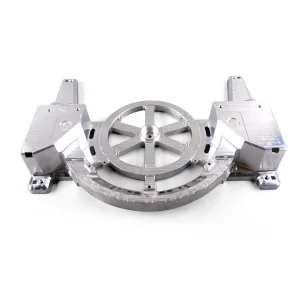
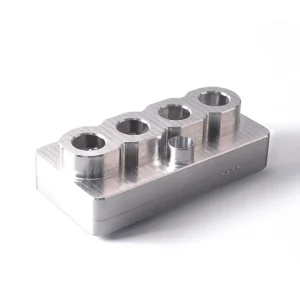
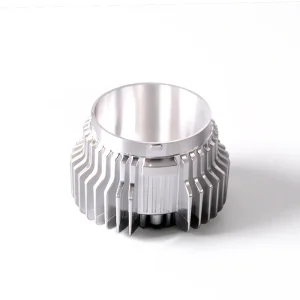
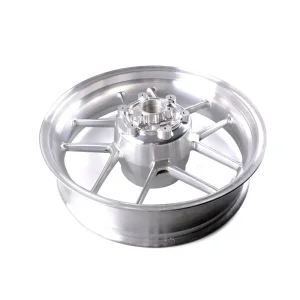
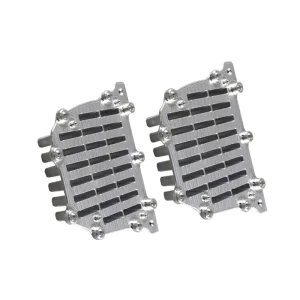
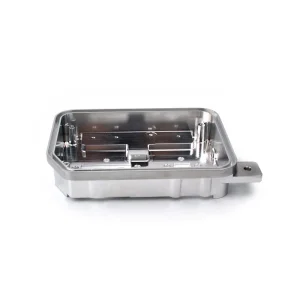
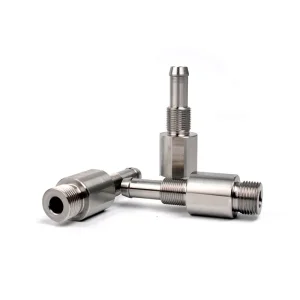
In high-stakes industrial environments, selecting the optimal structural medium is critical. OEM Zinc has established itself as the ultimate manufacturing substrate for factories looking to bridge the gap between high tensile performance and structural flexibility.
For modern B2B suppliers and global factories, zinc alloys (specifically Zamak designations such as Zamak 3, Zamak 5, Zamak 8, and high-performance casting alloys like ZA-8, ZA-12, and ZA-27) present a host of unmatched engineering properties. Historically misunderstood as simply a structural coating medium, industrial grade zinc alloys are engineered to support intricate shapes with razor-thin walls while maintaining exceptionally high dimensional stability and superior mechanical performance.
When evaluated via structural testing, zinc alloys exhibit mechanical characteristics that outperform comparable metals such as aluminum and magnesium. For example, Zamak 3 provides a tensile strength of approximately 283 MPa, dramatically higher than typical die-cast aluminum alloys, alongside exceptional impact strength. This enables factories to produce structural parts that handle extreme mechanical loads with significantly thinner wall thicknesses—driving weight reduction without compromising on structural integrity.
Analyzing semantic industrial demands and application roadmaps reveals key reasons why modern procurement groups prioritize OEM zinc alloy fabrication.
In telecommunication modules and optical transceivers, shielding electronic interference is paramount. OEM Zinc provides exceptional natural electromagnetic shielding effectiveness alongside outstanding thermal and electrical conductivity, outperforming plastics and composite structural brackets.
Unlike steel components which require heavy external plating to resist oxidation, OEM zinc parts inherently resist rust and localized atmospheric decay. Their chemical makeup facilitates self-healing oxide layers, making them highly suitable for harsh marine, industrial automotive, and offshore environments.
For B2B factories and OEM suppliers, tool life determines long-term profitability. Due to zinc's exceptionally low melting point (approx 380°C - 420°C), die-casting tooling lasts significantly longer (often exceeding 1 million cycles) compared to aluminum molds, slashing upfront capital expenditures.
Global supply chain directors require reliable manufacturing partners that can bridge low-cost rapid prototyping with high-capacity mass production.
As international supply chain environments grow increasingly volatile, corporate procurement teams are prioritizing multi-tiered supply chain resilience, rigorous regulatory compliance, and rapid prototyping workflows. Modern industrial buyers no longer evaluate factories purely on piece-price calculations; instead, they measure total cost of ownership (TCO), risk mitigation, and engineering capability.
This is where precision manufacturers with high material processing versatility stand out. Procurement managers require dynamic factories that can manage a wide material portfolio, processing complex alloys alongside traditional metals like aluminum, stainless steel, and aerospace-grade titanium. The ability to transition effortlessly from initial concept rapid prototyping to large-scale multi-axis CNC manufacturing ensures shorter time-to-market and reliable quality control across all production phases.
A premier industrial rapid prototyping and precision CNC manufacturing partner in China.
Dongguan Hongrui Model Technology Co., Ltd. was established in 2019 with a registered capital of 5 million yuan and currently employs over 100 people. We are recognized as one of the best rapid prototyping companies in China, specializing in low-cost OEM CNC machining parts manufacturing. Our engineered components are utilized globally across highly regulated sectors including automotive, medical, electronic, aerospace, industrial machinery, telecommunications, high-end toy production, and consumer smart devices.
As part of our uncompromising quality assurance strategy, Hongrui has invested significantly in advanced precision testing equipment and clean production environments. In 2020, we passed our comprehensive quality system audit by SGS, and in 2023, we obtained the prestigious "GB/T19001-2016 ISO 9001:2015" certification. In the same year, we successfully completed the SGS environmental system audit. By strictly executing the details of these globally recognized ISO standards, we guarantee exceptional part quality and complete customer satisfaction across all custom manufacturing programs.
Equipped to handle high-complexity geometry and tight tolerances under compressed global lead times.
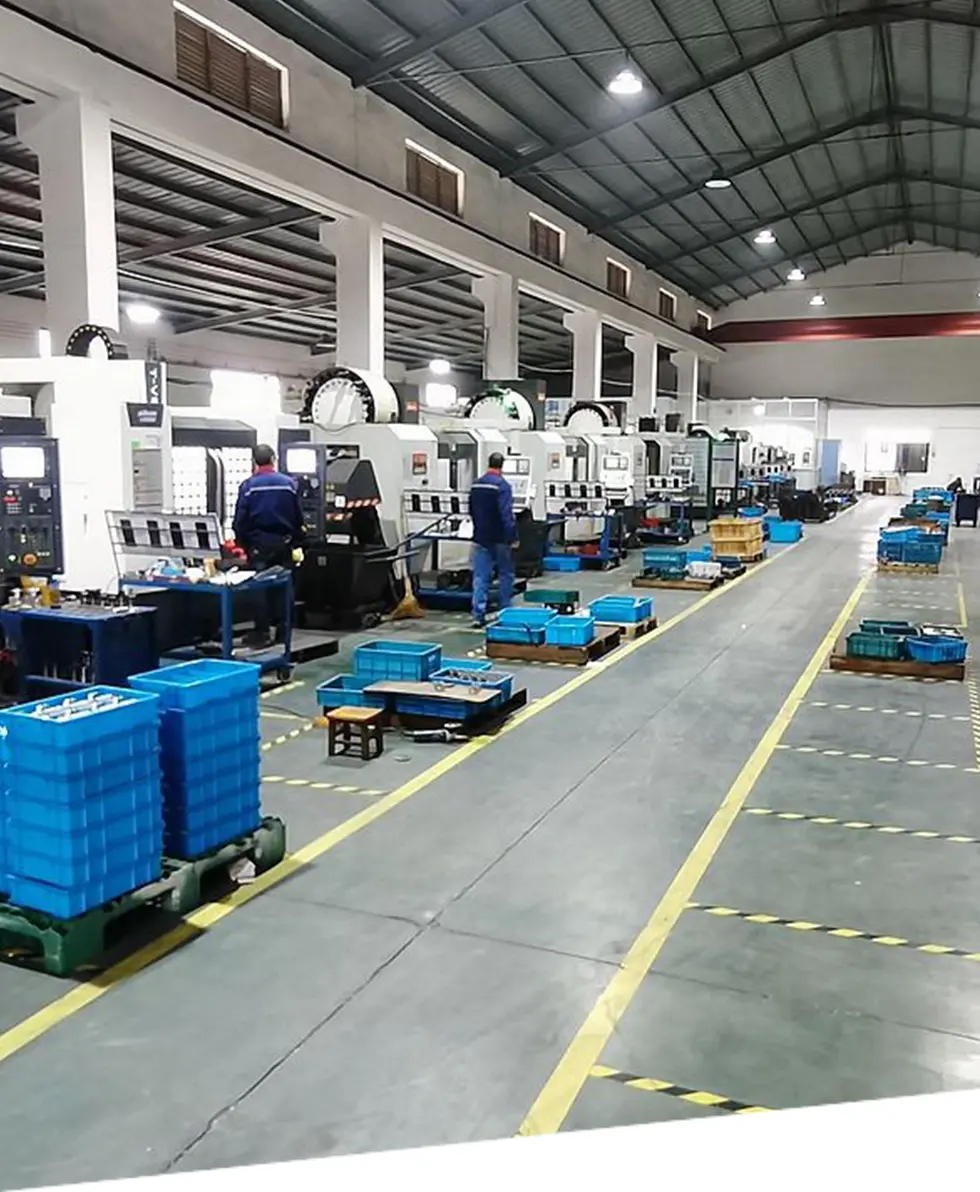
Hongrui operates a robust fleet of 50 advanced CNC machine tools, including vertical, horizontal, three-axis, four-axis, and high-speed five-axis CNC machining centers. This extensive equipment roster allows us to significantly compress production lead times for complex OEM components. By pairing advanced kinematics with thermal-stable structural designs, our optimal machining tolerances are reliably controlled within ±0.0002 inches (±0.005 mm), ideal for demanding high-precision OEM industries.
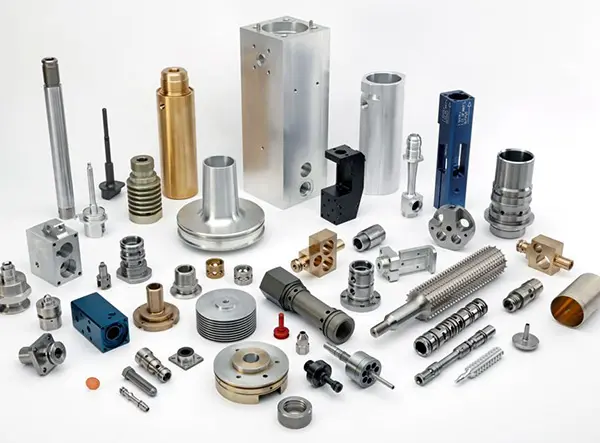
Our material capabilities encompass a broad and diverse spectrum. We support advanced processing of metals including aluminum, stainless steel, copper, nickel, cobalt, tungsten, titanium, specialized zinc alloys, and various structural plastics. Beyond standard CNC milling and turning, we offer comprehensive post-processing solutions including grinding, planing, deburring, high-precision drilling, and advanced surface treatments such as anodizing, electroplating, rust removal, tapping, micro sandblasting, mirror polishing, vibratory finishing, pressure testing, ultrasonic cleaning, and modular final assembly.
By leveraging continuous 5-axis toolpaths, we eliminate cumulative error stack-up. This setup enables the production of complex complex undercuts, deep pockets, and compound curves in a single clamping cycle.
From micro sandblasting and electroplating to vibratory polishing and anodizing, our post-processing operations ensure all parts arrive field-ready and perfectly finished.
Our operational structures adhere to strict standard operating procedures (SOPs). Fully audited by SGS, our workflows feature transparent document traceabilities and proactive risk mitigation systems.
Building cross-border confidence through transparent compliance structures and localization support.
For large-scale international OEMs, manufacturing compliance is a strict legal requirement. At Dongguan Hongrui, we design our processing frameworks to comply with all global environmental and raw material regulations. Our processing lines align with key global standards, including the Restriction of Hazardous Substances (RoHS) Directive and the European Union's REACH regulation.
We work closely with global logistics networks and third-party inspectors to provide transparent documentation and raw material certifications (MTRs) for every production run. This rigorous approach ensures zero issues at port entry, simplifies global shipping, and allows seamless integration into demanding manufacturing sectors like medical hardware and aerospace systems.
In addition to strict document controls, we offer comprehensive localization support for international engineering teams. Our technical support division provides around-the-clock DFM (Design for Manufacturability) analysis, helping overseas engineering groups optimize component geometry, minimize tool wear, and select the ideal alloys to balance performance and cost.
Whether navigating complex customs procedures or refining material specifications, Hongrui serves as a direct extension of your local engineering team, bridging time zones to deliver premium components on time.
Analyzing technical shifts in precision engineering over the next decade.
The precision manufacturing sector is undergoing rapid transformation, driven by advanced structural optimization, automated machining, and high-performance material blends. The future of OEM zinc and multi-alloy fabrication lies in hybrid manufacturing strategies—combining rapid tooling and casting techniques with high-speed multi-axis CNC finishing. This approach allows factories to achieve cast-to-size thin-wall geometries while maintaining precision CNC tolerances where critical interfaces occur.
Simultaneously, the integration of real-time machine monitoring and automated laser scan verification is reshaping quality control. At Hongrui, we are continually upgrading our facility to incorporate advanced software tools and smart sensor packages. These technical investments enable us to optimize toolpaths, minimize carbon impact, and deliver next-generation tolerances for international B2B partners across all industries.
Answering technical engineering questions regarding OEM Zinc and CNC machining capabilities.
 Hongrui Model